
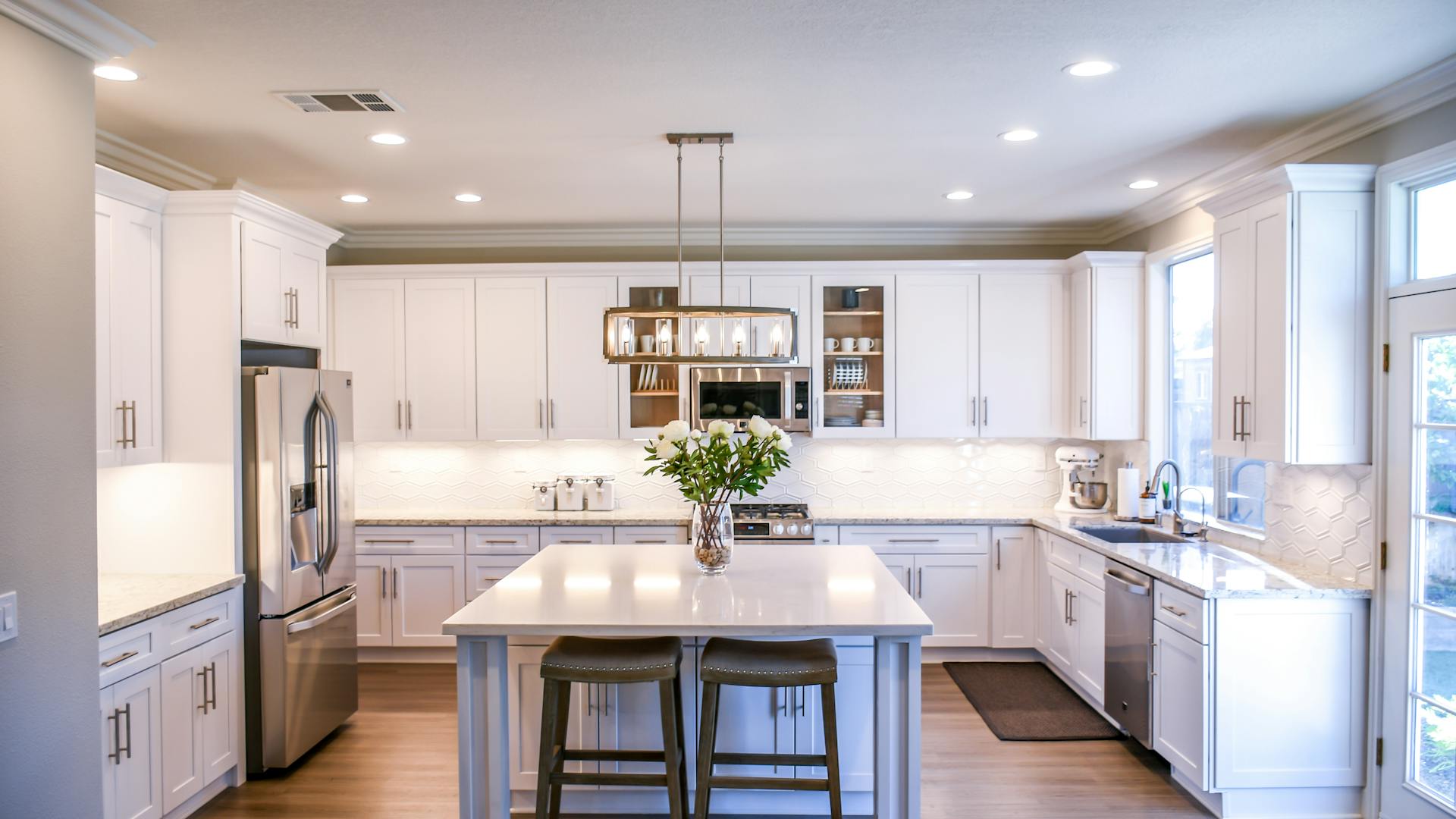
Is Your Kitchen Too Dark to Cook In?
Dark kitchen with poor lighting? Discover under-cabinet, pendant, recessed & task lighting solutions. Expert kitchen lighting design in Monmouth & Ocean Counties NJ. Free estimates.
Shadowy counters, dim corners, and that single overhead fixture from 1985 — poor lighting makes cooking harder and your kitchen look dated. Discover how proper lighting design transforms both function and feel.
Plan Your ProjectView Our Work
Signs Your Kitchen Lighting Isn't Working
Dark Counters
Shadows on work surfaces from overhead lighting
Single Fixture
One central light trying to do everything
Eye Strain
Squinting to read recipes or see ingredients
Dated Fixtures
Outdated fluorescents or '90s fixtures
Not Enough Outlets
Limited options for adding lighting
Dim Corners
Dead zones that feel cave-like
Wrong Color
Yellowish or harsh lighting that looks bad
Cooking Frustration
Hard to prep food safely
The 3-Layer Kitchen Lighting Solution
Ambient Lighting
Overall illumination that fills the entire room evenly. The foundation of your lighting design.
- Recessed can lights throughout
- Flush mount or semi-flush fixtures
- Track lighting for flexibility
Most Popular
Task Lighting
Focused light where you work. Eliminates shadows on counters and makes cooking safer.
- Under-cabinet LED strips
- Pendants over island/peninsula
- Light above sink area
Accent Lighting
Decorative lighting that adds ambiance and highlights features. Creates mood and visual interest.
- In-cabinet lighting
- Above-cabinet rope lighting
- Toe-kick lighting
Frequently Asked Questions
The best kitchen lighting uses layered approach: ambient lighting (recessed or flush mounts for overall illumination), task lighting (under-cabinet lights for counters), and accent lighting (pendants over islands, in-cabinet lighting). This combination eliminates shadows and creates a functional, inviting space.
Kitchen lighting upgrades in NJ typically cost: Under-cabinet lighting recessed lighting per fixture installed, pendant lights each installed, and complete kitchen lighting redesign . LED upgrades often pay for themselves in energy savings within 2-3 years.
General rule: one recessed light per 4-6 square feet of ceiling space. A 10x12 kitchen (120 sq ft) typically needs 6-8 recessed lights. Place lights 2-3 feet from walls and space evenly. For task areas, add focused lighting directly above counters and the sink.
Absolutely. Under-cabinet lighting eliminates shadows on your work surfaces, making food prep safer and easier. It also adds ambient glow in the evening and showcases your backsplash. LED strips are energy-efficient and last 50,000+ hours. It's one of the highest-impact, lowest-cost kitchen upgrades.
For kitchens, 3000K-4000K (warm to neutral white) is ideal. 3000K creates a warm, inviting feel while still providing good task visibility. 4000K is more neutral and shows colors accurately. Avoid 2700K (too yellow for cooking) or 5000K+ (too harsh and clinical). Dimmer switches allow flexibility.
Ready to Start Your Project?
Request a private design consultation for your kitchen, bath, cabinetry, or whole-home project.