
Farmhouse kitchen design ideas for NJ homes — from classic rustic to modern farmhouse. Cabinets, countertops, sinks, hardware, and flooring choices with real NJ pricing. Expert guide from Custom Kitchens by Lopez, 20+ years experience.
Plan Your ProjectView Our Work
Custom Kitchens by Lopez TeamApril 7, 202613 min read
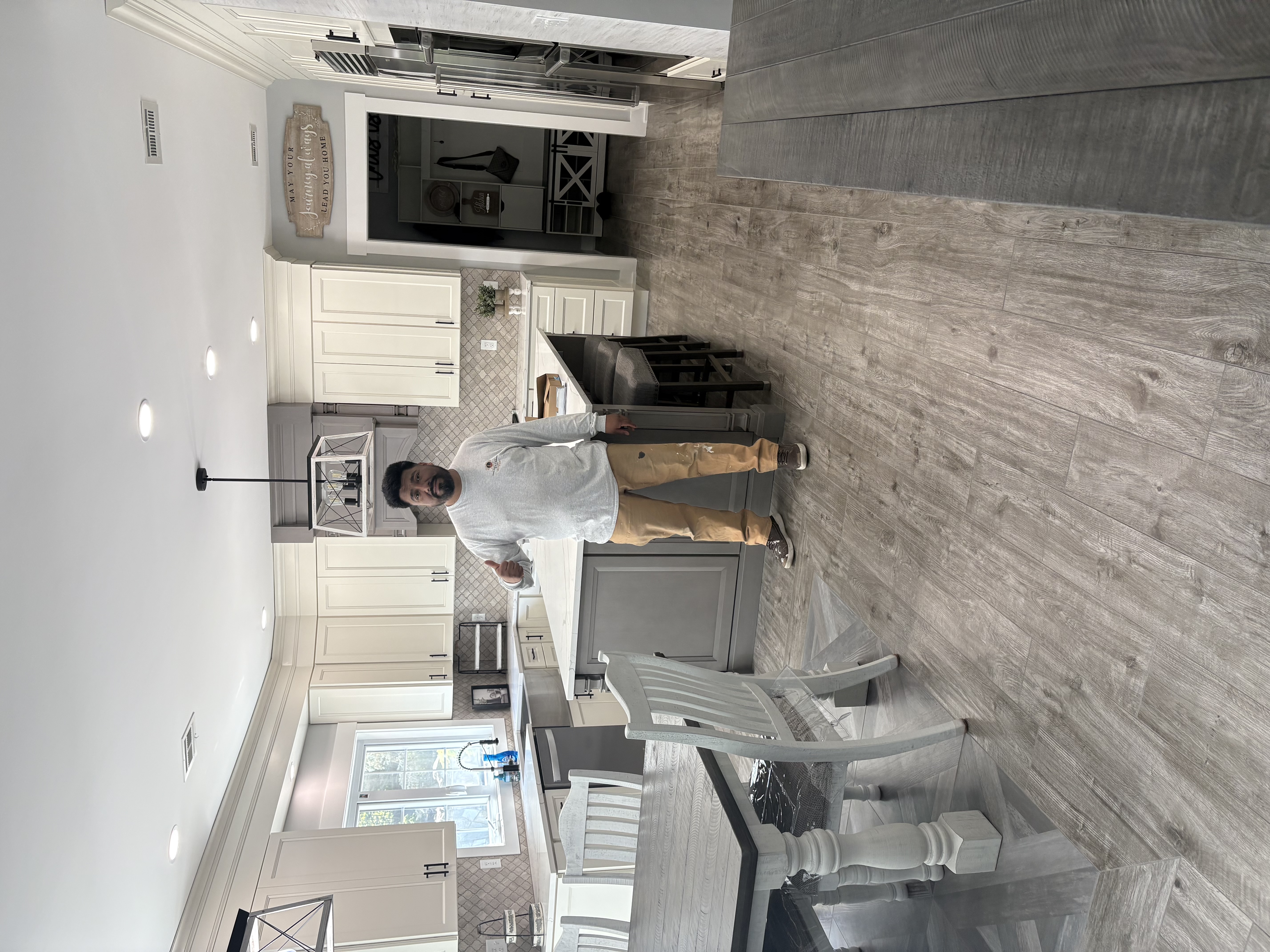
Farmhouse Kitchen Design Ideas: Rustic to Modern NJ Guide
The farmhouse kitchen is one of the most enduring kitchen styles in American home design — and one of the most misunderstood. Somewhere between the Fixer Upper era and the Instagram aesthetic, "farmhouse" became shorthand for shiplap, distressed wood, and mason jar light fixtures. That version is fading. But the core of farmhouse kitchen design — warmth, functionality, natural materials, and a kitchen that feels like the heart of the home — is stronger than ever.
In Monmouth and Ocean Counties, farmhouse kitchens are particularly popular because so many NJ homes have the bones for it: colonial and Cape Cod architecture, generous kitchen footprints, and homeowners who want a space that feels warm and welcoming rather than sterile and modern.
After 20+ years of kitchen remodeling in New Jersey, we have built farmhouse kitchens in every style — from full rustic with reclaimed wood beams to sleek modern farmhouse with clean lines and mixed metals. This guide covers the full spectrum, with real NJ pricing and honest advice about what works, what is fading, and what will stand the test of time.
What you will learn:
- The difference between traditional, transitional, and modern farmhouse styles
- Cabinet, countertop, sink, hardware, and flooring choices for each
- What still works in 2026 and what feels dated
- Real costs for NJ farmhouse kitchen remodels
- Design mistakes to avoid
Dreaming of a farmhouse kitchen? Schedule a free design consultation or call (732) 984-1043. We will help you find the farmhouse style that fits your home, taste, and budget.
The Three Farmhouse Kitchen Styles (And Which One Is Right for Your NJ Home)
Traditional Farmhouse
The style most people picture when they hear "farmhouse kitchen." Heavily influenced by rural American and English country kitchens, traditional farmhouse is about authenticity, warmth, and the patina of use.
Key elements:
- Inset cabinets with face frames — often painted in cream, sage, or muted blue
- Open shelving for everyday dishes and collected pottery
- Apron-front fireclay sink in white or biscuit
- Butcher block countertops (or at minimum, a butcher block island)
- Exposed ceiling beams (real or faux) in natural wood
- Unlacquered brass or oil-rubbed bronze hardware
- Wide-plank wood flooring with visible grain and character
- Furniture-style base cabinets (legs visible, freestanding appearance)
- Pot rack, plate rack, or hanging storage
- Warm lighting from pendants and sconces, not recessed cans
Best for: Older NJ homes with character — pre-1960 colonials, Victorian-era homes, Cape Cods, and any home where a rustic aesthetic complements the architecture.
Watch out for: Going too far into "themed" territory. A kitchen that looks like a Cracker Barrel gift shop is not the goal. Traditional farmhouse should feel collected over time, not staged.
Transitional Farmhouse (The Sweet Spot)
Transitional farmhouse takes the warmth and character of traditional farmhouse and cleans it up. The lines are straighter, the materials are more refined, and the overall effect is polished without being cold.
Key elements:
- Shaker cabinets (the defining cabinet style of transitional farmhouse) in white, warm white, or light gray
- Quartz countertops in a soft marble-look pattern — the practical substitute for real marble
- Apron-front sink as the focal point (fireclay or stainless steel)
- Mixed metals — brushed gold pulls with a stainless steel range, or matte black hardware with a brass faucet
- Wood accents in natural tones — a wood island, open wood shelving, or wood-backed glass cabinet doors
- Subway tile or zellige backsplash in white or a warm neutral
- Wide-plank flooring (hardwood or wood-look porcelain)
- Pendant lights in glass, metal, or mixed materials
- Hidden modern conveniences (soft-close drawers, pull-out organizers, integrated lighting)
Best for: The majority of NJ homeowners. Transitional farmhouse works in colonials, center-hall homes, and even newer construction. It is warm enough to feel inviting, clean enough to feel current, and timeless enough to avoid looking dated in five years.
Modern Farmhouse
Modern farmhouse leans into contemporary design while keeping farmhouse's warmth and organic materials. The silhouettes are cleaner, the palette is more restrained, and technology and convenience are fully integrated.
Key elements:
- Flat-panel or slim-shaker cabinets with minimal reveal — in matte white, warm putty, or light wood grain
- Quartzite or quartz countertops with clean, minimal veining
- Integrated or undermount farmhouse-style sink
- Matte black hardware and fixtures (the dominant metal choice for modern farmhouse in 2026)
- Open shelving in natural wood or metal brackets
- Large-format backsplash tile or slab backsplash
- Light wood or warm gray flooring
- Statement range hood — either a custom wood-wrapped hood or a sleek black range hood as a focal point
- LED lighting throughout, including accent and display lighting
Best for: Newer NJ homes (2000s and later), homeowners who want warmth without rustic elements, and anyone who gravitates toward clean lines but finds fully modern kitchens too cold.
Farmhouse Kitchen Cabinets: Styles, Colors, and What Works in 2026
Cabinets set the tone for the entire farmhouse kitchen. They cover more visual surface area than any other element, and their style, color, and finish define whether the space reads as traditional, transitional, or modern.
Cabinet Door Styles
Shaker (most popular): The flat-panel center with a simple frame around the edge is the defining cabinet door of farmhouse kitchens in 2026. It works across all three farmhouse sub-styles. We install shaker doors in roughly 70 percent of our farmhouse kitchen remodels.
Inset (premium choice): The door sits flush within the face frame rather than overlapping it. Inset cabinets have a refined, furniture-quality appearance that signals craftsmanship. They cost 15 to 25 percent more than overlay cabinets because of the precision required.
Beadboard (traditional accent): Vertical grooves in the door panel add texture and traditional character. Use beadboard selectively — on an island, a pantry door, or a few accent cabinets — rather than throughout. Full beadboard kitchens feel heavy and dated.
Flat panel (modern farmhouse): Clean, flat doors with minimal frame detail. These lean modern while the material choices (warm wood grain, matte finishes) keep the farmhouse warmth.
Cabinet Colors That Work
| Color | Style | Notes |
|---|---|---|
| Bright white | Transitional, modern | The default. Bright, clean, photographs well. Can feel cold without warm accents. |
| Warm white / cream | Traditional, transitional | Softer and warmer than bright white. Our most recommended farmhouse cabinet color for NJ homes. |
| Sage green | Traditional, transitional | The "it" color for farmhouse kitchens in 2026. Soft, earthy, and works beautifully with brass hardware and wood accents. |
| Light gray / greige | Transitional, modern | A safe, versatile neutral. Pairs with almost any countertop and hardware finish. |
| Navy blue (island only) | Transitional | Bold, sophisticated, best used on the island or lower cabinets only — not full navy kitchens. |
| Natural wood (white oak, hickory) | Modern farmhouse | Full wood-grain cabinets in light, natural tones. The most organic modern farmhouse option. |
Two-Tone Combinations for Farmhouse Kitchens
Two-tone cabinetry is standard in farmhouse kitchens. The most successful NJ combinations we install:
- White perimeter + natural wood island — the classic modern farmhouse combination
- White perimeter + sage green island — fresh, earthy, distinctive
- White perimeter + navy island — bold, elegant, works in larger kitchens
- Cream perimeter + charcoal island — sophisticated contrast without stark white
- Light gray perimeter + warm white island — subtle tonal contrast for a cohesive look
For a deeper dive into cabinet color trends and what is working in the NJ market, see our dedicated cabinet color guide.
The Farmhouse Kitchen Sink: The Centerpiece
If there is one element that defines a farmhouse kitchen, it is the apron-front (farmhouse) sink. The large, deep basin with the exposed front panel visible below the countertop is the visual signature of the style.
Sink Materials
Fireclay (our top recommendation): Made from clay fired at extremely high temperatures, fireclay sinks are dense, durable, and resistant to stains, chips, and thermal shock. They maintain their glossy finish for decades. Top brands: Rohl (Shaws of England), Kohler, andDERA.
Cast iron with enamel: The Kohler Whitehaven is the most popular cast iron farmhouse sink and for good reason — it is incredibly durable, the enamel finish is chip-resistant, and it is available in multiple sizes and configurations. Heavier than fireclay (requires reinforced cabinet base).
Stainless steel: For a more industrial or modern farmhouse look, stainless steel apron-front sinks offer durability and easy maintenance at a lower price point. They do not have the traditional farmhouse aesthetic of white fireclay but work beautifully in modern farmhouse kitchens.
Copper: Stunning patina development over time and natural antimicrobial properties. Requires more maintenance (develops a living finish that changes with use). Best for traditional farmhouse kitchens where the sink is a deliberate design statement.
Sink Sizing
| Sink Type | Width | Depth | Best For |
|---|---|---|---|
| Single basin | 30-36 in. | 9-10 in. | Most kitchens, sheet pan friendly, easy cleaning |
| Double basin | 33-36 in. | 8-9 in. | Homeowners who want wash/rinse separation |
| Large single basin | 36 in. | 10 in. | Serious cooks, frequent entertainers |
Our recommendation: A 33 or 36-inch single basin fireclay sink in white. Single basins are more functional for washing large pots, sheet pans, and cutting boards — the items that actually need a big sink. Double basins divide the space and limit what you can wash in each side.
NJ pricing: Expect $800 to $2,500 for a quality farmhouse sink (material only). Installation adds $200 to $500, plus the cabinet modification to accommodate the apron front. Budget total: $1,000 to $3,000 installed.
Farmhouse Kitchen Countertops
Best Countertop Materials for Each Farmhouse Style
For traditional farmhouse:
- Honed marble — authentic, beautiful, develops patina. Requires sealing and accepts that it will etch and stain over time (many traditionalists consider this part of the charm).
- Soapstone — soft, dark, develops a natural patina. Does not stain but does scratch (scratches can be oiled out). Historically used in farmhouse and colonial kitchens.
- Butcher block — warm, functional, classic. Best on the island or a dedicated prep section. Requires oiling and sanding but adds irreplaceable warmth.
For transitional farmhouse:
- Quartz in marble-look patterns — the dominant choice. Looks like marble, performs like engineered stone. No sealing, no staining, no etching. See our quartz countertop cost guide for NJ pricing.
- Quartzite — natural stone with the look of marble and the hardness of granite. Dramatically veined options (Calacatta, Taj Mahal) make stunning statement countertops.
For modern farmhouse:
- Quartz in minimal patterns — clean white or soft gray with subtle veining. Matches the restrained modern farmhouse aesthetic.
- Concrete — industrial-leaning, pairs with matte black fixtures and natural wood. Custom poured or precast. Niche choice but striking.
- Dekton or Neolith — ultra-compact sintered surfaces. Extremely durable and available in finishes that complement modern farmhouse.
Mixing Countertop Materials
A farmhouse kitchen is one of the best opportunities to mix countertop materials. The most popular combinations:
- Quartz on perimeter + butcher block on island — practical and warm
- Quartzite on perimeter + contrasting quartzite on island — dramatic and cohesive
- Marble on perimeter + butcher block prep station — traditional and functional
Hardware, Fixtures, and Farmhouse Details
Cabinet Hardware
| Metal Finish | Style Match | 2026 Popularity |
|---|---|---|
| Brushed brass / satin gold | Traditional, transitional | Very high — the dominant farmhouse metal |
| Matte black | Modern farmhouse | High — clean, bold contrast on light cabinets |
| Oil-rubbed bronze | Traditional | Moderate — classic but can feel dated if overused |
| Unlacquered brass | Traditional, transitional | Rising — develops a living patina over time |
| Brushed nickel | Transitional, modern | Steady — safe, versatile, never wrong |
The mixed metals approach: Farmhouse kitchens in 2026 embrace mixed metals — brass pulls on cabinets, matte black faucet, stainless appliances, and an iron light fixture. The days of matching every metal in the kitchen are over. Two to three metals, deliberately chosen, create a collected-over-time feel that is the essence of farmhouse design.
Lighting
Lighting makes or breaks a farmhouse kitchen. The right fixtures add character, warmth, and the "finished" quality that elevates the space.
Over the island: Two to three pendant lights in glass, black metal, or brass. Schoolhouse pendants, lantern-style pendants, and glass globe pendants are all farmhouse-appropriate. Avoid anything too ornate or rustic — simple shapes with quality materials.
General ambient: Recessed LED downlights on a dimmer. Even in a traditional farmhouse kitchen, recessed lights provide the functional light layer you need. The pendant lights provide character; the recessed lights provide visibility.
Under-cabinet: LED strip lights beneath upper cabinets. Essential for task lighting and evening ambiance. These are invisible during the day and transform the kitchen at night.
Accent: In-cabinet lighting behind glass doors, open shelf lighting, or toe-kick lighting adds the finishing layer. Not essential, but the difference between a nice farmhouse kitchen and one that feels professionally designed.
Farmhouse Kitchen Flooring for NJ Homes
Wide-Plank Hardwood (The Authentic Choice)
Nothing says farmhouse like wide-plank wood floors. White oak in a natural or light finish is the gold standard — it is hard, handles NJ humidity well, and develops beautiful character over time. Hickory offers more grain variation and a more rustic feel. Reclaimed wood adds authentic character but costs significantly more and requires careful sourcing.
NJ pricing: $8 to $15 per square foot installed for engineered wide-plank hardwood. Solid hardwood runs $10 to $18 per square foot installed.
Recommended plank width: 5 inches minimum, 7 to 8 inches preferred for the farmhouse aesthetic. Narrow planks look generic and do not deliver the farmhouse feel.
Wood-Look Porcelain Tile (The Practical Choice)
Modern porcelain tile in wood-look planks has become remarkably realistic. The best wood-look porcelains are difficult to distinguish from real wood at a glance, and they offer zero water damage risk, no refinishing, and a lifetime of durability. Ideal for NJ kitchens where water and humidity are concerns.
NJ pricing: $12 to $25 per square foot installed.
Luxury Vinyl Plank (The Budget Choice)
Wide-format LVP in wood tones provides the farmhouse look at the most accessible price point. Modern LVP is waterproof, comfortable underfoot, and available in convincing wood-grain patterns. It does not have the prestige of real wood or the durability of porcelain, but for a farmhouse kitchen remodel on a budget, it delivers the aesthetic.
NJ pricing: $6 to $10 per square foot installed.
What Is Fading in Farmhouse Kitchen Design (2026)
Shiplap on every surface. One accent wall — maybe. Shiplap on walls, ceilings, islands, and range hoods is over.
Faux-distressed finishes. Factory-distressed cabinets and furniture-painted-to-look-old are being replaced by naturally aged materials and clean finishes.
Barn door hardware. The sliding barn door on the pantry was charming five years ago. It now signals "2018 Pinterest board." Use a regular door or pocket door.
All-white everything. The all-white farmhouse kitchen with white cabinets, white countertops, white backsplash, and white walls feels sterile. Today's farmhouse kitchens incorporate warm tones, natural wood, and color accents.
Mason jar light fixtures. No.
Open shelving everywhere. A few open shelves for display — great. Replacing all upper cabinets with open shelves — impractical and messy. Most homeowners who went all-open-shelving have added cabinets back.
"Live Laugh Love" and decorative signs. The kitchen should speak for itself through design quality, not wall art slogans.
What Is Rising in Farmhouse Kitchen Design (2026)
Warm whites and cream tones replacing bright white. The shift toward warmth is real and lasting.
Natural wood accents — range hoods, islands, and open shelves in natural white oak or walnut. Real wood, not painted or distressed.
Sage green cabinetry as an accent or a full commitment. The most popular non-neutral farmhouse color.
Unlacquered brass fixtures and hardware that develop a living patina. Authentic aging rather than factory-applied aging.
Professional-grade ranges as the visual centerpiece. A beautiful range anchoring the back wall replaces the decorative range hood as the main statement piece.
Handmade tile backsplashes — zellige, handmade ceramic, and artisan tile that add texture and imperfection.
Your Farmhouse Kitchen: Where to Start
The first step is deciding which farmhouse style matches your home, your taste, and your lifestyle. Bring your inspiration photos to a consultation, and a good designer will tell you honestly what translates to your specific space and what does not.
Schedule your free farmhouse kitchen design consultation or call us at (732) 984-1043. We will come to your NJ home, talk about your vision, and show you how to bring farmhouse warmth to your kitchen — without the cliches.
Custom Kitchens by Lopez has been building farmhouse kitchens across Monmouth and Ocean Counties for over 20 years. From traditional country kitchens to sleek modern farmhouse designs, we know what works in NJ homes.
We serve Freehold Township, Holmdel, Colts Neck, Marlboro, Manalapan, Middletown, Red Bank, Rumson, and all surrounding communities.
*Custom Kitchens By Lopez is a licensed NJ Home Improvement Contractor (HIC #13VH04175700) based in Freehold Township. We specialize in kitchen remodeling, bathroom remodeling, custom cabinetry, and general contracting across Monmouth County and Ocean County, NJ.*
Planning a Complete Kitchen?
See how CKL plans custom cabinetry, premium materials, and $75,000+ kitchen projects.
Ready to start your project?
Related Services
Kitchen Remodeling Near MeCustom Kitchen CabinetsCountertop InstallationKitchen Backsplash Installation
5 Rating(46+ reviews)
Ready to Plan the Complete Kitchen?
Move from product research to a complete design plan. See real CKL kitchens, the decisions that define luxury work, and the $75,000–$150,000+ planning range.
Explore Luxury KitchensCall 732.984.1043
Licensed & Insured20+ Years ExperienceLuxury kitchens from $75,000
Local Services
Kitchen Remodeling FreeholdKitchen Remodeling EdisonKitchen Cabinets FreeholdKitchen Cabinets EdisonMonmouth County Kitchen Remodeling
Popular Service Areas
Holmdel, NJColts Neck, NJRumson, NJMarlboro, NJShrewsbury, NJMiddletown, NJRed Bank, NJFreehold, NJSpring Lake, NJManalapan, NJ
Ready to start your project?
Get a free, no-obligation quote today.
5 (46+ reviews)
Category
Kitchen Design# Coffee Bar Ideas: Designs + What It Costs to Build One (NJ 2026)# Green Kitchen Cabinets: The Complete Guide to Shades, Pairings, Paint & Cost
More Articles
Ready to Start Your Project?
Request a private design consultation for your substantial kitchen, bath, cabinetry, or whole-home project.