
Everything NJ homeowners need to know about heated bathroom floors. Types, costs, best flooring materials, installation process, and energy efficiency considerations for Monmouth and Ocean County homes.
Plan Your ProjectView Our Work
Enrique LopezJanuary 30, 202612 min read
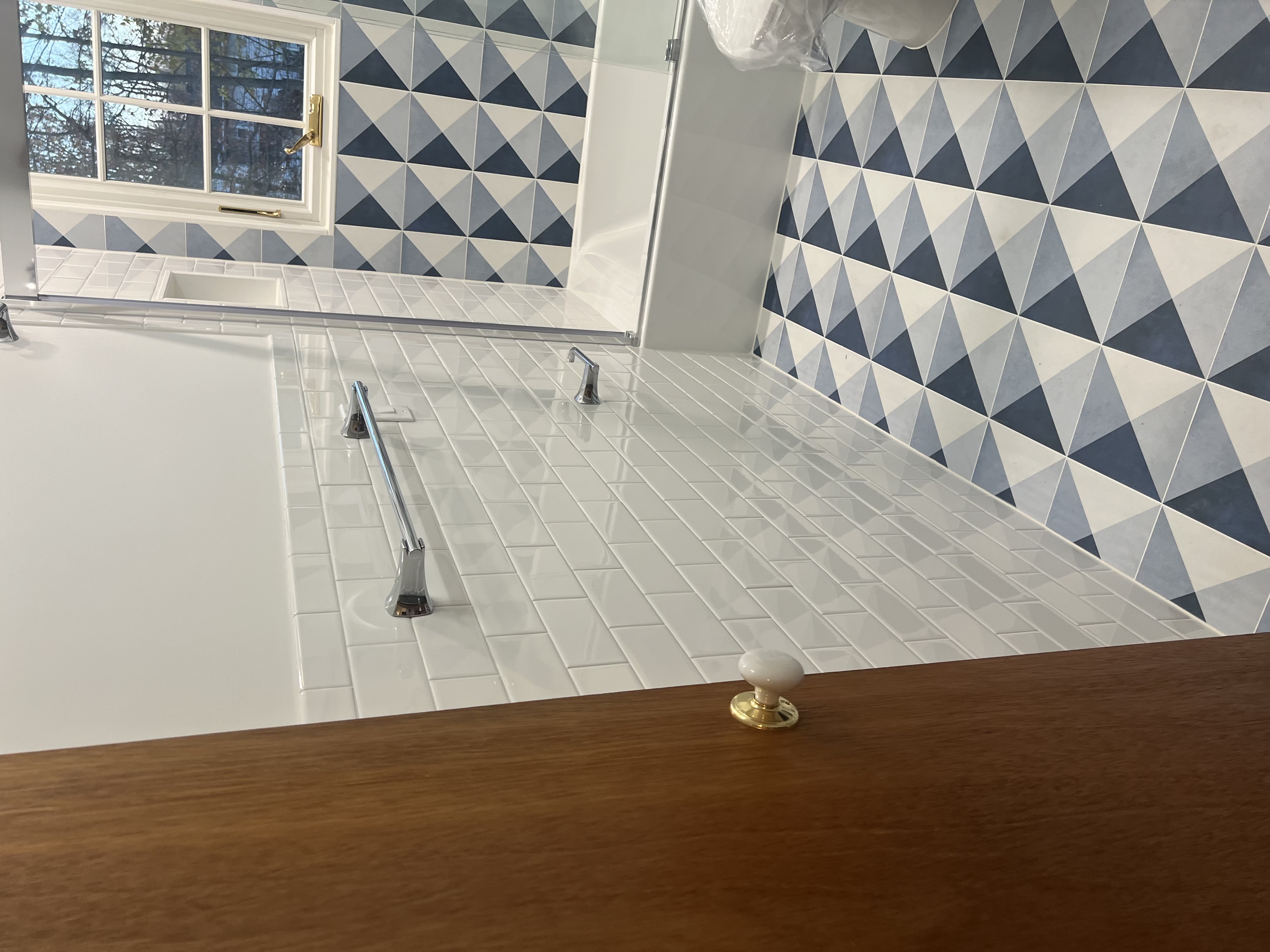
Heated Bathroom Floors in NJ: Complete Installation Guide
Stepping onto an ice-cold bathroom floor at 6 AM in January is one of New Jersey's least pleasant winter experiences. Heated bathroom floors eliminate that shock entirely, transforming your bathroom into a warm, welcoming space even on the coldest mornings.
This comprehensive guide covers everything NJ homeowners need to know about radiant floor heating: the types available, costs for installation, best flooring materials, the installation process, and practical considerations for Monmouth and Ocean County homes.
Why Heated Bathroom Floors Make Sense in New Jersey
The NJ Climate Factor
New Jersey winters are serious. December through March brings temperatures regularly below freezing, with average lows in the 20s°F. Traditional bathroom floors—especially tile on concrete—become uncomfortably cold. Even with central heating, floor surfaces remain the coldest part of any room.
Heated floors address this directly. Instead of warming air that rises to the ceiling, radiant heat warms surfaces and objects (including your feet). The result is consistent, comfortable warmth exactly where you need it.
Benefits Beyond Comfort
Moisture control: Warm floors help bathrooms dry faster after showers, reducing humidity that promotes mold and mildew growth. In NJ's humid summers and cold winters, this matters for bathroom longevity.
Energy efficiency: Radiant heat feels warmer at lower thermostat settings. Many homeowners reduce their central heat by 2-4°F when bathrooms have heated floors, saving on overall heating costs.
Health benefits: Warm floors improve circulation in feet and legs. For those with arthritis, diabetes, or circulation issues, the comfort difference is significant.
Resale appeal: Heated floors are a sought-after feature in NJ's competitive real estate market. Buyers notice—and appreciate—this upgrade.
Explore our bathroom remodeling services
Types of Heated Bathroom Floors
Electric Radiant Heat (Most Popular for Bathrooms)
Electric systems use thin heating cables or mats installed beneath your floor covering. They're ideal for bathrooms because of their simplicity, affordability, and room-by-room control.
How it works: Electric resistance cables convert electricity directly to heat. Modern systems use thin cables arranged in mats or individual wire patterns, covered by thin-set mortar and then flooring.
Pros:
- Lower installation cost than hydronic
- Easy to retrofit into existing bathrooms
- Individual room thermostats
- No maintenance required
- Thin profile (adds minimal floor height)
- 99% energy efficient (all electricity converts to heat)
Cons:
- Higher operating cost per BTU than hydronic
- Not practical for whole-home heating
- Requires electrical circuit (may need panel upgrade)
Best for: Single bathrooms, bathroom renovations, homeowners wanting simple installation and precise room control.
Cost in NJ: $8-$15 per square foot installed (materials and labor)
Hydronic Radiant Heat (Best for Whole-Home Systems)
Hydronic systems circulate heated water through tubing beneath floors. They're more efficient for heating large areas but more complex and expensive to install.
How it works: A boiler heats water that circulates through PEX tubing embedded in the floor. The warm water transfers heat to the floor surface. The water returns to the boiler for reheating in a continuous loop.
Pros:
- Lower operating costs for large areas
- Can integrate with existing boiler system
- More even heat distribution
- Ideal for new construction whole-home systems
Cons:
- Higher installation cost
- More complex installation (requires manifolds, pumps, boiler)
- Difficult to retrofit
- Requires maintenance
- Not practical for single-room applications
Best for: New construction, whole-home radiant systems, homes with existing boilers.
Cost in NJ: $15-$25 per square foot installed
Which Type for Your NJ Bathroom?
For most bathroom projects in Monmouth and Ocean Counties, electric radiant heat is the clear choice:
- Bathrooms are typically 40-100 square feet—perfect for electric systems
- Retrofit-friendly during bathroom renovations
- Individual thermostat control for each bathroom
- No boiler or plumbing required
- Lower upfront cost
- Zero maintenance
Hydronic systems make sense only if you're building a new home with whole-house radiant or already have a boiler system you want to extend.
Best Flooring Materials for Heated Bathrooms
Not all flooring works well with radiant heat. The ideal materials conduct heat efficiently, tolerate temperature fluctuations, and handle bathroom moisture.
Porcelain and Ceramic Tile (Best Choice)
Why they excel:
- Excellent thermal conductivity (heat transfers quickly to surface)
- Withstand temperature cycles without damage
- Completely waterproof
- Durable and long-lasting
- Wide variety of styles, sizes, and price points
Considerations:
- Requires professional installation for best results
- Thicker tiles take slightly longer to heat
- Grout lines need sealing for moisture resistance
Recommendation: Large-format porcelain tiles (12"x24" or larger) in neutral tones offer modern appeal and efficient heat transfer. Budget $3-$15 per square foot for quality tile.
Learn about tile installation services
Natural Stone (Excellent Choice)
Types that work well:
- Marble (luxurious, classic, excellent heat conductor)
- Travertine (warm appearance, good conductivity)
- Slate (durable, slip-resistant when honed)
- Limestone (elegant, requires sealing)
Why it works:
- Dense material conducts heat efficiently
- Retains heat well once warmed
- Timeless aesthetic
- Increases home value
Considerations:
- Higher cost than porcelain ($10-$50 per square foot)
- Requires regular sealing (annually)
- Softer stones may scratch or etch
- Weight requires solid subfloor
Recommendation: Marble or honed slate for luxury master baths. Seal thoroughly and maintain annually for best results.
Luxury Vinyl Plank/Tile (Budget-Friendly Option)
Why it can work:
- Lower cost than tile or stone
- Comfortable underfoot (softer than tile)
- Waterproof
- Easy DIY installation
- Wide variety of wood and stone looks
Important limitations:
- Requires LOW-temperature heating systems (max 85°F surface temp)
- Not all LVP is rated for radiant heat—verify manufacturer specifications
- Adhesive and material can degrade with excessive heat
- May void warranty if used with incompatible systems
Recommendation: If budget is primary concern, choose LVP explicitly rated for radiant heat and use with a thermostat limited to 85°F maximum. Not our first choice, but viable for budget-conscious projects.
Flooring to AVOID with Heated Floors
Solid hardwood: Wood expands and contracts with temperature and humidity changes. Radiant heat accelerates this movement, causing gaps, cupping, and potential warping. Not recommended for bathrooms even without radiant heat.
Laminate: The composite construction can delaminate with repeated heating cycles. Moisture vulnerability makes it a poor bathroom choice regardless.
Carpet: Insulates against heat transfer, making radiant heat ineffective. Also inappropriate for bathroom moisture.
Some engineered woods: While better than solid hardwood, most engineered products aren't rated for radiant heat AND bathroom moisture. Few products meet both requirements.
Installation Process
Professional Installation Overview
A typical electric heated floor installation in an NJ bathroom follows these steps:
Day 1: Preparation
- Remove existing flooring and fixtures
- Inspect and repair subfloor as needed
- Ensure subfloor is level (critical for proper installation)
- Run electrical supply to bathroom (if needed)
- Test electrical circuit capacity
Day 2: Heating System Installation
- Install insulation board (optional, improves efficiency)
- Lay out heating mats or cables per manufacturer pattern
- Secure heating elements to subfloor
- Run thermostat wiring to wall location
- Test all heating circuits (before covering!)
- Apply thin-set mortar to embed heating elements
- Allow mortar to cure (typically overnight)
Day 3-4: Flooring Installation
- Apply additional thin-set for tile installation
- Set tile in planned pattern
- Allow tile to set (typically 24 hours)
- Apply grout
- Seal grout
- Install thermostat
Day 5: Completion
- Reinstall fixtures (toilet, vanity)
- Final testing
- Program thermostat
- Homeowner walkthrough
Total timeline: 5-7 days for a typical bathroom, including drying/curing times.
DIY Considerations
Electric mat systems are technically DIY-friendly for confident homeowners. However, we recommend professional installation because:
- Electrical connections should be done by a licensed electrician
- Damaged heating cables during installation void warranties
- Improper thin-set application causes uneven heating
- Tile installation requires skill for professional results
- NJ permits may require licensed contractor work
If you DIY, have an electrician handle all electrical connections and inspections.
Permits and Codes
In Monmouth and Ocean Counties, heated floor installation typically requires:
- Electrical permit for the new circuit and connections
- Inspection of electrical work before covering
- Building permit (sometimes) if part of larger renovation
Your contractor should handle permitting. Unpermitted work can complicate future home sales and insurance claims.
Cost Breakdown for NJ Bathrooms
Materials Cost (Electric System)
| Component | Cost Range |
|---|---|
| Heating mats/cables | $5-$12 per sq ft |
| Thermostat | $50-$300 |
| Electrical supplies | $50-$150 |
| Thin-set mortar | $30-$75 |
| Insulation board (optional) | $50-$150 |
Total materials for 50 sq ft bathroom: $350-$850
Labor Cost in NJ
| Service | Cost Range |
|---|---|
| Electrician (circuit, connections) | $200-$500 |
| Floor prep and mat installation | $300-$600 |
| Tile installation | $500-$1,500 |
Total labor for 50 sq ft bathroom: $1,000-$2,600
Complete Project Costs
Budget bathroom (50 sq ft):
- Materials: $400
- Labor: $1,200
- Tile: $200 (basic ceramic)
- Total: $1,800
Mid-range bathroom (50 sq ft):
- Materials: $600
- Labor: $1,800
- Tile: $500 (quality porcelain)
- Total: $2,900
Upscale bathroom (75 sq ft):
- Materials: $900
- Labor: $2,500
- Tile: $1,500 (natural stone)
- Total: $4,900
Adding Heated Floors to a Bathroom Remodel
If you're already remodeling your bathroom, adding heated floors is extremely cost-effective. You're already removing flooring, replacing tile, and having contractors on-site. The marginal cost to add heating is just:
- Heating system materials: $400-$800
- Additional labor: $300-$600
- Electrical work: $200-$400
Marginal cost during remodel: $900-$1,800
This is the most efficient time to install heated floors—you'll never have a better opportunity.
Get a bathroom remodeling estimate
Energy Efficiency Considerations
Operating Costs in New Jersey
Typical usage scenario:
- 50 sq ft heated floor
- 600 watts system (12 watts per sq ft)
- 4 hours daily operation (morning and evening)
- NJ average electricity rate: $0.14/kWh
Daily cost: 0.6 kW x 4 hours x $0.14 = $0.34 Monthly cost: $0.34 x 30 = $10.20 Annual cost: $10.20 x 8 months (heating season) = $82
For about $10/month during winter, you get consistently warm bathroom floors. Most NJ homeowners consider this excellent value.
Efficiency Tips
Programmable thermostats: Schedule heat only when needed. Warm floors 30 minutes before your alarm, off during work hours, on again for evening routines. Reduces operating cost by 30-50%.
Insulation board: Installing insulation beneath heating elements directs heat upward rather than into subfloor. Improves efficiency by 20-30% and provides faster warm-up times.
Floor covering choice: Thinner tiles and good thermal conductors (porcelain, stone) transfer heat faster and more efficiently than thick or insulating materials.
Thermostat placement: Install thermostat away from heating vents, windows, and exterior walls for accurate temperature reading.
Comparison to Other Heating
Radiant floor heat is more efficient than forced air for several reasons:
- No duct losses: Forced air loses 25-35% of heat through ductwork
- Lower temperature settings: Warm surfaces feel comfortable at lower air temps
- Zone control: Heat only rooms you're using
- No fan energy: No blower motors running
Many NJ homeowners reduce overall heating costs by using radiant bathroom heat and lowering the central thermostat.
Choosing the Right System
Factors to Consider
Bathroom size: For small bathrooms (under 60 sq ft), mat systems provide adequate coverage. Larger bathrooms may benefit from cable systems that allow custom layout.
Existing electrical capacity: Older NJ homes may need panel upgrades to accommodate additional circuits. Have an electrician assess before choosing systems.
Flooring choice: Your flooring material determines heat output requirements. Thick stone needs more watts per square foot than thin porcelain.
Budget: Electric mat systems from quality manufacturers (Nuheat, Schluter, WarmlyYours) cost $8-$12 per square foot. Premium systems with better warranties cost slightly more but offer peace of mind.
Recommended Brands
Based on our experience installing heated floors across Monmouth and Ocean Counties:
Schluter DITRA-HEAT: Premium system with excellent uncoupling membrane. Prevents cracked tile, provides waterproofing, and offers efficient heating. Higher cost but superior long-term performance.
Nuheat: Reliable, well-supported mat systems. Good warranty, reasonable cost, widely available.
WarmlyYours: Good value option with comprehensive DIY support. Budget-friendly without sacrificing quality.
SunTouch: Affordable option for budget projects. Less refined than premium brands but functional.
What We Install
At Custom Kitchens by Lopez, we typically recommend Schluter DITRA-HEAT for bathroom remodels. The integrated uncoupling membrane protects your tile investment, the waterproofing layer is essential for bathrooms, and the heating performance is excellent. The slightly higher material cost is offset by superior long-term results.
Maintenance and Longevity
Maintenance Requirements
Electric systems: Essentially zero maintenance. No moving parts, no fluids, no filters. Once installed, electric radiant heat runs indefinitely with no attention needed.
Routine care:
- Clean floors normally (no special requirements)
- Don't use sharp tools that might damage cables beneath thin tile
- Keep thermostat programmed appropriately
- That's it!
Expected Lifespan
Quality electric radiant floor heating lasts 25-35 years—often the life of the flooring itself. Warranties from major manufacturers range from 15-25 years.
The most common failure point is the thermostat (electronic components have shorter lifespans). Replacing a thermostat is straightforward and inexpensive ($50-$200).
Troubleshooting
Floor not heating:
- Check thermostat settings and programming
- Check circuit breaker
- Test thermostat with multimeter (or call electrician)
- If thermostat is fine, heating element may have failed (rare)
Uneven heating:
- Usually normal—slight variations occur due to cable spacing
- Significant cold spots may indicate damaged cable
- Check for furniture blocking heat distribution
Floor too hot:
- Thermostat set too high
- Thermostat sensor in wrong location
- Wrong wattage system installed (oversized)
Frequently Asked Questions
Can heated floors go under a shower floor?
Yes, with proper installation. Use systems rated for wet locations, ensure waterproof membrane is properly installed, and use GFCI protection. Many homeowners appreciate warm shower floors—no cold tiles even after the water stops.
Do heated floors work under toilet and vanity areas?
Heating elements should NOT go directly under toilets, vanities, or built-in cabinetry. The trapped heat can damage fixtures and waste energy. Professional installers plan layouts to heat open floor areas only.
Can I install heated floors on concrete slab?
Yes, but insulation beneath the heating system is even more important. Concrete conducts heat downward efficiently—without insulation, you're heating your foundation instead of your bathroom.
What if a heating cable fails?
Modern quality systems rarely fail, but if they do, repair options depend on failure location. Edge failures can sometimes be repaired. Failures in the middle of the floor typically require removing and replacing affected flooring sections. This is why quality products and professional installation matter.
Will heated floors increase my electric bill significantly?
For typical bathroom use (4 hours daily during winter), expect $8-$15 monthly increase. This is comparable to running a few extra light bulbs. Most homeowners reduce central heating slightly, offsetting much of the bathroom heating cost.
Ready to Install Heated Bathroom Floors?
Cold bathroom floors are completely unnecessary in 2026. With affordable electric radiant systems, straightforward installation during bathroom remodels, and minimal operating costs, there's no reason to suffer through another NJ winter with icy tiles.
At Custom Kitchens by Lopez, we've installed heated floors in hundreds of Monmouth and Ocean County bathrooms. We understand the local climate, building requirements, and what systems perform best in NJ homes.
Planning a bathroom remodel? Contact us for a consultation and let's discuss adding heated floors to your project. Your feet will thank you every winter morning.
Related Services
- Bathroom Remodeling New Jersey
- Bathroom Remodeling Monmouth County
- Walk-In Shower Conversion NJ
- Tile Installation Near Me
Custom Kitchens by Lopez | NJ License #13VH04175700 | Since 2005 | Family Owned | 5.0★ Google Rating
*Bringing warmth to NJ bathrooms since 2005*
Thinking About a Remodel?
Get expert advice from our team — serving NJ since 2005.
Ready to start your project?
Related Services
Bathroom Remodeling Near MeWalk-In ShowersTile InstallationBathroom Vanities
5 Rating(46+ reviews)
Ready to Transform Your Space?
Our expert designers are ready to help bring your vision to life. Schedule your free consultation today and get a personalized quote for your project.
Request a Design ConsultationCall 732.984.1043
Licensed & Insured20+ Years ExperiencePrivate Consultations
Local Services
Bathroom Remodeling FreeholdMonmouth County Bathroom RemodelingBathroom Remodelers NJ
Popular Service Areas
Holmdel, NJColts Neck, NJRumson, NJMarlboro, NJShrewsbury, NJMiddletown, NJRed Bank, NJFreehold, NJSpring Lake, NJManalapan, NJ
Ready to start your project?
Get a free, no-obligation quote today.
5 (46+ reviews)
Category
Bathroom Design# Freestanding Tubs: Pros, Cons, Cost & Are They Worth It? (NJ 2026)# Shower Niche Ideas, Sizes, Cost & How to Avoid Leaks (NJ 2026)
More Articles
Ready to Start Your Project?
Request a private design consultation for your substantial kitchen, bath, cabinetry, or whole-home project.