
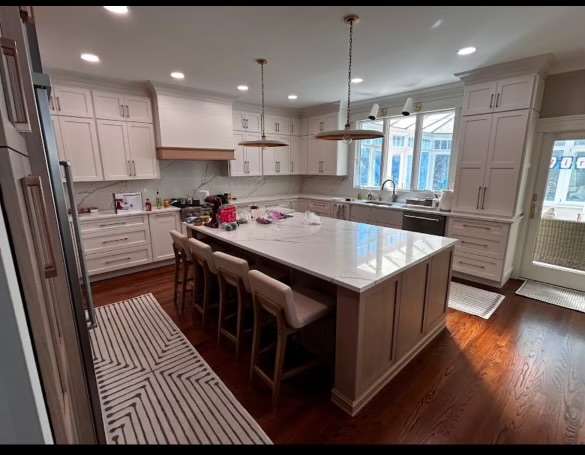
Do you need a permit for your NJ kitchen remodel? This 2026 guide covers when permits are required, the application process across NJ municipalities, costs, common violations, and how your contractor should handle permitting. Practical advice from a licensed NJ contractor.
Plan Your ProjectView Our Work
Custom Kitchens by Lopez TeamApril 7, 202613 min read
NJ Kitchen Remodel Permits: What You Need to Know Before Starting
Permits are the least exciting part of a kitchen remodel. Nobody dreams about filling out applications or scheduling inspections. But in New Jersey, permits are not optional for most kitchen renovations -- they are required by law, and skipping them creates risks that can cost you far more than the permit fee.
This guide is the practical, no-jargon resource for NJ homeowners. We cover exactly when you need a permit, what the process looks like in different municipalities, how much it costs, what happens if you skip it, and how your contractor should handle everything. After 20+ years as a licensed NJ Home Improvement Contractor, we have pulled hundreds of kitchen remodel permits across Monmouth County and Ocean County, and we know the process inside out.
What you will learn:
- Which kitchen remodel activities require permits in NJ (and which do not)
- How the permit process works across NJ municipalities
- Costs by municipality and permit type
- What inspections are required and what inspectors look for
- What happens if you remodel without permits
- How your contractor should handle permitting (and red flags if they do not)
When You Need a Permit in NJ
The NJ Uniform Construction Code (UCC) governs building permits statewide. While municipalities administer permits locally, the rules are consistent across New Jersey.
Work That Requires a Permit
Plumbing Changes:
- Moving the kitchen sink to a different location
- Adding a pot filler faucet (requires new water line)
- Relocating the dishwasher
- Adding a second sink (prep sink in the island)
- Moving or adding gas lines (for gas range or cooktop relocation)
- Installing a garbage disposal on a new line
Electrical Changes:
- Adding new circuits (for an island, under-cabinet lighting, or appliance upgrades)
- Moving outlets or switches
- Upgrading the electrical panel to support new appliances
- Installing new dedicated circuits for refrigerator, dishwasher, microwave, or range
- Adding recessed lighting or other hardwired fixtures where none existed
Structural Changes:
- Removing or modifying any wall (load-bearing or non-load-bearing)
- Adding or enlarging a window or door opening
- Creating a pass-through in a wall
- Any work that changes the structural integrity of the home
HVAC Changes:
- Moving or adding ductwork
- Relocating supply or return vents
- Adding or modifying a range hood vent that goes through an exterior wall or roof
Work That Typically Does NOT Require a Permit
- Painting walls and ceilings
- Replacing cabinet doors and drawer fronts (replacement)
- Installing new cabinets in the same footprint
- Replacing countertops on existing cabinets
- Replacing backsplash tile
- Replacing a faucet on existing plumbing (no pipe changes)
- Replacing flooring (same level, no subfloor modification)
- Replacing appliances using existing connections (same location, same fuel type)
- Installing hardware (knobs, pulls, hinges)
The Gray Areas
Some projects fall into gray areas where different NJ municipalities interpret the rules differently:
- Replacing a faucet that requires a valve change. Some municipalities consider this a plumbing alteration; others do not.
- Adding under-cabinet LED lighting. Hardwired fixtures require an electrical permit. Plug-in LED strips do not.
- Replacing an existing range hood with a different model. If it uses the same duct and electrical connection, typically no permit. If you are changing the ductwork path, you need a permit.
Our recommendation: When in doubt, call your local construction office. It is a 5-minute phone call that can save you thousands of dollars in problems later.
How the NJ Permit Process Works
Step 1: Determine What Permits You Need
For a kitchen remodel, you may need multiple permits:
- Building permit -- for structural work
- Plumbing sub-permit -- for any plumbing changes
- Electrical sub-permit -- for any electrical changes
- HVAC sub-permit -- for ductwork changes
Your contractor determines which permits are needed based on the scope of work.
Step 2: Prepare the Application
Each NJ municipality has its own forms, but typical requirements include:
- Completed application form
- Contractor's NJ Home Improvement Contractor (HIC) license number
- Licensed subcontractor information (plumber's license, electrician's license)
- Plans or drawings showing the proposed work (for structural changes, stamped engineering drawings are required)
- Estimated project cost
- Proof of insurance
Step 3: Submit and Pay
Applications are submitted to the municipal construction department -- either in person, by mail, or increasingly online. Permit fees are paid at submission.
Step 4: Plan Review
A construction official reviews the application:
- Simple sub-permits: reviewed and approved within 3-7 business days
- Building permits with structural plans: 2-4 weeks for plan review
- Complex projects: may require revisions and resubmission
Step 5: Permit Issued
Once approved, the permit is issued and must be posted visibly at the work site. Construction can begin.
Step 6: Schedule Inspections
As work progresses, inspections are required at specific stages:
Rough inspections (before walls are closed up):
- Rough plumbing -- all new pipes installed, pressure tested
- Rough electrical -- all new wiring, boxes, and circuits installed
- Rough framing -- any structural modifications visible
Final inspections (after work is complete):
- Final plumbing -- fixtures installed, everything connected and working
- Final electrical -- devices installed, circuits tested, GFCI protection verified
- Final building -- overall compliance with approved plans
Step 7: Certificate of Approval
After all inspections pass, the municipality issues a Certificate of Approval (COA). This document proves the work was done legally and meets code. Keep it -- you will need it when you sell the home.
Permit Costs Across NJ Municipalities
Monmouth County
| Municipality | Building Permit | Plumbing Sub-Permit | Electrical Sub-Permit |
|---|---|---|---|
| Freehold Township | $100 - $300 | $75 - $150 | $75 - $150 |
| Manalapan | $150 - $350 | $100 - $175 | $100 - $175 |
| Holmdel | $150 - $400 | $100 - $200 | $100 - $200 |
| Middletown | $100 - $300 | $75 - $150 | $75 - $150 |
| Marlboro | $150 - $350 | $100 - $175 | $100 - $175 |
| Colts Neck | $150 - $400 | $100 - $200 | $100 - $200 |
| Rumson | $200 - $500 | $125 - $250 | $125 - $250 |
| Red Bank | $100 - $300 | $75 - $150 | $75 - $150 |
| Fair Haven | $150 - $350 | $100 - $175 | $100 - $175 |
| Spring Lake | $150 - $400 | $100 - $200 | $100 - $200 |
Ocean County
| Municipality | Building Permit | Plumbing Sub-Permit | Electrical Sub-Permit |
|---|---|---|---|
| Toms River | $100 - $300 | $75 - $150 | $75 - $150 |
| Barnegat | $75 - $250 | $75 - $125 | $75 - $125 |
| Brick | $100 - $300 | $75 - $150 | $75 - $150 |
| Jackson | $100 - $300 | $75 - $150 | $75 - $150 |
Total Permit Costs for Typical Kitchen Remodels
| Project Type | Typical Total Permit Cost |
|---|---|
| Cosmetic update (no permits needed) | $0 |
| Countertop replacement with sink relocation | $75 - $200 (plumbing only) |
| Kitchen remodel with new electrical and plumbing | $250 - $500 |
| Full kitchen remodel with wall removal | $400 - $750 |
| Open concept conversion with structural beam | $500 - $1,000 |
What Inspectors Look For
Electrical Inspections
- All outlets within 6 feet of a water source have GFCI protection
- Dedicated circuits for refrigerator, dishwasher, garbage disposal, microwave, and range
- Wire gauge matches circuit amperage
- Junction boxes are accessible and properly covered
- Code-compliant outlet spacing (every 4 feet along countertops, per NJ code)
- Arc-fault protection on required circuits
Plumbing Inspections
- Proper pipe sizing for supply and drain lines
- Adequate venting to prevent siphoning and ensure drainage
- No cross-connections between clean water and waste water
- Shut-off valves accessible
- Backflow prevention where required
Structural Inspections
- Beam size matches the structural engineer's stamped design
- Beam connections at supports match the design
- Temporary shoring is adequate during installation
- Load path is continuous from roof to foundation
What Causes Failed Inspections
Common reasons kitchen remodel inspections fail in NJ:
- Missing GFCI outlets near the sink
- Insufficient electrical circuits for the kitchen
- Plumbing not properly vented
- Structural beam not matching the approved plans
- Inaccessible junction boxes buried behind drywall
- Work completed before inspection was called
A failed inspection is not a disaster -- it means corrections are needed. Your contractor makes the corrections and schedules a re-inspection.
What Happens If You Skip Permits
During the Project
If a municipal building inspector discovers unpermitted construction work, the municipality can:
- Issue a stop-work order. All work ceases immediately.
- Require the work to be exposed. If walls were closed before inspection, they must be opened. This means tearing out finished drywall, tile, or flooring.
- Fine the homeowner and contractor. NJ municipalities have authority to levy daily fines.
At Resale
This is where most homeowners encounter permit problems -- sometimes years later.
- Title search reveals missing permits. NJ title companies check municipal records for permits on work that appears to have been done.
- Buyer's home inspector identifies unpermitted work. Experienced inspectors recognize signs of modifications and check for corresponding permits.
- Retroactive permitting required. The seller may need to open up finished work for inspection, pay fees and penalties, and make corrections to bring work up to current code.
- Sale delayed or cancelled. Permit issues can delay closings by weeks or months.
The Math Is Simple
A kitchen remodel permit costs $250-$750. The cost of getting caught without one: $5,000-$25,000+ in remediation, fines, and resale complications. There is no scenario where skipping the permit saves money.
How Your Contractor Should Handle Permits
What a Good Contractor Does
- Determines which permits are needed during the planning phase
- Includes permit fees in the project estimate
- Prepares and submits applications with complete documentation
- Schedules all inspections at the appropriate stages
- Is present for inspections and addresses deficiencies immediately
- Provides the Certificate of Approval at project completion
- Factors permit processing time into the project timeline
Red Flags
Be cautious of a contractor who:
- Asks you to pull the permits yourself. This may mean they are not properly licensed.
- Says you do not need a permit. If the work involves plumbing, electrical, or structural changes, a permit is required.
- Suggests doing the work without permits to save time. This is illegal and puts you at risk.
- Cannot provide their NJ HIC license number. NJ law requires anyone performing home improvement work over $500 to hold a Home Improvement Contractor license.
- Does not schedule inspections. If your contractor closes up walls without calling for rough inspections, the work was not inspected.
Permit Process Tips for NJ Homeowners
Before the Project
- Ask your contractor which permits are needed and confirm they are handling the applications.
- Budget for permits -- add $250-$750 to your project budget.
- Allow extra time -- add 2-4 weeks for permit processing.
- Know your municipality's process. Some NJ towns have online permit portals.
During the Project
- Confirm the permit is posted at the work site before construction begins.
- Do not let work proceed ahead of inspections.
- Keep copies of all permits and inspection results.
After the Project
- Request the Certificate of Approval.
- Store the COA with your home records. You will need it when you sell.
- Keep a copy of the contractor's license and insurance.
Start Your Kitchen Remodel the Right Way
At Custom Kitchens by Lopez, permits are a standard part of every project. Our NJ Home Improvement Contractor license (HIC #13VH04175700) is active and current. We handle all permit applications, schedule all inspections, and ensure every project meets NJ building code requirements.
We know the permit process in every Monmouth County and Ocean County municipality because we work in them every week. We factor processing times into our project timelines and manage the entire permit workflow so you never have to think about it.
Schedule your free kitchen remodel consultation or call us at (732) 984-1043. We will scope your project, determine which permits are needed, and give you a complete timeline and budget that includes everything.
For more planning guidance, explore our kitchen remodeling checklist, our kitchen remodel budget guide, or our Monmouth County permits guide for municipality-specific details.
*Custom Kitchens By Lopez is a licensed NJ Home Improvement Contractor (HIC #13VH04175700) based in Freehold Township. We specialize in kitchen remodeling, bathroom remodeling, custom cabinetry, and general contracting across Monmouth County and Ocean County, NJ.*
Planning a Complete Kitchen?
See how CKL plans custom cabinetry, premium materials, and $75,000+ kitchen projects.
Ready to start your project?
Related Services
Kitchen Remodeling Near MeKitchen Designer Near MeHome Remodeling NJKitchen Remodeling Cost NJ
5 Rating(46+ reviews)
Ready to Plan the Complete Kitchen?
Move from product research to a complete design plan. See real CKL kitchens, the decisions that define luxury work, and the $75,000–$150,000+ planning range.
Explore Luxury KitchensCall 732.984.1043
Licensed & Insured20+ Years ExperienceLuxury kitchens from $75,000
Local Services
Kitchen Cabinets FreeholdKitchen Cabinets EdisonKitchen Cabinets ManalapanKitchen Remodeling FreeholdKitchen Remodeling EdisonBathroom Remodeling FreeholdMonmouth County Kitchen Remodeling
Popular Service Areas
Holmdel, NJColts Neck, NJRumson, NJMarlboro, NJShrewsbury, NJMiddletown, NJRed Bank, NJFreehold, NJSpring Lake, NJManalapan, NJ
Ready to start your project?
Get a free, no-obligation quote today.
5 (46+ reviews)
Category
Related Articles
# 7 Signs Your Kitchen Failed the Holiday Hosting Test (And What to Do About It)# Bathroom Remodel Cost NJ 2026: $6K-$80K+ Price Guide# Aging in Place Home Guide NJ: Accessible Kitchen & Bathroom Features That Preserve Style (2026)
More Articles
Ready to Start Your Project?
Request a private design consultation for your substantial kitchen, bath, cabinetry, or whole-home project.