
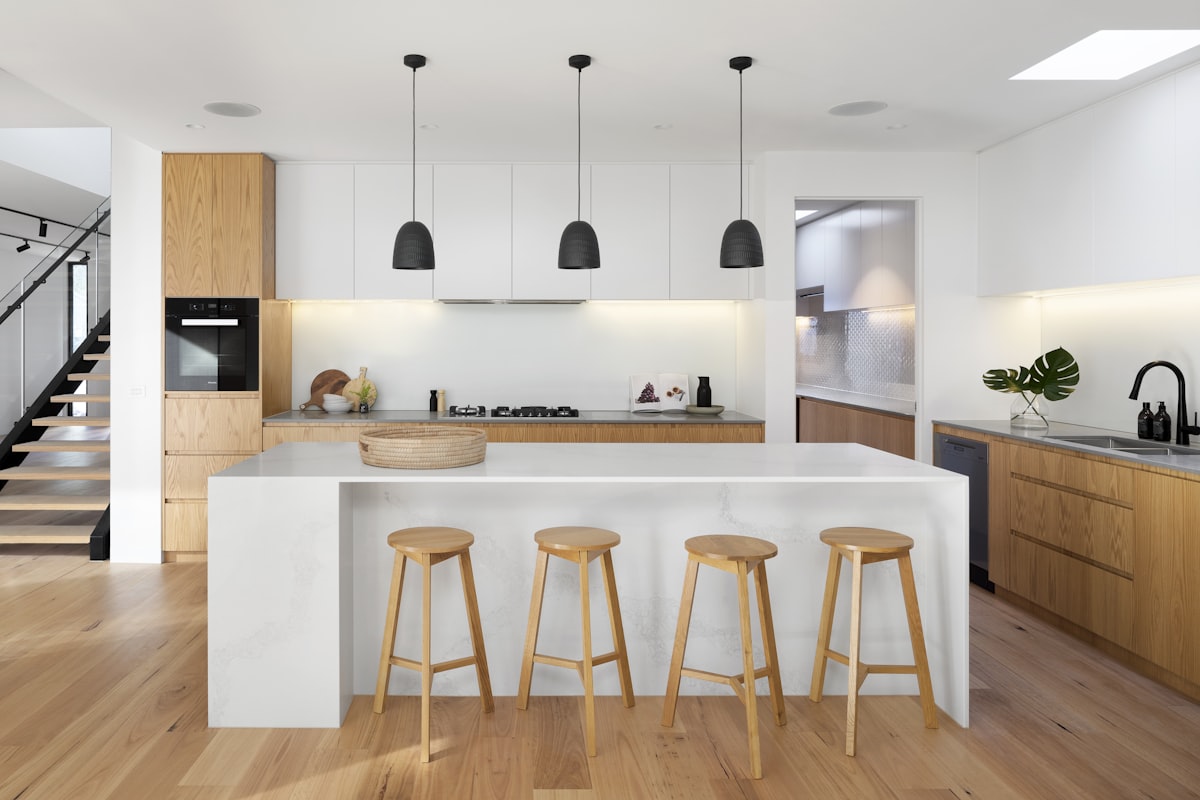
Can't decide between quartz and quartzite countertops? Our NJ kitchen experts compare durability, cost, maintenance, heat resistance, and which material works best for Jersey Shore homes. Includes local pricing and real installation insights.
Plan Your ProjectView Our Work
Custom Kitchens by Lopez TeamDecember 5, 202612 min read
Quartz vs Quartzite Countertops: The Complete NJ Homeowner's Guide
Last month, a Colts Neck homeowner called us in a panic—she had ordered "quartzite" for her dream kitchen but received "quartz" instead. The installer was already on-site, and she wasn't sure if she should proceed or send it back.
This confusion happens more often than you'd think. Despite sounding almost identical, quartz and quartzite are completely different materials with different properties, maintenance requirements, and price points. Choosing the wrong one could mean a $5,000-$15,000 mistake.
After installing over 500 kitchens across Monmouth and Ocean Counties, we've helped countless homeowners navigate this exact decision. This guide gives you everything you need to make the right choice for your home, your lifestyle, and your budget.
The Great Confusion: Why These Names Matter
Here's the fundamental difference that trips up even experienced homeowners:
- Quartz = Engineered stone (man-made in a factory)
- Quartzite = Natural stone (formed in the earth over millions of years)
The similar names are unfortunate because the materials couldn't be more different. One is manufactured for consistency; the other is quarried for uniqueness. One never needs sealing; the other requires annual maintenance. One can be damaged by heat; the other laughs at hot pans.
Understanding these differences before you visit a showroom saves time, prevents costly mistakes, and ensures you get exactly what you want.
What Is Quartz? (Engineered Stone Explained)
How Quartz Countertops Are Made
Quartz countertops are engineered surfaces manufactured in controlled factory settings. The production process combines:
- 90-95% crushed natural quartz crystals (one of earth's hardest minerals)
- 5-10% polymer resins and pigments (for binding and color)
This mixture is compressed under intense pressure and heat, creating dense, non-porous slabs. The result is a consistent, durable surface that can be produced in virtually unlimited colors and patterns.
Popular quartz brands include:
- Caesarstone
- Silestone
- Cambria
- MSI Q Quartz
- Viatera
Appearance & Design Options
Because quartz is manufactured, designers have extraordinary control over the final appearance:
- Consistent patterns — The same design looks identical across multiple slabs
- Unlimited color options — From pure white to jet black, soft beige to bold navy
- Marble and granite mimics — Many quartz products convincingly replicate natural stone
- Uniform veining — Patterns repeat predictably, making matching easier
For homeowners who want a sleek, modern look with no surprises, quartz delivers exactly that consistency.
What Is Quartzite? (Natural Stone Explained)
How Quartzite Forms
Quartzite is a metamorphic rock created deep within the earth over millions of years. The process begins with sandstone, which is then subjected to extreme heat and pressure from tectonic movement. This transforms the sandstone into an incredibly hard, dense stone.
Quartzite is quarried in large blocks from locations worldwide, including:
- Brazil (most common source for US market)
- United States (primarily Montana and South Dakota)
- Italy
- Norway
Each quarry produces stone with unique characteristics based on local mineral content and geological conditions.
Appearance & Characteristics
The beauty of quartzite lies in its natural variation:
- Unique veining — No two slabs are identical; each is literally one-of-a-kind
- Natural color palette — Typically whites, grays, soft golds, creams, with occasional blues and pinks
- "Marble look with granite strength" — The elegant veining of marble with superior durability
- Natural depth and movement — Light interacts with natural stone differently than engineered surfaces
Popular quartzite varieties include:
- Taj Mahal (soft gold veining, cream background)
- White Macaubas (dramatic gray and white veining)
- Cristallo (translucent whites with subtle gold)
- Super White (clean white with gray movement)
- Sea Pearl (blue-gray tones)
Head-to-Head Comparison: The 8 Critical Factors
This is what you really need to know. We've broken down the comparison into the eight factors that matter most when choosing countertops for your New Jersey home.
Quick Comparison Table
| Factor | Quartz | Quartzite | Winner |
|---|---|---|---|
| Heat Resistance | 300°F max | 1,000°F+ | Quartzite |
| Hardness | 7-8 Mohs | 7-8 Mohs | Tie |
| Maintenance | None required | Annual sealing | Quartz |
| Appearance | Consistent | Unique | Preference |
| Lifespan | 20-60 years | 100+ years | Quartzite |
| UV Resistance | Poor | Excellent | Quartzite |
| NJ Cost (installed) | $60-$150/sq ft | $80-$200/sq ft | Quartz |
| Installation | Standard | Requires expertise | Quartz |
1. Heat Resistance
Quartz: Maximum tolerance around 300°F. The resin binders can be damaged by hot pots and pans, potentially causing discoloration, cracking, or permanent marks. Always use trivets.
Quartzite: Handles temperatures exceeding 1,000°F without damage. You can place hot cookware directly on the surface without concern—though we still recommend trivets for best practices.
Jersey Shore Reality: If you cook frequently or entertain often, quartzite's heat resistance provides peace of mind. For the host who pulls a hot Dutch oven straight from the oven and sets it on the island while greeting guests—quartzite won't flinch.
2. Durability & Hardness
Both materials rate 7-8 on the Mohs hardness scale, making them extremely scratch-resistant. For perspective, a steel knife blade rates about 5.5—neither surface will scratch from normal kitchen use.
Key difference: Quartz's resin content gives it slight flexibility, making it marginally less prone to chipping on edges. Quartzite, while incredibly hard, can chip if subjected to a direct impact on an edge or corner.
Coastal NJ Note: Neither material is affected by humidity or salt air, making both excellent choices for Jersey Shore homes.
3. Maintenance Requirements
Quartz: True zero maintenance. The non-porous surface never needs sealing. Clean with soap and water or any non-abrasive household cleaner. Spills—including wine, coffee, and oil—wipe away without staining.
Quartzite: Requires sealing upon installation and typically every 12-24 months thereafter (some dense varieties like Taj Mahal may need less frequent sealing). Without proper sealing, acidic substances can etch the surface.
The sealing reality: Annual sealing takes about 30 minutes and costs $50-$100 in materials. It's not difficult, but it is a commitment. If the idea of maintenance bothers you, quartz is the clear choice.
4. Appearance & Uniqueness
Quartz: Offers consistent color and pattern across your entire kitchen. What you see in the showroom sample is exactly what you'll get. This makes matching across multiple slabs seamless and predictable.
Quartzite: Every slab tells a different story. Natural veining means your countertops are genuinely one-of-a-kind. However, this also means you should view full slabs before purchasing—samples can't capture the variation.
Showroom tip: For quartzite, always request to see the actual slabs that will be installed in your home. Variations between slabs from the same quarry can be significant.
5. Lifespan & Long-Term Value
Quartz: With proper care, expect 20-60 years of service. The resin binders may eventually show wear, particularly in high-use areas.
Quartzite: Being natural stone, quartzite can literally last centuries. Many 100+ year-old buildings feature quartzite that still looks beautiful. It will outlast your home.
ROI consideration: Both materials are considered premium by New Jersey homebuyers. Expect to recoup 60-80% of your countertop investment at resale, with either choice adding equivalent appeal.
6. UV Resistance (Critical for Jersey Shore Homes)
Quartz: Susceptible to UV damage. Prolonged exposure to direct sunlight can cause fading or yellowing over time. This is a significant consideration for kitchens with large windows, skylights, or any outdoor application.
Quartzite: Completely UV stable. Natural stone won't fade or discolor from sun exposure, making it ideal for sun-drenched Jersey Shore kitchens and absolutely essential for outdoor kitchen installations.
Important for NJ: Many Monmouth and Ocean County homes feature open floor plans with large windows facing the water or extensive natural light. If your countertops will receive significant sun exposure, quartzite is the safer long-term choice.
7. Cost Comparison for NJ Homeowners
Quartz (installed): $60-$150 per square foot Quartzite (installed): $80-$200 per square foot
For a typical NJ kitchen with 40 square feet of countertop:
- Quartz: $2,400-$6,000
- Quartzite: $3,200-$8,000
Cost factors in Monmouth & Ocean Counties:
- Labor rates in our area run 10-15% higher than national averages
- Complex edge profiles add $10-$30 per linear foot
- Waterfall edges (where countertop cascades down the side of an island) add significant material costs
- Sink cutouts, cooktop cutouts, and complex layouts increase fabrication costs
Hidden cost consideration: Factor in sealing supplies for quartzite (~$50-100/year) over the countertop's lifetime.
8. Installation Considerations
Quartz: Standard countertop installers can handle quartz installation. The consistent material properties make templating and fabrication straightforward.
Quartzite: Requires fabricators experienced with natural stone. The hardness and natural variation demand specialized equipment and expertise. Not all countertop companies work with quartzite—ask specifically about their quartzite experience.
Timeline: Both materials typically require 1-2 weeks from template to installation. Custom edge profiles or complex layouts may extend this timeline.
Which Material Is Right for YOUR Kitchen?
Choose Quartz If...
- Zero maintenance appeals to you — You never want to think about sealing
- Consistency matters — You want a uniform look across all countertop surfaces
- Budget is a primary factor — You want premium quality at a lower price point
- You have young children — Easy cleanup and stain resistance simplify daily life
- Modern, uniform aesthetics match your style — You prefer contemporary design
- Your kitchen doesn't get excessive sunlight — Limited direct UV exposure
Choose Quartzite If...
- You love natural stone beauty — Nothing else captures that organic elegance
- Your kitchen receives lots of sunlight — UV stability prevents fading
- You cook frequently — Heat resistance means no worrying about hot pans
- You want a one-of-a-kind statement — Every slab is unique
- Long-term value matters more than upfront cost — 100+ year lifespan
- You're building an outdoor kitchen — Quartzite is essential for outdoor applications
The "Best of Both Worlds" Approach
One increasingly popular choice among our New Jersey clients: use quartzite for the island (the kitchen's showpiece) and quartz for perimeter counters (practical workhorse surfaces).
This approach lets you enjoy the natural beauty and heat resistance where it matters most—the central gathering spot—while keeping maintenance manageable on surrounding surfaces. It also balances budget, typically costing 10-15% more than all-quartz but 15-20% less than all-quartzite.
Jersey Shore Kitchen Considerations
Coastal Home Factors
Living near the water presents unique considerations for your countertop choice:
Humidity: Both materials handle humidity exceptionally well. Unlike some natural stones, neither quartz nor quartzite will be affected by the moisture levels common in Shore-area homes.
Salt air: No special concerns with either material. Unlike metals that can corrode, stone surfaces are unaffected by salt air.
Sunlight: This is where the materials differ significantly. Shore homes often feature large windows and open layouts designed to capture ocean views and natural light. Quartzite handles UV exposure without issue; quartz may fade or yellow over time in sunny spots.
Outdoor kitchens: For outdoor bar areas, built-in grills, or pool house kitchens—quartzite is essential. Quartz should never be used outdoors due to UV sensitivity and potential resin degradation.
What We're Seeing Across Our Service Area
Based on our installations over the past year:
- Colts Neck & Rumson: 60% quartzite — Luxury preference, budget less constrained
- Freehold & Howell: 55% quartz — Practical choice, value-conscious
- Brick & Toms River: 50/50 split — Mixed preferences based on lifestyle
- Shore homes with outdoor kitchens: 90%+ quartzite — UV and heat resistance essential
Making Your Final Decision
Questions to Ask Yourself
- How much direct sunlight does your kitchen receive?
- Significant sun → Consider quartzite
- Limited sun → Either works well
- How important is zero maintenance?
- Critical → Choose quartz
- Willing to seal annually → Either works
- Do you frequently cook with high heat?
- Yes, often pulling hot pans → Quartzite provides peace of mind
- Moderate cooking → Either works with trivets
- What's your aesthetic preference?
- Consistent, uniform look → Quartz
- Natural, unique character → Quartzite
- What's your total budget?
- Tighter budget → Quartz offers premium quality at lower cost
- Flexible budget → Either, based on preference
- Are you planning an outdoor kitchen?
- Yes → Quartzite is essential
- No → Either works for indoor applications
Next Steps
Once you've considered these factors, we recommend:
- Visit a stone showroom — See both materials in person; photos don't capture the difference
- View full slabs (for quartzite) — Don't rely on small samples
- Get multiple quotes — Prices vary significantly between fabricators
- Ask about experience — Especially important for quartzite installation
- Schedule a consultation — A professional can assess your specific kitchen needs
Ready to Choose Your Countertops?
Still not sure which material is right for your kitchen? That's completely normal—it's a significant decision that you'll live with for decades.
Our Free Design Consultation Includes:
- Material samples brought to your home (see them in your actual lighting)
- Professional measurement of your space
- 3D design visualization showing your kitchen with new countertops
- Detailed pricing with no hidden costs
- Timeline planning that fits your schedule
Why Custom Kitchens by Lopez
- 20+ years combined experience in kitchen and bathroom remodeling
- 500+ kitchens and bathrooms transformed across Monmouth & Ocean Counties
- Partnerships with top stone fabricators — access to premium materials
- NARI Member — trusted credentials
- Licensed & Insured — NJ License #13VH04175700
We don't push one material over another. Our job is helping you find what works best for your home, your lifestyle, and your budget.
Ready to get started? Call us at 732.984.1043 or schedule your free consultation online.
We proudly serve Freehold, Manalapan, Marlboro, Colts Neck, Holmdel, Middletown, Red Bank, Rumson, Howell, Brick, Toms River, and all surrounding Monmouth and Ocean County communities.
Related Resources
Continue Your Kitchen Research:
- Kitchen Remodeling Cost in NJ (2026) — Complete budget breakdown
- Kitchen Countertop Trends 2026 — Latest surface trends
- How to Choose a Kitchen Remodeling Contractor in NJ — Hiring guide
- Kitchen Remodeling Ideas for 2026 — Design inspiration
- Choosing the Perfect Countertop Material — Broader materials overview
Our Services:
Planning a Complete Kitchen?
See how CKL plans custom cabinetry, premium materials, and $75,000+ kitchen projects.
Ready to start your project?
Related Services
Countertop InstallationCustom Kitchen CabinetsTile InstallationHardwood Flooring
5 Rating(46+ reviews)
Ready to Plan the Complete Kitchen?
Move from product research to a complete design plan. See real CKL kitchens, the decisions that define luxury work, and the $75,000–$150,000+ planning range.
Explore Luxury KitchensCall 732.984.1043
Licensed & Insured20+ Years ExperienceLuxury kitchens from $75,000
Local Services
Kitchen Cabinets FreeholdKitchen Cabinets EdisonKitchen Cabinets ManalapanKitchen Cabinets MarlboroKitchen Remodeling FreeholdBathroom Remodeling Freehold
Popular Service Areas
Holmdel, NJColts Neck, NJRumson, NJMarlboro, NJShrewsbury, NJMiddletown, NJRed Bank, NJFreehold, NJSpring Lake, NJManalapan, NJ
Ready to start your project?
Get a free, no-obligation quote today.
5 (46+ reviews)
Category
Materials Guide# Porcelain Countertops: Pros, Cons, Cost & Vs. Quartz (2026 NJ Guide)# Soapstone Countertops: Pros, Cons, Cost & Colors (2026 NJ Guide)
More Articles
Ready to Start Your Project?
Request a private design consultation for your substantial kitchen, bath, cabinetry, or whole-home project.