
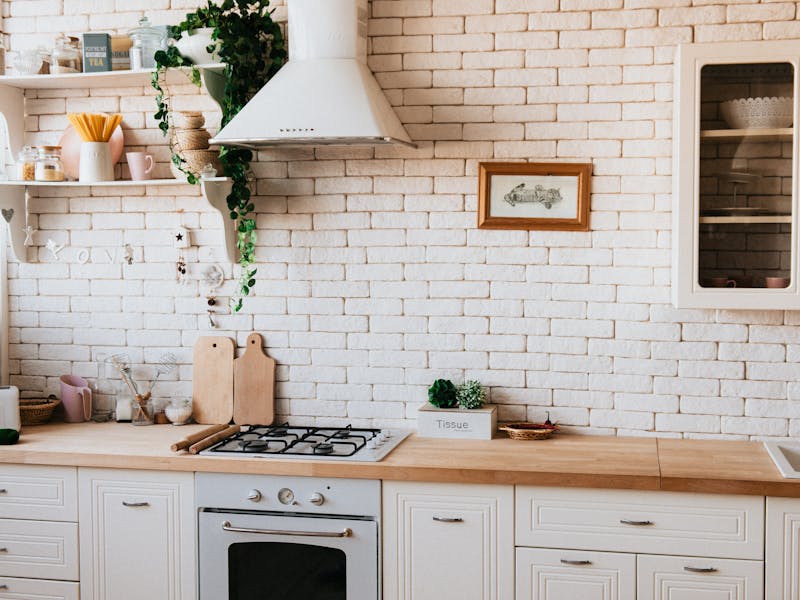
Everything NJ homeowners need to know about butcher block countertops. Wood species, sealing, maintenance, cost, where to use and where to avoid, and how NJ humidity affects your choice. Expert guide from Custom Kitchens by Lopez.
Plan Your ProjectView Our Work
Custom Kitchens by Lopez TeamApril 7, 202614 min read
Butcher Block Countertops: Pros, Cons & NJ Installation Guide
Butcher block countertops bring a warmth and character to a kitchen that no stone surface can replicate. The rich grain of walnut, the clean brightness of maple, the trending warmth of white oak — wood countertops transform a kitchen from a functional space into a room that feels lived-in and inviting.
They are also the most misunderstood countertop material in the NJ market. Homeowners either love the idea and underestimate the maintenance, or dismiss butcher block entirely because they heard it is unsanitary or high-maintenance. The truth is somewhere in the middle — and understanding that truth is critical before you invest.
After 20+ years of kitchen remodeling across Monmouth and Ocean Counties, we have installed butcher block in hundreds of kitchens. Some homeowners adore their wood countertops a decade later. Others regretted the choice within a year. The difference is almost always expectations and maintenance commitment — not the material itself.
What you will learn:
- The real pros and cons of butcher block in a NJ kitchen
- Which wood species work best (and which to avoid)
- Where to use butcher block and where to avoid it
- How NJ's climate affects wood countertops specifically
- Sealing and maintenance — what it actually takes
- Real NJ pricing at every budget level
Considering butcher block for your kitchen? Schedule a free kitchen design consultation or call (732) 984-1043. We will help you decide if butcher block is right for your kitchen, your lifestyle, and your maintenance tolerance.
The Case for Butcher Block: Real Advantages
Unmatched Warmth and Character
No other countertop material adds warmth to a kitchen the way wood does. In a kitchen full of hard surfaces — tile, stone, stainless steel, glass — butcher block introduces an organic, tactile element that makes the space feel inviting. It softens modern kitchens that might otherwise feel cold or clinical.
The grain pattern is unique to every slab. Walnut's dramatic dark swirls, maple's clean tight grain, white oak's distinctive ray flecks — your countertop is genuinely one of a kind. Over time, wood develops a patina that tells the story of your kitchen — the slight marks from years of cooking, the deeper golden tone that develops with age and oil.
This character is why butcher block remains popular even as quartz and quartzite dominate the NJ market. It brings something to a kitchen that engineered materials simply cannot replicate.
A Real Food Preparation Surface
Butcher block is the only countertop material designed to be cut on directly. Every other surface — quartz, granite, marble — will dull your knives and requires a separate cutting board. With butcher block, the countertop itself is the cutting board.
For serious home cooks, this is transformative. Rolling out dough, chopping vegetables, breaking down proteins — all directly on the counter surface. Professional kitchens have used maple butcher block for exactly this reason for over a century.
The food safety concern is largely a myth. Research from the University of Wisconsin found that bacteria survive longer on plastic cutting surfaces than on wood. Wood's cellular structure absorbs and traps bacteria beneath the surface where they die, while bacteria on plastic surfaces remain viable in cut grooves. Proper cleaning with warm soapy water after each use is all that is required.
Renewable Surface
This is the single biggest advantage butcher block has over every other countertop material. When your quartz countertop gets a deep scratch or a burn mark, it is permanent. When marble etches, it is permanent. When granite chips, it requires professional repair.
When butcher block gets scratched, stained, burned, or worn — you sand it down and refinish it. The countertop looks brand new. A standard 1.5-inch-thick butcher block can be sanded and refinished 3 to 5 times over its lifetime, giving you decades of use with periodic renewal.
This renewability makes butcher block one of the most sustainable countertop choices as well. Instead of demolishing and replacing a stone counter when it shows age, you refinish wood and extend its life indefinitely.
Affordable Entry Point
Butcher block is significantly less expensive than most stone countertops, as of 2026. Where quartz runs $60 to $150 per square foot installed and quartzite runs $80 to $200+ per square foot, butcher block runs $40 to $100 per square foot installed — with the most popular species (maple) at the lower end of that range.
For budget-conscious NJ kitchen remodels, butcher block delivers a warm, custom look at a fraction of the cost of premium stone. This is especially relevant for island-only applications where you want a different material to create visual contrast without a massive price premium.
Pairs Beautifully with Other Materials
Butcher block works best when combined with other countertop materials. A white quartz perimeter countertop with a walnut butcher block island is one of the most popular kitchen designs in the NJ market right now. The contrast between the cool, clean quartz and the warm, organic wood creates visual interest that a single-material kitchen cannot match.
This mixed-material approach also solves the practical concerns — you get quartz's zero-maintenance performance near the sink and dishwasher, and butcher block's warmth and food-prep functionality on the island where water exposure is minimal.
The Case Against Butcher Block: Real Drawbacks
Maintenance Is Not Optional
This is the dealbreaker for most NJ homeowners, and you need to be honest with yourself about it. Butcher block requires regular oiling — every 2 to 4 weeks for the first year, then monthly. Miss the oiling schedule and the wood dries out, cracks, and becomes vulnerable to staining and water damage.
In NJ specifically, the maintenance demands are higher than in drier climates. Our humid summers cause wood to expand. Our dry, heated winters cause wood to contract. This seasonal movement stresses the wood and the joints between pieces. Consistent oiling mitigates this, but it never eliminates it entirely.
If you are the type of homeowner who wants to install a countertop and forget about it for 15 years, butcher block is not for you. Choose quartz and enjoy the zero-maintenance life.
Water Is the Enemy
Wood and water do not coexist peacefully. Standing water on butcher block causes dark staining, swelling, warping, and eventually rot. The area around the sink is the danger zone — constant water exposure from hand washing, dish rinsing, and dishwasher unloading creates persistent moisture that even well-oiled wood struggles to handle.
In NJ's climate, this problem is amplified by humidity. The combination of summer humidity and water exposure near the sink accelerates deterioration. This is why we strongly recommend against using butcher block on the perimeter countertop if it includes a sink cutout — unless you commit to a marine-grade finish and vigilant maintenance.
Heat Sensitivity
Hot pots and pans placed directly on butcher block leave burn marks. Period. Unlike granite or quartzite, wood cannot handle direct heat contact without scorching. You need trivets, hot pads, or a habit of never setting hot cookware on the counter. If your cooking style involves pulling pans off the stove and setting them on the nearest surface, butcher block will show the evidence.
It Will Change Over Time
Butcher block is not a static surface. It darkens with age and oil application. Cherry wood shifts from pinkish-brown to a deep reddish-brown. Maple develops a warm golden tone. Walnut lightens slightly in areas exposed to sunlight. Scratches and cut marks accumulate. Stains from red wine, beet juice, and turmeric are difficult to remove without sanding.
Some homeowners love this evolution — the countertop tells the story of their kitchen. Others find it frustrating because the surface never looks as clean and uniform as the day it was installed. Know which camp you fall into before committing.
Wood Species for Butcher Block: The Complete Guide
Maple (The Industry Standard)
Janka hardness: 1,450 (very hard) Color: Light cream to pale golden Grain: Tight, consistent, minimal porosity Cost: $40 to $65 per square foot installed (as of 2026)
Maple is the default butcher block species for good reason. It is one of the hardest domestic woods, its tight grain resists moisture absorption, and its light color brightens any kitchen. Hard maple (also called sugar maple or rock maple) is the specific variety used for countertops — soft maple is a different species and not appropriate for countertop use.
Best for: Food preparation surfaces, light-colored kitchens, budget-conscious projects, and homeowners who want the classic butcher block look.
NJ consideration: Maple's tight grain makes it more resistant to humidity fluctuations than more porous species, which is an advantage in the NJ climate.
Walnut (The Premium Choice)
Janka hardness: 1,010 (moderately hard) Color: Rich chocolate brown with lighter sapwood streaks Grain: Open, distinctive, dramatic Cost: $75 to $100+ per square foot installed (as of 2026)
Walnut is the showpiece butcher block species. Its deep brown color and dramatic grain create a statement surface that becomes the focal point of the kitchen. Walnut pairs exceptionally well with white cabinetry — the contrast between white cabinets and a dark walnut island is one of the most requested designs in our Monmouth County projects.
Best for: Kitchen islands (especially with white or light cabinets), premium kitchens, homeowners who want the countertop to be the visual centerpiece.
NJ consideration: Walnut's more open grain absorbs moisture more readily than maple. More frequent oiling is required in NJ's humid summers. Not recommended for perimeter counters near sinks.
White Oak (The 2026 Trend)
Janka hardness: 1,360 (hard) Color: Warm honey to golden brown Grain: Distinctive ray flecks, moderate openness Cost: $65 to $90 per square foot installed (as of 2026)
White oak is the trending butcher block species in 2026, matching the broader white oak trend in cabinetry, flooring, and furniture design. Its warm tone and distinctive grain patterns give it a modern, organic quality that works in contemporary, transitional, and farmhouse kitchens.
Best for: Modern farmhouse and transitional kitchens, matching white oak cabinetry or flooring, homeowners who want a warm mid-tone wood.
NJ consideration: White oak has natural tyloses (cellular structures that block moisture penetration), making it more water-resistant than other species. This is why white oak is used for boat building and wine barrels. It is arguably the best species for NJ's climate, though it still requires regular oiling.
Cherry
Janka hardness: 950 (moderately soft) Color: Pinkish-brown when new, deepening to rich reddish-brown over time Grain: Smooth, fine, with subtle character Cost: $60 to $85 per square foot installed (as of 2026)
Cherry offers beautiful warmth but comes with trade-offs. It is softer than maple, walnut, and white oak, making it more susceptible to dents and scratches. Its dramatic color change over time — shifting from pink to deep red — is either a feature or a flaw depending on your perspective.
Best for: Traditional kitchens where the rich warmth of cherry complements other dark-toned elements. Not ideal for heavy food preparation use due to softness.
Birch and Beech (Budget Options)
Janka hardness: Birch 1,260 / Beech 1,300 Color: Light blonde to pale cream Grain: Fine, uniform Cost: $40 to $55 per square foot installed (as of 2026)
Birch and beech are the budget butcher block options. They are hard enough for countertop use, light in color, and significantly less expensive than walnut or white oak. The downside is less distinctive grain character — they look clean but plain compared to the premium species.
Best for: Budget kitchen remodels, rental property upgrades, and homeowners who want the warmth of wood without the premium price.
Edge Profiles and Construction Types
End Grain vs Edge Grain vs Face Grain
End grain butcher block shows the cross-section of the wood pieces — a checkerboard pattern of end-grain squares. This is the traditional butcher block style used in professional kitchens. End grain is the most forgiving for knife use (the blade slides between wood fibers rather than cutting across them), self-healing (fibers spring back after cuts), and the most visually distinctive. It is also the most expensive — 20 to 40 percent more than edge grain.
Edge grain butcher block shows the long edges of wood strips glued side by side. This is the most common and most affordable construction for residential countertops. It provides a clean, linear look with visible grain running the length of the counter. Edge grain is durable, easy to fabricate, and works well for both food prep and general countertop use.
Face grain (also called flat grain) shows the widest face of each board. It looks most like a traditional wood tabletop or plank flooring. Face grain is the most affordable but least durable for countertop use — it shows scratches more readily and is more prone to warping. We recommend face grain only for surfaces that will not be used for cutting.
Edge Profiles
Standard square edges are the most common and least expensive. Eased edges (slightly rounded) prevent chipping and are safer in kitchens with children. Ogee, bullnose, and decorative edges add visual detail but increase cost by $10 to $25 per linear foot for fabrication.
Where to Use Butcher Block in Your NJ Kitchen (and Where to Avoid It)
Ideal Locations
Kitchen island: This is the single best application for butcher block. The island is typically away from the sink, provides a natural food preparation area, and benefits most from the visual warmth and contrast that wood provides. A butcher block island with quartz perimeter counters is the most popular mixed-material approach in the NJ market.
Breakfast bar or eating area: Low water exposure, high visual impact, and the warm texture of wood enhances the dining experience. Butcher block eating surfaces feel more inviting than stone.
Butler's pantry or prep area: A secondary food preparation surface in a butler's pantry is an excellent application for butcher block — dedicated prep space with minimal water exposure.
Baking station: A section of countertop dedicated to rolling dough and baking prep. Butcher block's smooth surface is ideal for pastry work.
Locations to Avoid
Around the kitchen sink: Constant water exposure, splashing, and the humidity from the dishwasher make the sink area hostile territory for wood. If you insist on butcher block here, use a marine-grade polyurethane finish and expect higher maintenance.
Behind or adjacent to the cooktop: Despite its heat-sensitive reputation, the area next to the cooktop is manageable with trivets. But directly behind an open-flame gas range — where steam, grease, and heat concentrate — is not ideal for unfinished butcher block.
In a beach or shore home with inconsistent climate control: NJ shore homes that sit unoccupied during parts of the year experience extreme humidity swings. Wood countertops in these conditions are high-risk for warping and cracking unless the home maintains consistent climate control year-round.
Sealing and Finishing: The Complete Guide
Food-Safe Oil Finish (Mineral Oil)
Best for: Island countertops and surfaces used for food preparation Maintenance: Oil every 2 to 4 weeks initially, then monthly Pros: Food-safe, easy to apply, enhances natural grain, renewable surface (you can cut directly on it) Cons: Lowest water protection, requires consistent maintenance, offers no stain resistance
The most common and traditional finish for butcher block. Apply a generous coat of food-grade mineral oil, let it soak for 20 to 30 minutes, and wipe off the excess. For new countertops, apply daily for the first week, then taper to monthly. A mineral oil and beeswax blend (like Howard Butcher Block Conditioner or Odie's Oil) provides slightly better protection than mineral oil alone.
Oil and Wax Blend
Best for: Surfaces where you want food-safe protection with slightly better water resistance Maintenance: Apply every 4 to 6 weeks Pros: Better water beading than oil alone, food-safe, easy application Cons: Still requires regular maintenance, moderate stain protection
A step up from pure mineral oil. Products like Rubio Monocoat or Osmo Top Oil penetrate the wood and leave a thin protective layer that repels water better than oil alone while remaining food-safe.
Polyurethane or Varnish
Best for: Perimeter counters near sinks, surfaces where you will NOT cut directly on the counter Maintenance: Recoat every 3 to 5 years (sand lightly and apply a fresh coat) Pros: Strong water resistance, stain resistance, low ongoing maintenance Cons: Not food-safe (no direct food contact or cutting on the surface), requires sanding to refinish, shows scratches as white marks in the finish
Polyurethane is the practical choice for butcher block installed near water. It creates a hard, water-resistant film on the surface. The trade-off: you sacrifice the ability to cut on the surface directly, and scratches in the finish are visible and annoying. Use polyurethane on butcher block near the sink and oil finish on butcher block used for food prep.
Waterlox or Tung Oil Varnish
Best for: Homeowners who want moderate water protection with a more natural look than polyurethane Maintenance: Recoat annually, spot-repair as needed Pros: Penetrates and protects from within, more natural appearance than polyurethane, good water resistance Cons: Long cure time (up to 30 days for full cure), strong odor during application, not technically food-safe until fully cured
Waterlox (tung oil based) is a popular middle-ground option in the NJ remodeling market. It provides better water protection than mineral oil while looking more natural than polyurethane. Many of our Monmouth County installations use Waterlox on perimeter butcher block and mineral oil on island prep surfaces.
NJ Installation Considerations
Acclimation Is Non-Negotiable
Butcher block must acclimate to your kitchen's environment before installation. In NJ, where humidity varies dramatically between seasons, this step is critical. The countertop should sit in your kitchen (unwrapped and flat) for at least 72 hours — ideally a full week — before installation. This allows the wood to reach equilibrium with your home's temperature and humidity.
Skip this step and the wood will expand or contract after installation, potentially warping, separating at joints, or pulling away from the wall.
Substrate and Support
Butcher block countertops are heavy — a standard 1.5-inch maple top weighs approximately 10 pounds per square foot. Your base cabinets must be level and structurally sound. Butcher block should sit on the cabinet frame with the countertop's weight distributed evenly. Over-tightening fasteners can prevent the natural expansion and contraction that wood requires.
Use slotted mounting brackets or elongated screw holes that allow the countertop to move with humidity changes. Rigidly fastening butcher block to the cabinet frame is one of the most common installation mistakes — it prevents seasonal movement and causes cracking.
Seam Placement
For kitchens larger than 8 feet in any direction, butcher block will require seams. Seam placement affects both aesthetics and durability. Place seams over a cabinet support (never in open spans), use biscuit joints or dowels for alignment, and apply waterproof wood glue. Clamp the joint tightly and sand flush after the glue cures. Seams should be oiled and maintained more frequently than the rest of the surface because they are the most vulnerable point for water infiltration.
Sink Cutout Waterproofing
If you install an undermount sink in butcher block (which we generally advise against in NJ), the cutout edges must be sealed thoroughly. Apply 5 to 6 coats of waterproof finish (Waterlox or marine-grade polyurethane) to the exposed end grain around the cutout. This is the most critical waterproofing point on any butcher block countertop. Insufficient sealing here leads to swelling, darkening, and eventual rot within 2 to 3 years in NJ's humidity.
NJ Pricing: What You Will Actually Pay (As of 2026)
Material Cost Per Square Foot (Before Installation)
| Wood Species | Edge Grain | End Grain |
|---|---|---|
| Birch / Beech | $25-$40 | $35-$55 |
| Maple | $30-$50 | $45-$70 |
| Cherry | $40-$60 | $55-$80 |
| White Oak | $45-$65 | $60-$90 |
| Walnut | $55-$75 | $75-$100+ |
Installation Cost
NJ installation labor for butcher block countertops runs $15 to $30 per square foot, including templating, cutting, fitting, and mounting. Sink cutouts add $100 to $300 each. Seam fabrication adds $50 to $150 per seam.
Total Project Examples
Island only (15 sq ft, maple edge grain): $900 to $1,500 installed Island only (15 sq ft, walnut edge grain): $1,200 to $2,100 installed Full kitchen perimeter (30 sq ft, maple edge grain): $1,800 to $3,000 installed Mixed: quartz perimeter + walnut island: Most popular configuration in our NJ projects — see our countertop cost guide for combined pricing.
The Verdict: Is Butcher Block Right for Your NJ Kitchen?
Butcher block is right for you if:
- You enjoy the maintenance ritual (oiling, cleaning, caring for the surface)
- You want your kitchen to feel warm and organic
- You cook frequently and value a real food-prep surface
- You are OK with the countertop developing character over time
- You plan to use it on the island with quartz or quartzite on the perimeter
Butcher block is wrong for you if:
- You want a set-it-and-forget-it countertop
- You are bothered by scratches, stains, and surface imperfections
- Your kitchen sees heavy water exposure with no one willing to wipe things dry
- Your NJ shore home sits unoccupied for months with no climate control
- You want a perfectly uniform surface that looks the same in year 10 as year 1
The most successful butcher block installations in our 20+ years of NJ kitchen remodeling share one thing: the homeowner understood what they were getting. They chose butcher block deliberately, for its warmth and character, and they committed to the maintenance that preserves it.
Want to see butcher block options for your kitchen? Schedule a free consultation or call (732) 984-1043. We will bring samples of every wood species, help you choose the right combination of materials for your kitchen, and give you an honest assessment of whether butcher block fits your lifestyle.
Custom Kitchens by Lopez has been installing countertops across Monmouth and Ocean Counties for over 20 years. From butcher block islands to full quartz kitchens to mixed-material designs that combine the best of both — we help NJ homeowners choose the right surface for their kitchen, their cooking style, and their maintenance tolerance. Verified reviews from homeowners who trust us with their homes.
We serve Freehold Township, Holmdel, Colts Neck, Marlboro, Manalapan, Middletown, Red Bank, Rumson, and all surrounding communities.
*Custom Kitchens By Lopez is a licensed NJ Home Improvement Contractor (HIC #13VH04175700) based in Freehold Township. We specialize in kitchen remodeling, bathroom remodeling, custom cabinetry, and general contracting across Monmouth County and Ocean County, NJ.*
Planning a Complete Kitchen?
See how CKL plans custom cabinetry, premium materials, and $75,000+ kitchen projects.
Ready to start your project?
Related Services
Countertop InstallationCustom Kitchen CabinetsTile InstallationHardwood Flooring
5 Rating(46+ reviews)
Ready to Plan the Complete Kitchen?
Move from product research to a complete design plan. See real CKL kitchens, the decisions that define luxury work, and the $75,000–$150,000+ planning range.
Explore Luxury KitchensCall 732.984.1043
Licensed & Insured20+ Years ExperienceLuxury kitchens from $75,000
Local Services
Kitchen Cabinets FreeholdKitchen Cabinets EdisonKitchen Cabinets ManalapanKitchen Cabinets MarlboroKitchen Remodeling FreeholdBathroom Remodeling Freehold
Popular Service Areas
Holmdel, NJColts Neck, NJRumson, NJMarlboro, NJShrewsbury, NJMiddletown, NJRed Bank, NJFreehold, NJSpring Lake, NJManalapan, NJ
Ready to start your project?
Get a free, no-obligation quote today.
5 (46+ reviews)
Category
Materials Guide# Porcelain Countertops: Pros, Cons, Cost & Vs. Quartz (2026 NJ Guide)# Soapstone Countertops: Pros, Cons, Cost & Colors (2026 NJ Guide)
More Articles
Ready to Start Your Project?
Request a private design consultation for your substantial kitchen, bath, cabinetry, or whole-home project.