
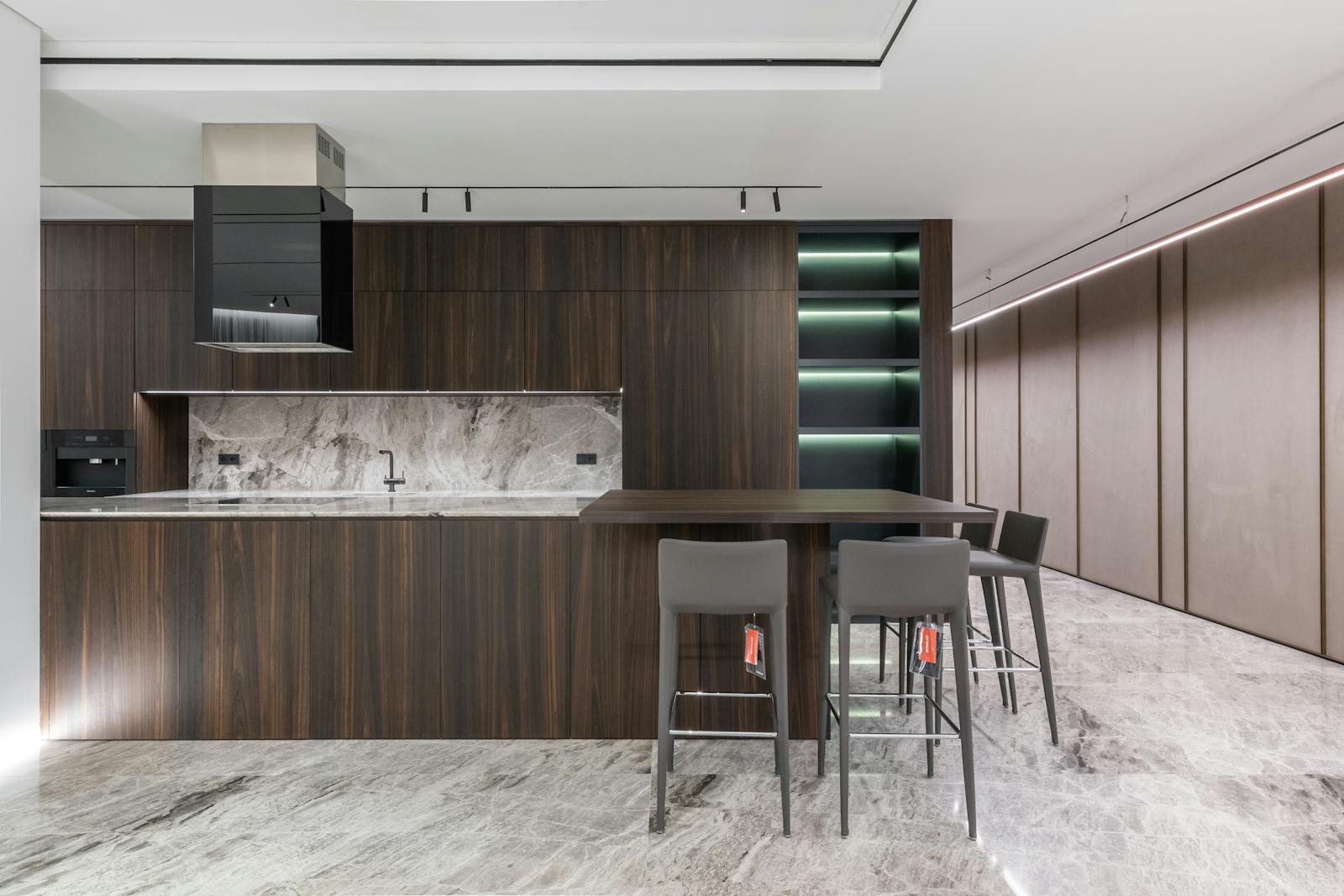
The complete guide to custom kitchen cabinets in New Jersey. Compare inset, overlay, and frameless styles. Learn about maple, cherry, walnut, and white oak. Real NJ pricing from $500-$2,000+ per linear foot, lead times, and how Custom Kitchens by Lopez builds cabinets that last decades.
Plan Your ProjectView Our Work
Custom Kitchens by Lopez TeamApril 7, 202614 min read
Custom Kitchen Cabinets in NJ: Styles, Materials & What to Expect
Cabinets are the single biggest investment in any kitchen remodel. They define the look, set the storage capacity, and determine whether your kitchen feels custom-designed or cookie-cutter. In New Jersey -- where homes range from 1920s colonials with quirky dimensions to modern open-concept builds -- the difference between stock cabinets and custom-built cabinetry is not subtle. It is the difference between a kitchen that works around the space and a kitchen that was built for it.
If you are considering custom kitchen cabinets for your NJ home, this guide covers everything you need to know: the three major construction styles, the wood species that perform best in the Northeast, honest pricing for the NJ market, realistic lead times, and how the custom cabinet process works from first design meeting to final installation.
After 20+ years of designing and installing custom cabinetry across Monmouth and Ocean Counties, we have strong opinions about what works and what does not. This guide shares all of them.
What you will learn:
- The three cabinet construction styles (inset, overlay, frameless) and which suits your home
- How maple, cherry, walnut, and white oak compare for NJ kitchens
- Finish options from painted to stained to specialty treatments
- Real NJ pricing by tier: \$500 to \$2,000+ per linear foot
- Custom vs. big box: why the gap matters more than you think
- Lead times, the design process, and what to expect at each stage
The Three Cabinet Construction Styles
Every custom cabinet starts with a fundamental design choice: how the doors and drawers relate to the cabinet frame. This is not a minor aesthetic detail. It changes the look, the cost, the functionality, and the maintenance of your entire kitchen.
Inset Cabinets
Inset doors and drawers sit flush inside the cabinet face frame, creating a perfectly flat surface when closed. The frame is fully visible around each door and drawer, with a consistent gap (called a reveal) on all four sides.
Why homeowners love inset:
- Timeless, furniture-quality appearance that never looks dated
- The gold standard for traditional, colonial, and period-style NJ homes
- Reveals the craftsmanship -- every line and joint is visible, so quality cannot hide
- Works beautifully in homes throughout Rumson, Colts Neck, and historic Red Bank
The tradeoffs:
- Costs 15-25% more than overlay due to the precision required in fabrication
- Requires expert installation -- doors must be shimmed and adjusted perfectly
- NJ humidity can cause seasonal wood movement that affects the reveal gaps
- Slightly less interior storage space because the door sits inside the frame
Cost impact: Add \$100-\$200 per linear foot over comparable overlay cabinets.
Best for: Colonial, Federal, Craftsman, and traditional NJ homes. Homeowners who value heirloom-quality craftsmanship and are willing to pay for it.
Full Overlay Cabinets
Full overlay doors and drawers cover nearly the entire face frame, leaving only a small gap between adjacent doors. The frame is almost completely hidden, creating a clean, uniform surface.
Why overlay dominates the NJ market:
- Clean, contemporary look that works in virtually any home style
- The most popular choice for transitional and modern kitchens in Monmouth County
- Maximizes usable interior space because the door is not inset into the frame
- More forgiving during installation -- minor frame imperfections are hidden behind doors
- Less affected by NJ seasonal humidity since door expansion does not create visible gaps
The tradeoffs:
- Less visually distinctive than inset -- you see doors and hardware, not frame detail
- Quality differences are less obvious, which means you need to evaluate box construction carefully
Cost impact: The baseline for custom cabinet pricing. Full overlay is the standard.
Best for: Transitional, contemporary, and modern farmhouse kitchens. The majority of NJ kitchen remodels in 2026.
Frameless (European) Cabinets
Frameless cabinets eliminate the face frame entirely. Doors attach directly to the cabinet box with concealed hinges, and when closed, you see only doors and drawer fronts with thin, uniform gaps between them.
Why frameless is gaining ground:
- Maximum interior access -- no face frame means wider openings for pull-outs and drawers
- The cleanest, most minimal aesthetic available
- Slab (flat panel) doors on frameless boxes create the ultra-modern look trending in 2026
- Concealed hinges mean zero visible hardware on the frame
- Popular in contemporary homes and kitchen renovations in Holmdel, Middletown, and newer developments
The tradeoffs:
- Requires extremely precise box construction -- there is no face frame to hide imperfections
- The cabinet box itself must be structural, so material quality matters even more
- Not the right fit for traditional colonial or period homes
- Some homeowners find the look too modern for NJ's predominantly traditional housing stock
Cost impact: Comparable to full overlay or slightly higher due to precision box requirements.
Best for: Modern, contemporary, and minimalist kitchens. Homeowners who want a European aesthetic and maximum storage efficiency.
Which Style for Your NJ Home?
| Home Style | Recommended Cabinet Style | Why |
|---|---|---|
| Colonial / Federal / Georgian | Inset | Matches the period architecture and furniture traditions of the home |
| Cape Cod / Ranch | Full Overlay | Clean and versatile without competing with the home's modest scale |
| Split-Level / Bi-Level | Full Overlay | Modernizes the most common mid-century NJ home type |
| Contemporary / New Construction | Frameless or Full Overlay | Complements open floor plans and modern finishes |
| Coastal / Shore Home | Full Overlay | Pairs well with casual, beachy aesthetics and shaker-style doors |
| Historic / Victorian | Inset | Respects the home's architectural heritage and period details |
Wood Species: Choosing the Right Material
The wood species you choose affects everything: appearance, durability, how the finish looks, how the grain reads, and how the cabinets age over decades. Here is an honest comparison of the four most popular species for NJ custom cabinets.
Maple
The workhorse. The most popular choice for NJ custom cabinets -- and for good reason.
Maple has a fine, even grain pattern that produces the smoothest painted surfaces of any hardwood. If you want white, gray, or any painted cabinet finish, maple is the default choice. It is also excellent for light stains where you want a clean, uniform look.
- Hardness (Janka): 1,450 -- one of the hardest domestic species, extremely durable
- Grain: Fine, subtle, even. Does not compete with the overall design
- Best finish: Paint (the gold standard for painted cabinets) or light stains
- NJ consideration: Handles NJ humidity well with proper finishing
- Price tier: Entry to mid-range for custom (\$500-\$900 per linear foot)
Our take: Maple is the right choice for 60% or more of the custom kitchens we build. It delivers quality that lasts decades at a price point that does not require a second mortgage.
Cherry
The classic. Rich warmth that deepens beautifully with age.
Cherry is a traditional premium wood with a warm reddish-brown tone that darkens over time as it is exposed to light. This natural aging process (called patina) is a feature, not a bug -- a 10-year-old cherry kitchen has a depth and richness that no other wood replicates. Cherry has been the prestige choice in Monmouth County colonial homes for decades.
- Hardness (Janka): 950 -- softer than maple, but still durable for cabinet use
- Grain: Smooth with occasional pin knots and subtle waves. Elegant and warm
- Best finish: Natural or light stain to showcase the wood's character. Can be stained darker for a more formal look
- NJ consideration: Cherry's color shift is accelerated by sunlight. Plan for south-facing kitchens to darken faster
- Price tier: Mid to premium (\$700-\$1,200 per linear foot)
Our take: Cherry is stunning in traditional and transitional NJ kitchens. If you are buying cherry, commit to the natural aging process. Trying to fight the color change with heavy stain defeats the purpose.
White Oak
The trend leader. The hottest wood species in kitchen design for 2026.
White oak has exploded in popularity because its prominent, open grain pattern brings natural texture and character to both modern and traditional spaces. Rift-sawn and quarter-sawn white oak (cut to minimize grain variation) produce the clean, linear grain pattern you see in design magazines. Plain-sawn white oak has more dramatic cathedral-pattern grain for a rustic look.
- Hardness (Janka): 1,360 -- very hard and durable, excellent for daily use
- Grain: Bold, prominent, and distinctive. The grain is the design element
- Best finish: Natural or light stain to highlight the grain. Wire-brushed or cerused (white-filled grain) finishes are trending in 2026
- NJ consideration: White oak's closed pore structure resists moisture better than red oak, making it ideal for NJ humidity
- Price tier: Mid to premium (\$800-\$1,400 per linear foot)
Our take: White oak is the right choice if you want your cabinets to have natural character and visual texture. It is equally at home in a modern Holmdel kitchen and a coastal Spring Lake beach house. The most versatile premium wood available.
Walnut
The showstopper. Deep, dramatic, and unmistakably luxurious.
Walnut is the prestige wood species in custom cabinetry. Its rich chocolate-brown color with lighter sapwood accents creates cabinets that function as furniture. Walnut kitchens make a statement -- they are designed to be noticed and admired.
- Hardness (Janka): 1,010 -- moderate hardness, but adequate for cabinets
- Grain: Open, flowing, with natural color variation from dark heartwood to lighter sapwood
- Best finish: Clear coat or natural oil to showcase the wood's inherent beauty. Avoid heavy stains that mask the natural color
- NJ consideration: Walnut lightens with prolonged UV exposure (opposite of cherry). Apply UV-protective finish for south-facing kitchens
- Price tier: Premium to luxury (\$1,200-\$2,000+ per linear foot)
Our take: Walnut is a commitment. It commands the room. If you want a kitchen where the cabinets are the centerpiece, walnut delivers that in a way no other species can. We typically install walnut in luxury renovations in Rumson, Colts Neck, and Holmdel.
Wood Species Comparison
| Species | Hardness | Grain Pattern | Best For | Price Range (per LF) |
|---|---|---|---|---|
| Maple | 1,450 (hardest) | Fine, subtle | Painted finishes, clean modern looks | \$500-\$900 |
| Cherry | 950 | Smooth, warm | Traditional homes, natural aging beauty | \$700-\$1,200 |
| White Oak | 1,360 | Bold, prominent | Modern, transitional, coastal homes | \$800-\$1,400 |
| Walnut | 1,010 | Dramatic, flowing | Luxury statement kitchens | \$1,200-\$2,000+ |
Finish Options: Paint, Stain, or Specialty
The finish transforms raw wood into the final look you live with every day. The right finish choice depends on the wood species, your design style, and how much character you want visible in the grain.
Painted Finishes
The most popular finish choice in NJ for 2026. About 65% of the custom cabinets we install are painted. White, warm gray, and deep navy lead the color requests.
Painted cabinets deliver a clean, uniform surface that works in virtually any kitchen style. Maple and MDF hybrid construction (hardwood frames with MDF center panels) produce the smoothest painted surfaces because MDF has no grain to telegraph through the paint over time.
Most requested paint colors for NJ kitchens in 2026:
- Classic white (Benjamin Moore White Dove, Simply White, Chantilly Lace)
- Warm gray (Revere Pewter, Edgecomb Gray)
- Deep navy (Hale Navy, Naval)
- Sage green (Cushing Green, Saybrook Sage)
- Black or charcoal (Iron Mountain, Black Panther) for islands and accent cabinets
Important to know: All wood expands and contracts with seasonal humidity changes. In NJ, where summers are humid and winters are dry, painted wood cabinet doors can develop hairline cracks at joint seams over time. This is normal wood behavior, not a defect. Quality construction minimizes it, and an MDF center panel in a hardwood frame eliminates it entirely.
Stained Finishes
Stained finishes let the natural wood grain show through. The stain enhances the grain pattern and adds color depth while preserving the organic beauty of real wood. About 25% of our custom installs are stained.
Best woods for staining: White oak (the grain becomes a design feature), cherry (enhances the warm tones), and walnut (a clear coat is usually all it needs).
Trending stain tones for 2026: Natural or clear coat finishes are leading the trend. Homeowners want to see the actual wood, not cover it with heavy dark stain. When color is desired, warm medium-brown tones and weathered gray tones are the most requested.
Specialty Finishes
For homeowners who want something beyond standard paint or stain:
- Cerused (limed): White or light pigment is rubbed into the open grain of oak, creating a dramatic two-tone effect. The grain lines read as white or gray against the natural wood color. Extremely popular for coastal kitchens in 2026.
- Distressed or antiqued: Edges and surfaces are hand-distressed to create a worn, lived-in patina. Still requested for farmhouse and French country kitchens, though less common than 5 years ago.
- Wire-brushed: The soft grain is brushed away to leave a textured surface that highlights the hard grain lines. Creates a tactile, organic feel.
- Glaze: A colored glaze is applied over a base coat and wiped away, settling into the cabinet profiles and crevices to add depth and dimension. Popular for traditional kitchens.
- Two-tone: Different finishes for upper and lower cabinets, or a contrasting island. White uppers with a stained oak island is the dominant two-tone combination in NJ for 2026.
Custom Cabinets vs. Big Box: Why the Gap Matters
When you compare custom cabinet pricing to Home Depot, IKEA, or Lowes cabinet lines, the price difference looks dramatic. Custom costs 3-5x more per linear foot. So why do NJ homeowners choose custom? Because what you are paying for is not just a box with a door.
What Custom Gets You That Big Box Cannot
Precision fit. Custom cabinets are built to your exact wall measurements -- down to the quarter inch. NJ homes, especially those built before 2000, rarely have walls that are perfectly square or openings that match standard sizes. Stock cabinets require filler strips, scribing, and compromises. Custom cabinets use every inch.
Material quality. Custom cabinet boxes use 3/4-inch hardwood plywood with dovetail or dowel joinery. Stock cabinets typically use 1/2-inch particleboard with staple or cam-lock assembly. The difference in long-term durability is substantial -- especially in NJ's humid climate where particleboard swells and degrades.
Hardware and function. Custom cabinets come standard with full-extension soft-close drawer slides, adjustable shelving, and premium hinges. Stock cabinets offer these as expensive upgrades that still do not match the quality of what comes standard in custom.
Design freedom. Need a 37.5-inch wide base cabinet for that awkward space next to the range? Done. Want a built-in spice rack that is exactly 4 inches wide? Done. Need a corner cabinet with a custom pull-out that actually works? Done. Stock cabinets cannot do any of this.
Finishing quality. Custom cabinets are finished in a controlled spray booth with catalyzed lacquer or conversion varnish -- finishes that are harder, more durable, and more beautiful than the thermofoil or UV-cured coatings on stock cabinets.
When Big Box Makes Sense
We are not going to pretend custom cabinets are the right choice for every situation. If you are updating a rental property, flipping a house, or working with a very tight budget, stock cabinets from a major retailer can provide a functional kitchen at a fraction of the cost. They serve a purpose.
But for homeowners who are building their forever kitchen in a home they love -- which describes most of our clients in Monmouth and Ocean Counties -- custom cabinets deliver a fundamentally different product. You can see the difference. You can feel the difference when you open a drawer. And you will appreciate the difference for the 20-30 years those cabinets serve your family.
What Custom Cabinets Cost in NJ: Real Numbers
Here is what NJ homeowners actually pay for custom kitchen cabinets in 2026. These numbers reflect our market -- Monmouth County, Ocean County, and surrounding areas -- not national averages.
By Tier
Entry-level custom (\$500-\$800 per linear foot)
- Maple or birch construction
- Painted finish in standard colors
- Shaker or flat-panel door style
- Full-extension soft-close hardware
- Standard interior configurations
Mid-range custom (\$800-\$1,200 per linear foot)
- Cherry, white oak, or premium maple
- Stained or custom paint finish
- More complex door profiles (inset beading, applied molding)
- Custom interior organizers (pull-out trays, spice racks, dividers)
- Specialty pieces like range hoods, plate racks, or display cabinets
Premium custom (\$1,200-\$2,000+ per linear foot)
- Walnut, rift-sawn white oak, or exotic species
- Specialty finishes (cerused, hand-distressed, multi-step glazing)
- Inset construction with furniture-grade details
- Complex custom pieces (curved cabinets, integrated appliance panels, library ladders)
- Full kitchen suites with matching built-in furniture
Full Kitchen Estimates
For a typical NJ kitchen with 20-25 linear feet of cabinetry:
| Tier | Per Linear Foot | Full Kitchen Estimate |
|---|---|---|
| Entry Custom | \$500-\$800 | \$10,000-\$20,000 |
| Mid-Range Custom | \$800-\$1,200 | \$16,000-\$30,000 |
| Premium Custom | \$1,200-\$2,000+ | \$24,000-\$50,000+ |
These prices are for cabinets only. Countertops, installation, and finishing trim are additional. For a complete breakdown of total kitchen remodel costs, see our NJ kitchen remodeling cost guide.
What Affects the Final Price
- Kitchen size (linear feet of cabinetry) -- the primary cost driver
- Wood species -- walnut costs 2-3x more than maple
- Door style -- inset adds 15-25% over overlay
- Finish -- specialty finishes (cerusing, glazing, multi-step) add 10-20%
- Interior features -- pull-outs, organizers, and custom inserts add up
- Specialty pieces -- range hoods, wine storage, display cases, and appliance panels
- Hardware -- from \$5 per pull (basic) to \$50+ per pull (architectural hardware)
The Custom Cabinet Process at Custom Kitchens by Lopez
Here is exactly what happens when you choose custom cabinets with us. No surprises.
Step 1: In-Home Design Consultation (Free)
We come to your home, walk through your kitchen, take detailed measurements, and talk about how you use the space. We discuss your design preferences, storage needs, material interests, and budget parameters. This is a conversation, not a sales pitch.
What we measure: Every wall dimension, ceiling height, window and door locations, plumbing and electrical positions, appliance sizes, and any out-of-square conditions. Our measurements are accurate to 1/8 inch because custom cabinets require it.
Step 2: Design Development (1-2 Weeks)
Based on the consultation, we develop detailed cabinet layouts with 3D renderings that show exactly how the finished kitchen will look. You see door styles, wood species, finish colors, hardware placement, and interior configurations before anything is built.
We go through at least two rounds of design refinement to make sure every detail is right.
Step 3: Material Selection
Visit our showroom or review physical samples at your home. Touch the wood species, see the finish options in person, and test the hardware. Paint chips and screen images do not tell the full story -- you need to see maple vs. cherry vs. oak in your kitchen's actual lighting.
Step 4: Shop Drawings and Approval
Once the design is locked, we produce detailed shop drawings that specify every cabinet dimension, material, finish, hinge type, drawer slide, and interior feature. You review and approve these before fabrication begins.
This is the point of no return. Changes after shop drawing approval add cost and extend the timeline. We make sure you are 100% confident before we proceed.
Step 5: Fabrication (6-10 Weeks)
Your cabinets are built by skilled craftsmen using the approved shop drawings. Each box is constructed with precision joinery, sanded smooth, and prepared for finishing. Doors and drawer fronts are milled, profiled, and matched to your specifications.
Step 6: Finishing (1-2 Weeks)
Cabinets are finished in a controlled spray booth for a flawless result. Painted cabinets receive primer, multiple coats, and final inspection under bright lighting. Stained cabinets receive the specified stain, sealer, and topcoat.
Step 7: Installation (3-5 Days)
Our installation team hangs uppers first, sets lowers, levels and aligns everything, installs doors and drawers, and adjusts every hinge and slide until everything operates perfectly. We protect your floors, walls, and countertops throughout.
Step 8: Final Walk-Through
We walk through the completed kitchen with you, test every door, drawer, and feature, and address any adjustments on the spot. You do not sign off until you are completely satisfied.
Total timeline from first meeting to completed installation: 12-18 weeks.
Common Custom Cabinet Mistakes to Avoid
After 20+ years, we have seen every mistake. Here are the ones that cost NJ homeowners the most:
Choosing a wood species based on a small sample. A 3-inch sample chip does not show how cherry will look across 25 linear feet of cabinetry. Ask to see full-size doors or visit completed projects.
Ignoring NJ humidity. New Jersey's humid summers and dry winters cause real wood movement. This is not a defect -- it is physics. MDF center panels in hardwood frames are the solution for painted cabinets. Your cabinet maker should explain this upfront.
Picking hardware last. Hardware is not an afterthought. The size, style, and placement of pulls and knobs affect how the entire kitchen reads. Choose hardware during the design phase, not at installation.
Skipping interior organizers. Custom cabinets without custom interiors waste the advantage of going custom. Build in the pull-outs, dividers, and organizers during fabrication -- adding them later costs more and limits options.
Assuming all custom cabinets are equal. "Custom" is not a regulated term. Ask about box construction (plywood vs. particleboard), joinery method (dovetail vs. staple), drawer slides (full-extension vs. three-quarter), and finishing process (spray booth vs. hand-brushed). The answers tell you what you are actually getting.
Your Custom Kitchen Starts Here
If you are a New Jersey homeowner considering custom cabinets, the most important step is having a conversation with a builder who knows the materials, the craftsmanship, and the NJ market. Not a showroom salesperson who has never built a cabinet -- a team that designs, builds, and installs custom cabinetry every week.
At Custom Kitchens by Lopez, we have been building custom kitchens in Monmouth County and Ocean County for over 20 years. Every project starts with a free in-home consultation where we measure your space, discuss your vision, and give you honest guidance on materials, styles, and pricing.
Schedule your free cabinet consultation or call us at (732) 984-1043 to get started.
Not sure whether stock, semi-custom, or fully custom replacement cabinets fit your project? We will give you an honest recommendation based on your layout, storage needs, goals, and budget.
*Custom Kitchens By Lopez is a licensed NJ Home Improvement Contractor (HIC #13VH04175700) based in Freehold Township. We specialize in custom kitchen cabinetry, kitchen remodeling, countertop installation, and bathroom remodeling across Monmouth County and Ocean County, NJ.*
Planning a Complete Kitchen?
See how CKL plans custom cabinetry, premium materials, and $75,000+ kitchen projects.
Ready to start your project?
Related Services
Countertop InstallationCustom Kitchen CabinetsTile InstallationHardwood Flooring
5 Rating(46+ reviews)
Ready to Plan the Complete Kitchen?
Move from product research to a complete design plan. See real CKL kitchens, the decisions that define luxury work, and the $75,000–$150,000+ planning range.
Explore Luxury KitchensCall 732.984.1043
Licensed & Insured20+ Years ExperienceLuxury kitchens from $75,000
Local Services
Kitchen Cabinets FreeholdKitchen Cabinets EdisonKitchen Cabinets ManalapanKitchen Cabinets MarlboroKitchen Remodeling FreeholdBathroom Remodeling Freehold
Popular Service Areas
Holmdel, NJColts Neck, NJRumson, NJMarlboro, NJShrewsbury, NJMiddletown, NJRed Bank, NJFreehold, NJSpring Lake, NJManalapan, NJ
Ready to start your project?
Get a free, no-obligation quote today.
5 (46+ reviews)
Category
Materials Guide# Porcelain Countertops: Pros, Cons, Cost & Vs. Quartz (2026 NJ Guide)# Soapstone Countertops: Pros, Cons, Cost & Colors (2026 NJ Guide)
More Articles
Ready to Start Your Project?
Request a private design consultation for your substantial kitchen, bath, cabinetry, or whole-home project.