
Complete guide to choosing hardwood flooring for your New Jersey kitchen. Compare oak, maple, and hickory, learn about engineered vs solid options, and understand NJ humidity considerations for lasting results.
Plan Your ProjectView Our Work
Enrique LopezFebruary 1, 202614 min read
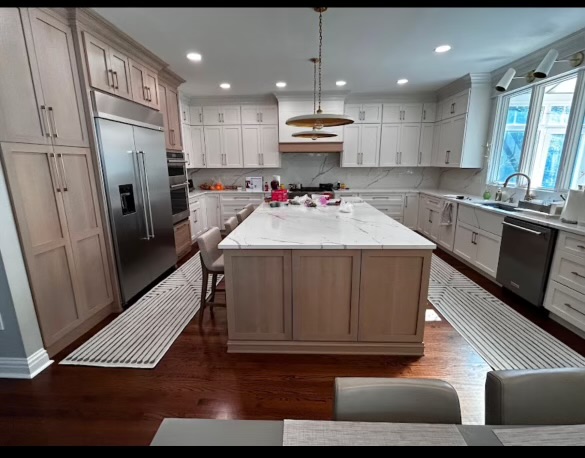
Hardwood Flooring Guide for NJ Kitchens: Oak, Maple, Hickory & More
Hardwood flooring in the kitchen was once considered daring. Today, it is one of the most popular choices for NJ homeowners who want warmth, beauty, and continuity throughout their home. When you invest in a kitchen remodel, the flooring sets the tone for the entire space.
With over 20 years of kitchen remodeling experience across Monmouth and Ocean Counties, we have installed hardwood in hundreds of NJ kitchens and understand exactly what works — and what does not — in our New Jersey climate.
This guide covers everything you need to know about choosing, installing, and maintaining hardwood floors in your kitchen.
Why Choose Hardwood for Your Kitchen?
Hardwood flooring offers distinct advantages that make it an excellent kitchen choice:
Timeless beauty — Hardwood never goes out of style. While tile patterns and vinyl designs date quickly, hardwood floors look as good in 20 years as they do today.
Warmth and comfort — Wood is warmer underfoot than tile or stone, making it more comfortable during long cooking sessions. In NJ winters, this difference is noticeable.
Home value — Real hardwood floors are a top feature buyers look for. They consistently increase home resale values in Monmouth and Ocean County markets.
Whole-home flow — If you have hardwood in your living areas, extending it into the kitchen creates a seamless, expansive feel that makes your home look larger and more cohesive.
Refinishable — Unlike any other flooring type, hardwood can be sanded and refinished multiple times, allowing you to change the color or restore a worn floor without full replacement.
Sustainability — Domestic hardwood is a renewable, natural material. When sourced responsibly, it is one of the most environmentally friendly flooring choices available.
Popular Hardwood Species for NJ Kitchens
Not all wood species perform equally in the demanding kitchen environment. Here are the top choices for New Jersey kitchens:
White Oak
Janka Hardness: 1360
White oak is the undisputed champion of kitchen hardwood in 2026. Its popularity has surged thanks to its versatile grain pattern that suits both modern and traditional designs, closed pore structure that provides natural water resistance superior to red oak, beautiful range of stain colors from light natural to dark ebony, and availability in rift-cut and quarter-sawn options for a contemporary linear grain.
Best for: Nearly any kitchen style. From a modern open-concept kitchen in Shrewsbury to a coastal farmhouse in Spring Lake.
Cost: $6 to $14 per square foot for materials.
Red Oak
Janka Hardness: 1290
Red oak has been a staple of American homes for generations. While slightly less popular than white oak in 2026 for new installations, it remains an excellent kitchen flooring choice. Its prominent grain pattern adds character and visual texture. Red oak takes stain well, particularly in medium to dark tones that minimize the pink undertones of its natural color.
Best for: Traditional, colonial, and farmhouse kitchens common in western Monmouth County towns like Colts Neck and Freehold.
Cost: $4 to $10 per square foot for materials.
Hickory
Janka Hardness: 1820
Hickory is the toughest domestic hardwood available and an outstanding choice for kitchens with heavy traffic, active families, or pets. Its dramatic grain variation and color range (from creamy white to deep brown, often in the same plank) create a bold, characterful floor. Hickory resists dents and scratches better than any other common species.
Best for: Busy family kitchens, homes with large dogs, rustic and farmhouse designs, and any kitchen where durability is the top priority.
Cost: $5 to $12 per square foot for materials.
Hard Maple
Janka Hardness: 1450
Hard maple offers a clean, subtle grain pattern with a light, uniform color. It creates a smooth, contemporary look that pairs well with modern kitchen designs. Maple is harder than oak and takes light stains or clear finishes beautifully. However, it does not absorb dark stains as evenly as oak.
Best for: Modern and contemporary kitchens, light and bright Scandinavian-inspired designs, and kitchens where a uniform, clean floor appearance is desired.
Cost: $5 to $11 per square foot for materials.
Walnut
Janka Hardness: 1010
Walnut is the luxury choice for kitchen flooring, prized for its rich chocolate brown color and flowing grain pattern. It is softer than oak and maple, making it more susceptible to dents, but its beauty is unmatched. Walnut darkens slightly with age and sunlight exposure, developing a warm, deep patina.
Best for: High-end kitchens, formal entertaining spaces, and NJ homes where the kitchen is a showcase room. Pairs beautifully with light-colored custom cabinets and marble or quartz countertops.
Cost: $8 to $18 per square foot for materials.
Species Comparison Table
| Species | Janka Hardness | Water Resistance | Grain Pattern | Price Range |
|---|---|---|---|---|
| White Oak | 1360 | Good (closed pore) | Medium, versatile | $6-$14/sf |
| Red Oak | 1290 | Fair (open pore) | Prominent, bold | $4-$10/sf |
| Hickory | 1820 | Good | Dramatic, varied | $5-$12/sf |
| Hard Maple | 1450 | Fair | Subtle, uniform | $5-$11/sf |
| Walnut | 1010 | Fair | Rich, flowing | $8-$18/sf |
Engineered vs. Solid Hardwood: The NJ Decision
This is one of the most important decisions for NJ kitchen flooring, and our climate makes the answer clearer than in many other regions.
Solid Hardwood
Solid hardwood is a single piece of wood, typically three-quarters of an inch thick. It can be sanded and refinished many times over its lifespan.
Pros: Maximum refinishing potential (8 to 10 times), authentic through-and-through wood, long proven track record, and traditional nail-down installation.
Cons: Expands and contracts significantly with humidity changes, cannot be installed below grade or over concrete, not compatible with radiant floor heating, and requires nail-down installation over a wood subfloor.
Engineered Hardwood
Engineered hardwood features a real hardwood wear layer (typically 2mm to 6mm) bonded to a cross-layered plywood or HDF core. The top surface is identical to solid hardwood in appearance and feel.
Pros: Superior dimensional stability in humidity fluctuations, can be installed over concrete, compatible with radiant floor heating, available in wider plank widths (7 inches and wider) with less risk of movement, click-lock or glue-down installation options, and can be refinished 1 to 3 times depending on wear layer thickness.
Cons: Fewer refinishing cycles than solid, quality varies significantly by manufacturer, and cheaper products may have very thin wear layers.
Our Recommendation for NJ Kitchens
For most New Jersey kitchens, engineered hardwood is the better choice. Our state's humidity swings are severe. Summers bring 70 to 80 percent humidity, while winter heating drops indoor humidity to 25 to 35 percent. This seasonal cycle stresses solid wood significantly, causing visible gaps in winter and potential cupping in summer.
Engineered hardwood's cross-layered construction resists these movements. Combined with its ability to go over concrete (important for NJ homes with slab-on-grade construction) and compatibility with radiant heat, engineered hardwood delivers the beauty of real wood with better long-term performance in our climate.
NJ Humidity and Your Hardwood Floors
Understanding and managing humidity is the single most important factor for hardwood floor longevity in New Jersey.
The NJ Humidity Challenge
New Jersey sits in a climate zone with dramatic seasonal humidity changes. Coastal areas in Monmouth and Ocean Counties experience even more pronounced humidity due to proximity to the ocean. This means your indoor environment cycles between moisture-rich summers and bone-dry winters.
How Humidity Affects Hardwood
High Humidity (Summer): Wood absorbs moisture from the air and expands. Boards push against each other, potentially causing cupping (edges higher than the center of each board) or buckling in extreme cases.
Low Humidity (Winter): Wood releases moisture and contracts. Gaps appear between boards, and the floor may creak more. This is normal and the gaps should close in spring.
Managing Humidity for Your Kitchen Floor
Target indoor humidity: 35 to 55 percent year-round.
- Summer: Run a dehumidifier or use your central air conditioning consistently. Do not leave windows open for extended periods when outdoor humidity is high.
- Winter: Use a whole-house humidifier or portable units to add moisture to heated indoor air.
- Monitor: A simple digital hygrometer (available for under $20) lets you track indoor humidity levels.
- Kitchen specifics: Run your range hood vent fan while cooking to remove steam. Wipe up any water around the sink and dishwasher promptly. Use mats at the sink, stove, and dishwasher areas.
Acclimation Before Installation
Before installation, your hardwood flooring must acclimate to your home's environment. This means storing the unopened boxes in the room where they will be installed for 5 to 7 days minimum. During this time, maintain normal temperature and humidity levels. This allows the wood to reach equilibrium with your home before it is locked into place, dramatically reducing post-installation movement.
Waterproof and Water-Resistant Options
For NJ homeowners concerned about water damage in the kitchen, several options bridge the gap between traditional hardwood beauty and waterproof performance:
Water-Resistant Engineered Hardwood
Several manufacturers now offer engineered hardwood with enhanced water resistance features. These include sealed edges that prevent moisture from penetrating the core, water-tight click-lock installation systems, and enhanced top coats that bead water on the surface. These floors handle everyday kitchen spills and splashes well, though standing water should still be wiped up within a few hours.
Waterproof Rigid Core with Wood Veneer
A newer category combining a real wood veneer with a 100 percent waterproof rigid core. These hybrid products look and feel like real hardwood from above while providing complete waterproof protection. They are ideal for kitchens near the NJ coast where salt air increases humidity concerns.
Luxury Vinyl Plank (LVP)
While not hardwood, quality LVP deserves mention as a waterproof alternative. Modern LVP has realistic wood-grain embossing and texture that is difficult to distinguish from real wood at a glance. It is 100 percent waterproof, less expensive than hardwood, warmer than tile, and available in styles that mimic every popular wood species. For budget-conscious NJ remodels or kitchens with high water exposure risk, LVP is a practical choice worth considering.
Choosing the Right Finish
The finish on your hardwood floor determines its look, durability, and maintenance requirements.
Site-Finished vs. Prefinished
Site-finished means the raw wood is installed first, then sanded and finished in place. This allows custom stain colors, a perfectly smooth finish across all boards, and the ability to match existing floors in other rooms. Downside: longer installation time (3 to 5 extra days for finishing) and fumes during the finishing process.
Prefinished hardwood comes with the finish already applied at the factory, often with aluminum oxide for extreme durability. Installation is faster, there are no fumes, and factory finishes are generally harder than site-applied finishes. Downside: micro-beveled edges between boards (a matter of preference) and limited ability to match existing floors.
Finish Types
Oil-Modified Polyurethane — The traditional choice. Provides a warm, slightly amber tone that deepens over time. Very durable and cost-effective. Takes 3 to 4 days to cure.
Water-Based Polyurethane — Offers a clear, non-yellowing finish that shows the wood's true color. Dries faster (same-day recoat), lower odor, and more environmentally friendly. Slightly less durable than oil-modified but has improved significantly.
Hardwax Oil — A European-inspired finish that penetrates the wood rather than sitting on top. Creates a natural, matte appearance. Easy to spot-repair (just reapply oil to damaged areas). Requires more frequent maintenance but is the preferred finish for modern white oak floors.
Sheen Levels
- Matte / Ultra-Matte: The most popular sheen for 2026. Hides scratches, looks natural, and works with contemporary and traditional styles alike.
- Satin: A subtle low sheen that balances practicality and elegance. Shows slightly more scratches than matte.
- Semi-Gloss / Gloss: Less popular in 2026 for kitchens. Shows every scratch, footprint, and dust particle. Best reserved for formal areas.
Installation Considerations for NJ Kitchens
Subfloor Preparation
Proper subfloor preparation is critical. The subfloor must be level (within 3/16 inch per 10 feet), clean, dry, and structurally sound. In older NJ homes, this may require removing existing flooring, repairing damaged subfloor sections, or adding a plywood overlay.
Installation Methods
Nail-Down: Traditional method for solid hardwood over wood subfloors. Each board is blind-nailed through the tongue.
Glue-Down: Common for engineered hardwood. Adhesive is spread on the subfloor and planks are pressed into place. Good for concrete subfloors.
Floating (Click-Lock): Engineered boards click together and float over an underlayment. The fastest installation method and good for DIY, though professional installation ensures better results.
Working Around Kitchen Fixtures
Kitchen flooring installation must account for cabinets (install flooring first for the best result, or scribe carefully around existing cabinets), appliances (the floor must extend under the dishwasher and refrigerator), islands (flooring should run underneath unless the island is a permanent built-in), and transitions to adjacent rooms.
When planning a kitchen remodel in New Jersey, having the flooring installed before cabinets is ideal. If you are replacing flooring in an existing kitchen, your contractor will need to work around or temporarily remove appliances and potentially modify cabinet toe kicks.
Maintenance and Care
Keeping your kitchen hardwood looking great requires consistent basic care:
Daily: Sweep or dust mop to remove grit and debris that can scratch the finish. A microfiber dust mop is ideal.
Weekly: Damp mop with a hardwood floor cleaner recommended by your finish manufacturer. Never use a soaking wet mop.
As Needed: Wipe up spills immediately, especially near the sink and dishwasher. Place mats at high-moisture areas. Use felt pads on furniture legs.
Annually: Inspect for wear, touch up any problem areas, and consider a maintenance coat of finish if your floor sees heavy use.
Every 7 to 10 Years: Evaluate whether a full sand-and-refinish is needed. Engineered floors with thick wear layers can handle this process, restoring the floor to like-new condition.
Budgeting for Kitchen Hardwood Flooring
Here is what to expect for a full hardwood flooring installation near you in NJ:
Material Costs (per square foot)
- Budget engineered hardwood: $4 to $8
- Mid-range engineered hardwood: $8 to $15
- Premium engineered hardwood: $15 to $25
- Solid hardwood (domestic species): $5 to $14
- Solid hardwood (exotic species): $10 to $20+
Installation Costs (per square foot)
- Basic installation (floating): $2 to $4
- Standard installation (nail or glue down): $3 to $6
- Complex installation (patterns, borders): $6 to $10+
- Old flooring removal: $1 to $3
- Subfloor repair: $2 to $5 where needed
Total Project Costs for a 200 Square Foot Kitchen
- Budget: $1,400 to $2,600
- Mid-Range: $2,600 to $4,600
- Premium: $4,600 to $7,000+
These ranges cover materials, installation, and basic preparation. Additional costs may apply for transitions, complex layouts, or subfloor issues.
Making Your Decision
Choosing kitchen hardwood flooring comes down to balancing your style preferences, practical requirements, and budget. For most NJ kitchens, we recommend engineered white oak with a matte or satin finish as the best combination of beauty, durability, and climate performance. It works with virtually any kitchen style and handles our humidity swings gracefully.
Whatever species and format you choose, invest in quality materials and professional installation. A well-installed hardwood floor will be the foundation of your kitchen for generations.
Ready to explore hardwood flooring for your kitchen? Contact Custom Kitchens by Lopez for a free consultation. We help homeowners throughout Monmouth County, Ocean County, and surrounding NJ communities choose and install the perfect kitchen floor.
Related Resources
- Kitchen Remodeling Ideas 2026
- Kitchen Countertop Trends 2026
- Kitchen Cabinet Trends 2026
- Hardwood Flooring Near Me
- Kitchen Remodeling New Jersey
- Kitchen Remodeling Cost NJ
- Kitchen & Bath Design
Custom Kitchens by Lopez | NJ License #13VH04175700 | Since 2005 | Family Owned | 5.0★ Google Rating
*Building beautiful NJ kitchen floors since 2005*
Planning a Complete Kitchen?
See how CKL plans custom cabinetry, premium materials, and $75,000+ kitchen projects.
Ready to start your project?
Related Services
Countertop InstallationCustom Kitchen CabinetsTile InstallationHardwood Flooring
5 Rating(46+ reviews)
Ready to Plan the Complete Kitchen?
Move from product research to a complete design plan. See real CKL kitchens, the decisions that define luxury work, and the $75,000–$150,000+ planning range.
Explore Luxury KitchensCall 732.984.1043
Licensed & Insured20+ Years ExperienceLuxury kitchens from $75,000
Local Services
Kitchen Cabinets FreeholdKitchen Cabinets EdisonKitchen Cabinets ManalapanKitchen Cabinets MarlboroKitchen Remodeling FreeholdBathroom Remodeling Freehold
Popular Service Areas
Holmdel, NJColts Neck, NJRumson, NJMarlboro, NJShrewsbury, NJMiddletown, NJRed Bank, NJFreehold, NJSpring Lake, NJManalapan, NJ
Ready to start your project?
Get a free, no-obligation quote today.
5 (46+ reviews)
Category
Materials Guide# Porcelain Countertops: Pros, Cons, Cost & Vs. Quartz (2026 NJ Guide)# Soapstone Countertops: Pros, Cons, Cost & Colors (2026 NJ Guide)
More Articles
Ready to Start Your Project?
Request a private design consultation for your substantial kitchen, bath, cabinetry, or whole-home project.