
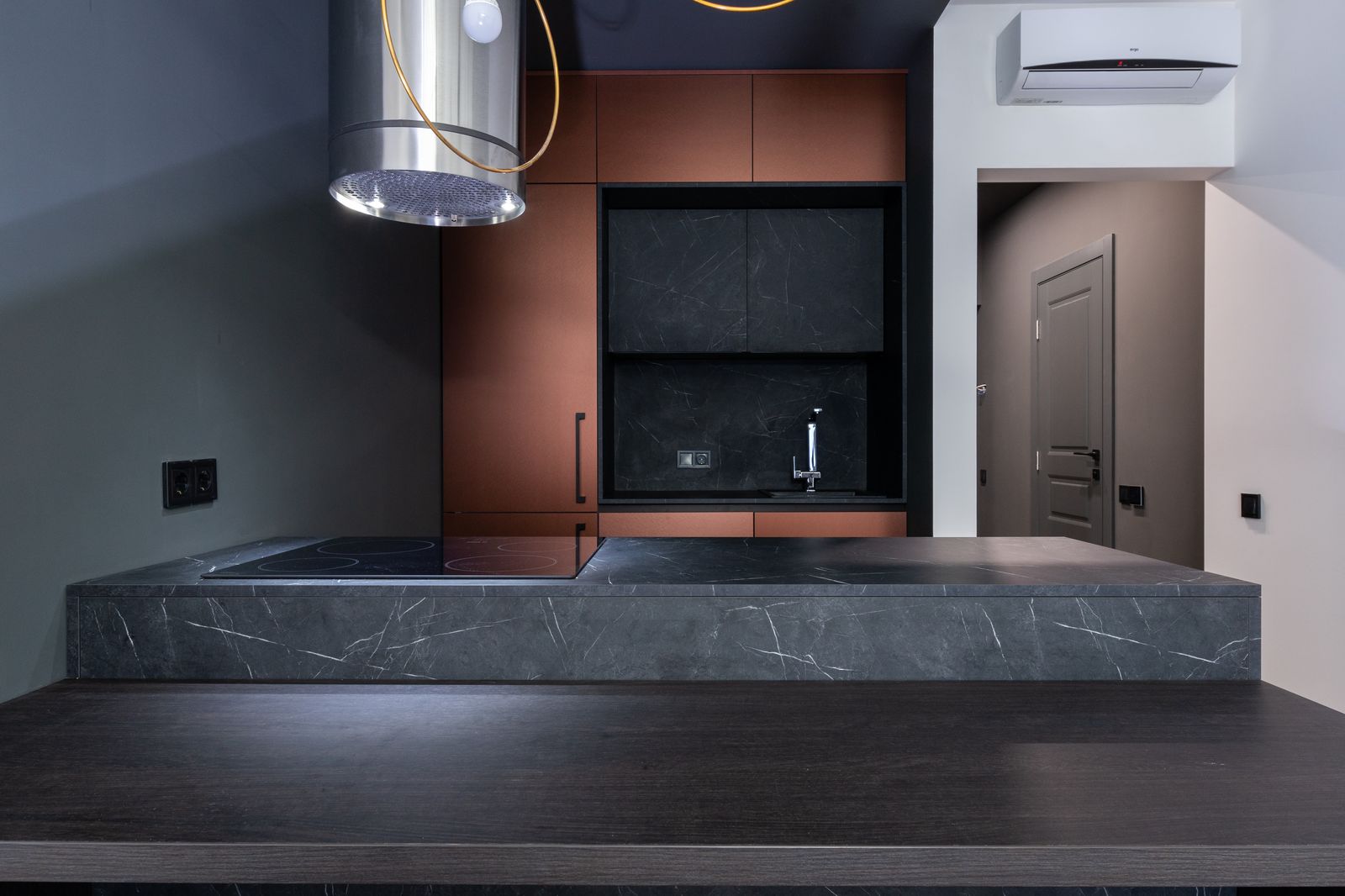
Complete guide to marble countertops for NJ kitchens. Real pros and cons, types of marble, maintenance requirements, etching and staining truths, cost per square foot, and how marble compares to quartz and quartzite. Expert advice from Custom Kitchens by Lopez.
Plan Your ProjectView Our Work
Custom Kitchens by Lopez TeamApril 7, 202614 min read
Marble Countertops: Pros, Cons & Cost Guide for NJ Kitchens
Marble is the countertop material that every other material tries to imitate. When quartz manufacturers develop new patterns, they are trying to replicate marble's veining. When porcelain slab producers design their most premium offerings, they are photographing marble. The entire "marble-look" category exists because marble is the gold standard of kitchen beauty.
And yet marble is also the countertop material that generates the most anxiety. Will it stain? Will it etch? Is it too soft for a kitchen? Is the maintenance too much? Can I really use it as an everyday cooking surface?
These are fair questions — and the answers are more nuanced than most people expect. Marble is not the maintenance disaster that some contractors claim, but it is also not the carefree surface that some designers suggest. The truth falls in between, and understanding that truth is essential before you invest $5,000 to $15,000 in natural stone countertops.
After 20+ years of kitchen remodeling across Monmouth and Ocean Counties, we have installed marble in hundreds of NJ kitchens. We know which homeowners love their marble a decade later and which ones regret it. This guide gives you the honest, unfiltered information you need to decide.
What you will learn:
- The real advantages of marble that no other material offers
- The real drawbacks — with no sugarcoating
- Types of marble and which ones work best in kitchens
- Etching, staining, and maintenance — what it actually involves
- Real NJ pricing for every marble type
- How marble compares to quartz and quartzite
Considering marble for your kitchen? Schedule a free design consultation or call (732) 984-1043. We will bring marble samples to your home, discuss the maintenance realities honestly, and help you decide if marble is right for your kitchen and your lifestyle.
Why Marble Remains the Most Desired Kitchen Surface
Unmatched Natural Beauty
Every marble slab is unique. The veining patterns, the depth of color, the way light interacts with the crystalline surface — these qualities are formed over millions of years of geological pressure and heat. No engineered material replicates this precisely. The best quartz patterns come close in photographs, but in person, the depth and movement of natural marble is immediately apparent.
Calacatta marble — with its dramatic gold and gray veining on a bright white background — is the single most requested countertop surface in luxury NJ kitchens. It transforms a kitchen from well-designed to breathtaking.
Cool Surface Temperature
Marble stays naturally cool to the touch — typically 7 to 10 degrees below room temperature. For bakers, this is a genuine functional advantage. A cool surface is ideal for rolling pastry dough, working with chocolate, and preparing any temperature-sensitive food. Professional pastry kitchens have used marble work surfaces for exactly this reason for centuries.
Timelessness
Marble has been used as a building material for over 2,000 years. It is not a trend. White marble countertops looked beautiful in 1926, they look beautiful in 2026, and they will look beautiful in 2126. While engineered materials come and go with design cycles, marble endures. A marble countertop in a NJ kitchen is a permanent investment in a material with no expiration date on its aesthetic appeal.
Value and Prestige
Marble communicates quality. Buyers recognize it instantly. In Monmouth County's competitive real estate market, marble countertops in a kitchen signal a premium renovation that commands higher pricing. While the ROI on marble specifically is difficult to isolate from a broader kitchen remodel, it contributes to the perception of quality that drives sale price and speed.
It Develops Character
This is either a pro or a con depending on your personality. Marble develops a patina over years of use — subtle etching, faint marks from daily life, a softening of the original polish. Many homeowners describe this as the surface "coming alive" and find that their marble becomes more beautiful with age. Think of the ancient marble surfaces in European kitchens and restaurants — worn, imperfect, and absolutely stunning.
The Real Drawbacks: No Sugarcoating
Etching Is Unavoidable in a Kitchen
Marble is composed primarily of calcium carbonate, which reacts chemically with acids. Lemon juice, vinegar, tomato sauce, wine, mustard, many cleaning products — all of these will etch marble on contact. Etching creates dull, lighter spots on the surface. It is not a stain (which can sometimes be removed); it is a physical change in the surface that requires polishing or honing to restore.
In a kitchen where you cook daily, you will encounter acidic substances constantly. No amount of sealing prevents etching — sealers protect against staining (liquid absorption), not etching (chemical reaction). You can minimize etching with cutting boards, trivets, and immediate cleanup of acidic spills, but you cannot eliminate it entirely.
The honest assessment: If visible imperfections in your countertop surface will cause you daily frustration, marble is not for you. If you can accept (or embrace) the patina that develops over time, marble is deeply rewarding.
Staining Requires Vigilance
Marble is porous. Without sealing, liquids absorb into the stone and leave permanent discoloration. With proper sealing (every 6 to 12 months), you have a window of time to wipe up spills before they penetrate — usually 15 to 30 minutes depending on the sealer quality and the porosity of the specific marble variety.
The most dangerous staining agents in a kitchen: red wine, coffee, turmeric, beet juice, and cooking oils. The prevention is simple — wipe spills promptly and maintain the sealer schedule. Most marble homeowners find this becomes second nature within the first month.
Softer Than Other Stone
Marble rates 3 to 5 on the Mohs hardness scale, compared to granite (6 to 7) and quartzite (7). It can scratch from dragged cookware, abrasive cleaning, or sharp impacts. Heavy impacts can chip edges. Use cutting boards, avoid dragging cast iron across the surface, and choose a honed finish (which hides minor scratches better than polished).
Higher Maintenance Than Alternatives
Between sealing every 6 to 12 months, promptly cleaning acidic spills, using pH-neutral cleaners (no Windex, no vinegar, no Clorox), and periodic professional polishing — marble requires more ongoing attention than quartz (zero maintenance) or granite (seal once every 1 to 2 years). The maintenance is not difficult, but it is not optional.
Premium Cost
Marble is more expensive than most countertop options. Carrara marble costs roughly the same as mid-range quartz, but Calacatta and Statuario marble cost significantly more — $100 to $200+ per square foot installed. When maintenance costs (sealing products, periodic professional polishing) are factored in over the life of the countertop, marble is the most expensive kitchen surface overall.
Types of Marble for NJ Kitchens
Carrara Marble
Origin: Carrara, Italy (Tuscany) Appearance: Gray to blue-gray background with soft, feathery gray veining Cost: $60 to $100 per square foot installed in NJ (as of 2026)
Carrara is the most common and most affordable Italian marble. It has been quarried for over 2,000 years — Michelangelo carved David from Carrara marble. In kitchens, Carrara offers a softer, more understated look than Calacatta. Its gray background and subtle veining hide minor etching and staining better than white-background marbles.
Best for: Homeowners who want genuine marble at a more accessible price point. Carrara is the practical marble choice for kitchen perimeter counters where daily use is heaviest.
Calacatta Marble
Origin: Carrara region, Italy (specific quarries) Appearance: Bright white background with bold, dramatic gold and gray veining Cost: $100 to $180 per square foot installed in NJ (as of 2026)
Calacatta is the marquee kitchen marble — the one people picture when they imagine a marble kitchen. Its dramatic veining and white background create a showpiece surface that transforms the entire room. Calacatta is rarer and more expensive than Carrara, and quality varies significantly between slabs. Always select your specific slab in person at the stone yard.
Best for: Kitchen islands and feature surfaces where the marble will be showcased. The bold veining makes Calacatta ideal for waterfall edges that display the full slab pattern.
Statuario Marble
Origin: Carrara region, Italy (the rarest quarries) Appearance: Brilliant white background with dramatic gray and sometimes gold veining, often bolder and more directional than Calacatta Cost: $120 to $200+ per square foot installed in NJ (as of 2026)
Statuario is the rarest and most expensive of the Italian whites. Its veining tends to be more dramatic and linear than Calacatta, with thicker, more defined lines. Some Statuario slabs have a slight warm tone to the background that adds depth.
Best for: Ultra-premium kitchens where the countertop is the centerpiece of the design. Statuario's rarity means the perfect slab may require visiting multiple stone yards.
Danby Marble (American Alternative)
Origin: Vermont, USA Appearance: White to off-white background with subtle gray or green veining Cost: $80 to $130 per square foot installed in NJ (as of 2026)
Danby marble is a domestic alternative that is denser and less porous than most Italian marbles. Its tighter crystal structure makes it slightly more resistant to staining and etching — though it is still marble and still susceptible to both. Danby was used in the U.S. Supreme Court building and the main branch of the New York Public Library.
Best for: Homeowners who want marble's beauty with somewhat better practical performance. Also appeals to homeowners who prefer American-sourced materials.
Finish Options: Polished vs Honed
Polished Marble
Appearance: High-gloss, mirror-like reflective surface Pros: Maximizes the depth and color of the veining. Makes the marble look its most dramatic and luxurious. Slightly more stain-resistant than honed (the polished surface has fewer microscopic pores). Cons: Shows etching more visibly (etched spots appear as dull marks against the glossy surface). Shows scratches and water spots more clearly.
Honed Marble
Appearance: Matte, smooth, velvety surface with no reflective sheen Pros: Hides etching significantly better (since the surface is already matte, etch marks blend in). More forgiving of daily use and wear. More contemporary, relaxed aesthetic. Cons: Slightly more porous than polished (absorbs stains marginally faster). Does not showcase the veining depth as dramatically as polished.
Our recommendation for NJ kitchens: Honed finish for daily-use kitchen surfaces. The etching visibility difference alone makes honed the practical choice for a cooking kitchen. Polished marble works beautifully in bathrooms, vanity tops, and surfaces that do not encounter acidic substances daily.
Marble Maintenance: The Real Routine
Daily Care
- Wipe surfaces with a soft cloth and warm water or a pH-neutral stone cleaner after cooking
- Clean spills immediately — especially acidic substances (citrus, wine, vinegar, tomato)
- Use cutting boards for food preparation — never cut directly on marble
- Use trivets under hot pots and pans (to protect the sealer, not the stone itself)
- Avoid all acidic, abrasive, or ammonia-based cleaners
Monthly Care
- Inspect the surface for new etch marks or stains
- Spot-treat minor etching with marble polishing powder (a simple 5-minute buffing process)
- Check the sealer with the water test (drops should bead, not absorb)
Semi-Annual Care
- Reseal the entire countertop surface (30-minute DIY process with an impregnating sealer)
- Address any deep stains with a poultice treatment (baking soda and water paste left overnight)
Annual or As-Needed
- Professional polishing or honing if etching has accumulated beyond what home polishing can address (typically $200 to $500 for a full kitchen)
The total time investment: About 5 minutes of extra attention per day (wiping spills promptly), 30 minutes twice a year for sealing, and the occasional spot polishing. Most marble homeowners report the maintenance is far less burdensome than they expected.
NJ Pricing: What You Will Actually Pay (As of 2026)
Cost Per Square Foot (Fabricated and Installed)
| Marble Type | Material Only | Installed (Material + Fabrication + Installation) |
|---|---|---|
| Carrara | $25-$50/sq ft | $60-$100/sq ft |
| Calacatta | $50-$100/sq ft | $100-$180/sq ft |
| Statuario | $60-$120/sq ft | $120-$200+/sq ft |
| Danby (Vermont) | $40-$70/sq ft | $80-$130/sq ft |
Total Project Examples (30 sq ft countertop area)
| Configuration | Cost Range |
|---|---|
| Carrara perimeter + Carrara island | $1,800-$3,000 |
| Calacatta island only (15 sq ft) | $1,500-$2,700 |
| Calacatta full kitchen | $3,000-$5,400 |
| Statuario full kitchen | $3,600-$6,000+ |
| Mixed: quartz perimeter + Calacatta island | $2,500-$4,000 |
Additional Costs
| Item | Cost |
|---|---|
| Waterfall edge (one side) | $800-$2,000 |
| Sink cutout (undermount) | $150-$300 |
| Edge profile upgrade (ogee, bullnose) | $15-$30/linear ft |
| Sealer (per application, DIY) | $30-$50 |
| Professional polishing (annual) | $200-$500 |
Marble vs Quartz vs Quartzite: The Decision Framework
Choose Marble When:
- The beauty of natural stone is a top priority
- You bake frequently and value the cool surface
- You appreciate (or at least accept) the patina that develops
- You are committed to the maintenance routine
- The kitchen island is the showcase — marble on the island with quartz on the perimeter is the most popular compromise
Choose Quartz When:
- Zero maintenance is the priority
- Staining and etching would cause daily frustration
- You want consistent, predictable appearance
- Budget is a factor (mid-range quartz is less expensive than premium marble)
- The kitchen is heavily used with minimal tolerance for surface imperfection
Choose Quartzite When:
- You want the natural stone beauty of marble with significantly better durability
- You can invest in the premium cost ($80 to $200+ per square foot installed)
- You want a surface that resists etching, staining, and scratching better than marble
- See our quartz vs quartzite guide for a detailed comparison
The Popular NJ Compromise
The most common marble configuration in our Monmouth County kitchen remodels: quartz on the perimeter counters (near sink, stove, and dishwasher) with marble on the island. This gives you the beauty of marble where it is most visible and most appreciated, with the zero-maintenance performance of quartz where daily kitchen abuse is heaviest.
The Verdict: Is Marble Right for Your NJ Kitchen?
Marble is right for you if:
- You prioritize beauty above all other countertop qualities
- You are comfortable with a surface that changes and develops character
- The maintenance routine (sealing, careful cleaning, prompt spill cleanup) fits your lifestyle
- You understand etching will happen and you are OK with it
- You view the patina as part of the material's story, not a flaw
Marble is wrong for you if:
- Surface imperfections (even minor ones) will bother you daily
- You want a countertop you can set and forget for 15 years
- Your kitchen sees heavy use with acidic foods and you do not want to manage spills
- You prefer your countertop to look identical in year 10 as it did on day one
- Budget is the primary consideration
The homeowners who love their marble the most are the ones who chose it with open eyes. They knew about the etching. They understood the sealing schedule. They chose marble anyway — because nothing else looks like marble, feels like marble, or ages like marble. And they were right.
Want to see marble slabs for your kitchen? Schedule a free consultation or call (732) 984-1043. We will take you to our stone suppliers, help you select the perfect slab, and give you an honest assessment of how marble will perform in your specific kitchen and lifestyle.
Custom Kitchens by Lopez has been installing countertops across Monmouth and Ocean Counties for over 20 years. From Carrara marble on a farmhouse island to a full Calacatta kitchen in a Rumson luxury home — we have worked with every marble type in every kitchen configuration. Verified reviews from homeowners who trust us with their homes.
We serve Freehold Township, Holmdel, Colts Neck, Marlboro, Manalapan, Middletown, Red Bank, Rumson, and all surrounding communities.
*Custom Kitchens By Lopez is a licensed NJ Home Improvement Contractor (HIC #13VH04175700) based in Freehold Township. We specialize in kitchen remodeling, bathroom remodeling, custom cabinetry, and general contracting across Monmouth County and Ocean County, NJ.*
Planning a Complete Kitchen?
See how CKL plans custom cabinetry, premium materials, and $75,000+ kitchen projects.
Ready to start your project?
Related Services
Countertop InstallationCustom Kitchen CabinetsTile InstallationHardwood Flooring
5 Rating(46+ reviews)
Ready to Plan the Complete Kitchen?
Move from product research to a complete design plan. See real CKL kitchens, the decisions that define luxury work, and the $75,000–$150,000+ planning range.
Explore Luxury KitchensCall 732.984.1043
Licensed & Insured20+ Years ExperienceLuxury kitchens from $75,000
Local Services
Kitchen Cabinets FreeholdKitchen Cabinets EdisonKitchen Cabinets ManalapanKitchen Cabinets MarlboroKitchen Remodeling FreeholdBathroom Remodeling Freehold
Popular Service Areas
Holmdel, NJColts Neck, NJRumson, NJMarlboro, NJShrewsbury, NJMiddletown, NJRed Bank, NJFreehold, NJSpring Lake, NJManalapan, NJ
Ready to start your project?
Get a free, no-obligation quote today.
5 (46+ reviews)
Category
Materials Guide# Porcelain Countertops: Pros, Cons, Cost & Vs. Quartz (2026 NJ Guide)# Soapstone Countertops: Pros, Cons, Cost & Colors (2026 NJ Guide)
More Articles
Ready to Start Your Project?
Request a private design consultation for your substantial kitchen, bath, cabinetry, or whole-home project.