
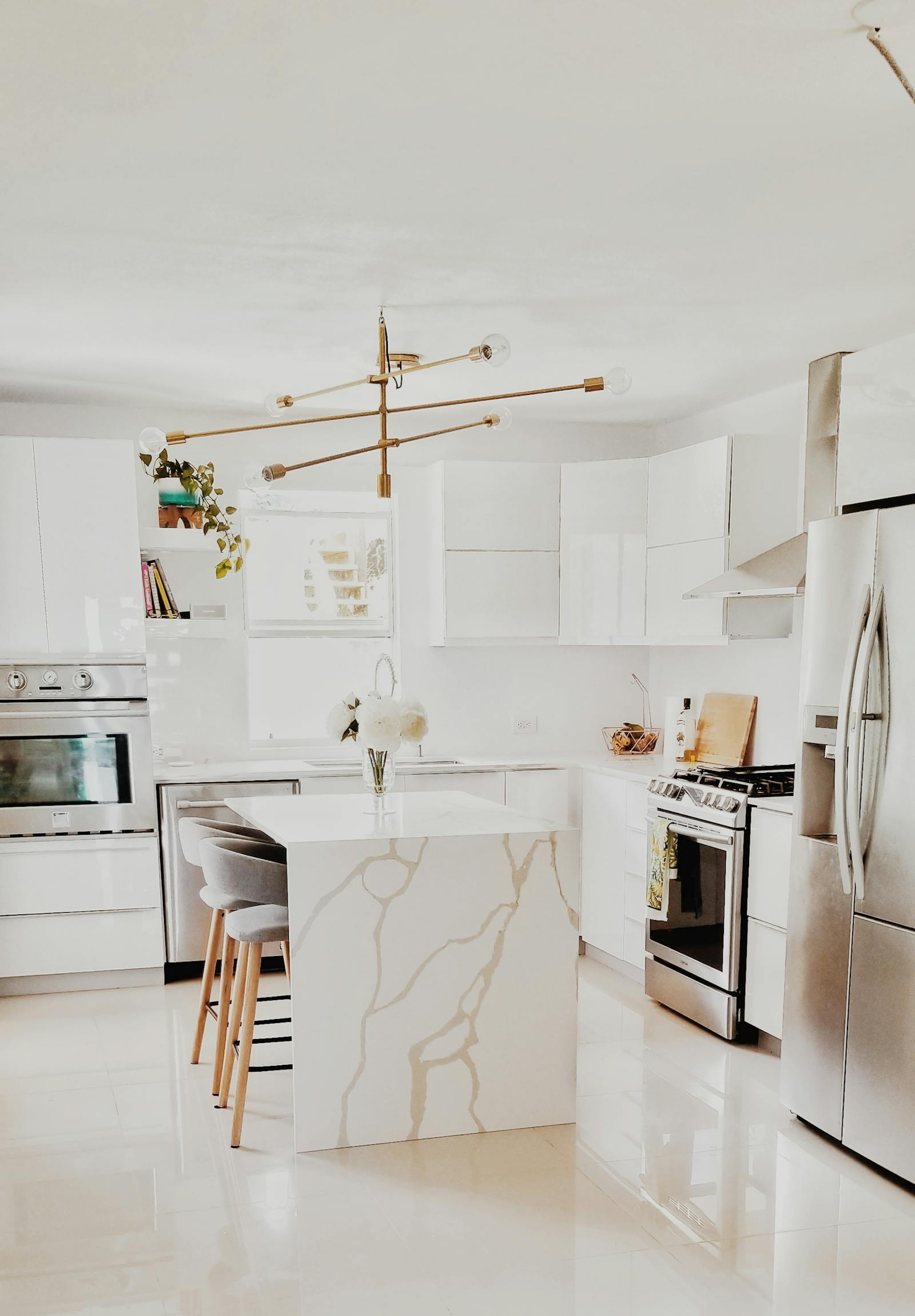
White kitchen design ideas for every style — all-white, two-tone, warm white vs cool white, hardware choices, countertop pairings, and how to avoid the sterile look. Modern white kitchens, farmhouse white kitchens, transitional white kitchens, and coastal white kitchens with NJ-specific guidance. Expert design from Custom Kitchens by Lopez.
Plan Your ProjectView Our Work
Custom Kitchens by Lopez TeamApril 7, 202624 min read
White Kitchen Ideas: Modern, Farmhouse & Transitional Designs
White kitchens have dominated residential design for over a decade — and for good reason. White reflects light, makes rooms feel larger, photographs well, appeals to the broadest range of buyers, and serves as a neutral foundation for any decorating style.
But "white kitchen" is not one thing. A bright white modern kitchen with flat-panel cabinets and stainless hardware looks nothing like a warm white farmhouse kitchen with shaker cabinets and brass hardware. The white you choose, the materials you pair with it, and the details you add determine whether your white kitchen feels luxurious, cozy, stark, boring, or timeless.
After over 20 years of kitchen remodeling in New Jersey, white cabinets remain our most-requested color — in every town from Freehold to Rumson, every style from Colonial to Contemporary. This guide covers every approach to white kitchen design: all-white, two-tone, warm vs cool, and how to make a white kitchen feel like yours — not like everyone else's.
What this guide covers:
- All-white kitchen design strategies (and how to avoid the sterile trap)
- Two-tone white kitchen combinations
- Warm white vs cool white cabinet selection
- White kitchen ideas by style: modern, farmhouse, transitional, coastal
- Countertop pairings for white cabinets
- Hardware and fixture recommendations
- Backsplash ideas specifically for white kitchens
- NJ-specific guidance: light, resale, and maintenance
Designing a white kitchen? Schedule a free in-home consultation or call (732) 984-1043. We bring cabinet door samples, countertop slabs, and hardware to your home so you can see whites in your actual kitchen light.
Choosing the Right White
This is the most important decision in any white kitchen project, and it is the one most homeowners rush past.
There are hundreds of whites. They differ in undertone, brightness, and how they react to natural and artificial light. Picking the wrong white — especially in NJ, where natural light varies dramatically by orientation and season — can make a kitchen look yellow, gray, cold, or muddy.
The White Spectrum
Warm whites (cream, ivory, and yellow undertones):
- Benjamin Moore White Dove (OC-17) — the most popular warm white for NJ kitchens. Soft, creamy, universally flattering.
- Benjamin Moore Simply White (OC-117) — clean and warm without being yellow. Works in modern and traditional settings.
- Benjamin Moore Swiss Coffee (OC-45) — warmer and more ivory. Best in traditional and farmhouse kitchens.
- Benjamin Moore Navajo White (OC-95) — the warmest of the common whites. Almost a cream.
Cool whites (blue, gray, or no visible undertone):
- Benjamin Moore Chantilly Lace (OC-65) — the purest white. No undertone. Reads as clean and bright.
- Benjamin Moore Decorator's White (OC-149) — a subtle cool edge. Modern and crisp.
- Benjamin Moore Super White (OC-152) — very bright, slightly blue. Best in rooms with generous warm light to balance it.
Greige whites (gray-beige undertone):
- Benjamin Moore Pale Oak (OC-20) — technically not white but reads as an off-white with warm gray character. Beautiful on cabinets.
- Benjamin Moore Balboa Mist (OC-27) — a warm greige-white that adds depth without looking gray.
How to Choose for Your NJ Kitchen
North-facing kitchen: Choose warm whites (White Dove, Simply White). The cool, indirect light from the north will make cool whites look icy and unwelcoming.
South-facing kitchen: You have the most flexibility. Both warm and cool whites work because the generous warm light balances cool tones and enhances warm tones.
East-facing kitchen: Morning light is warm, afternoon light is cooler. Choose a neutral-warm white that holds up in both conditions (Simply White or White Dove).
West-facing kitchen: Intense warm afternoon light can make warm whites look yellow. Consider a clean white (Chantilly Lace) or a neutral white that does not shift too much.
The only way to choose correctly: Buy sample quarts. Paint 12 x 12 inch patches on multiple walls. Live with them for 3 to 5 days, observing at morning, noon, and evening. Paint swatches lie. Large patches tell the truth.
All-White Kitchen Ideas (Done Right)
An all-white kitchen — white cabinets, white countertops, white backsplash, light walls — can look stunning or sterile. The difference is texture, tone variation, and material quality.
Strategy 1: Vary the White Tones
Do not paint every surface the same white. Use slightly different whites on different surfaces:
- Cabinets: White Dove (a warm white)
- Walls: Classic Gray (a lighter, cooler white that creates subtle contrast)
- Trim: White Dove (matching the cabinets for a built-in feel)
- Ceiling: Chantilly Lace (a brighter white that makes the ceiling recede)
The eye registers these as "white" but the subtle differences create depth and dimension.
Strategy 2: Let Materials Provide Pattern
In an all-white kitchen, the countertop and backsplash become the main visual interest. Choose materials with natural movement:
- Countertop: Calacatta marble or marble-look quartzite with bold gray and gold veining. The dramatic veining provides all the pattern the kitchen needs.
- Backsplash: Full-height stone slab matching or complementing the countertop — one continuous sweep of natural pattern from counter to ceiling.
Strategy 3: Add Warmth Through Wood
The single most effective way to prevent an all-white kitchen from feeling cold: introduce natural wood. Options:
- A butcher block countertop on the island
- Open shelving in natural wood (white oak, walnut)
- Wood flooring (light or medium tone)
- A wood range hood surround
- Wood bar stools or dining chairs
The wood provides organic warmth and visual texture that white surfaces alone cannot create.
Strategy 4: Warm Metallic Accents
Hardware, fixtures, and lighting in warm metals (brass, gold, champagne, or copper) add warmth at the accent level. In an all-white kitchen, the metal finish becomes one of the few color elements — it reads prominently and sets the entire mood.
- Brushed brass hardware + brass faucet + brass pendant lights = warm, elegant all-white kitchen
- Matte black hardware + black faucet + black pendants = crisp, modern all-white kitchen
- Mixed metals (brass + black) = layered, contemporary all-white kitchen
Strategy 5: Texture Over Color
When you eliminate color, texture becomes the primary design tool:
- Handmade backsplash tile (zellige, handmade subway) with irregular surfaces instead of machine-perfect tile
- Honed or leathered stone instead of polished — the matte finish adds tactile interest
- Shaker cabinet profiles with beaded inset detail instead of flat panels
- Linen, rattan, or woven pendant lights instead of glass or metal
- Concrete or plaster range hood instead of stainless steel
Every texture choice adds a layer of interest that keeps the all-white kitchen from reading as flat or monotonous.
Two-Tone White Kitchen Ideas
Two-tone kitchens — white combined with a second color or material — are the strongest trend in NJ kitchen design. They offer the brightness of white with the personality of color.
White + Navy Island
The most popular two-tone combination in Monmouth County. White perimeter cabinets (White Dove or Simply White) with a navy island (Hale Navy HC-154). The navy anchors the room while the white keeps everything bright. Best with brass hardware and marble-look countertops.
White + Sage Green Island
The nature-inspired alternative. White perimeter with a sage or muted green island (Cushing Green HC-125 or October Mist 1495). Pair with warm wood accents and brass hardware for an organic, calming kitchen.
White + Charcoal Lower Cabinets
Dramatic: white uppers with charcoal or dark gray lowers (Kendall Charcoal HC-166). The dark base grounds the kitchen while the white uppers keep it from feeling heavy. Works best in kitchens with 9-foot or higher ceilings and good natural light.
White + Natural Wood Island
The warmest option. White painted perimeter cabinets with a natural wood island (rift-cut white oak, walnut, or hickory). The wood island becomes the visual centerpiece and provides organic warmth that paint cannot replicate.
White + Black Island
The highest-contrast combination. White perimeter with a true black island. Bold, graphic, and modern. Pair with polished chrome or nickel hardware for a clean look, or brass for warmth. This combination photographs dramatically and sells well in luxury NJ real estate listings.
White Uppers + Colored Lowers
Instead of limiting the second color to the island, paint all lower cabinets in the accent color and keep all uppers white. This approach creates a clear visual line: the bottom half of the kitchen has personality, and the top half stays bright and open. Particularly effective in kitchens with lower ceilings where dark upper cabinets would feel heavy.
White Kitchen Ideas by Style
Modern White Kitchen
The look: Clean lines, minimal ornamentation, flat-panel (slab) cabinet doors, integrated or minimal hardware.
The white: Cool whites (Chantilly Lace, Decorator's White). Modern design favors crisp, true whites without warm undertones.
Key elements:
- Flat-panel (slab) cabinet doors with no frame or reveal
- Integrated edge pulls, finger pulls, or push-to-open latches — no visible hardware
- Handleless appearance throughout
- Countertops: white quartz with minimal veining or concrete-look surfaces
- Backsplash: large-format porcelain (24 x 48 or larger) with minimal grout lines, or a continuous stone slab
- Appliances: panel-ready (hidden behind cabinet fronts) or stainless steel
- Lighting: recessed only, or minimal pendant lights in simple geometric shapes
- Ceiling-height cabinets with no gap or soffit
Hardware: If visible, brushed stainless or matte black bar pulls in a long, linear profile. If integrated, a continuous channel or notch cut into the bottom of the upper cabinet or the top of the lower cabinet.
Avoid: Traditional profiles (shaker, raised panel), ornate hardware, busy backsplash patterns, visible appliances, cluttered open shelving.
Farmhouse White Kitchen
The look: Warm, inviting, layered with natural materials and handmade textures. Comfortable rather than pristine.
The white: Warm whites (White Dove, Simply White, Swiss Coffee). Farmhouse kitchens should feel soft and approachable, not stark.
Key elements:
- Shaker cabinet doors or beadboard panel doors
- Apron-front (farmhouse) sink in white fireclay or cast iron
- Open shelving (wood brackets, white-painted shelves or natural wood)
- Butcher block countertops on at least the island
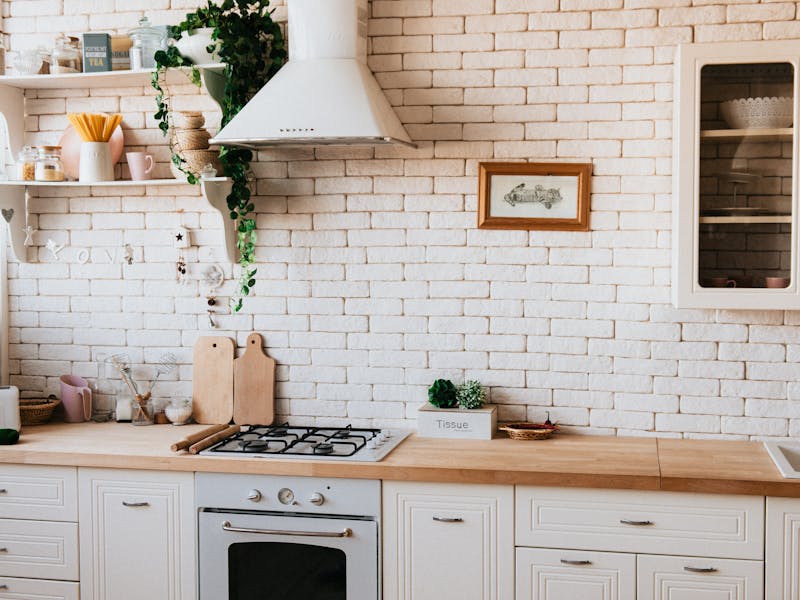
- Backsplash: white subway tile (standard 3x6 or oversized 4x12), beadboard, or shiplap
- Visible vintage or vintage-inspired elements: a plate rack, glass-front cabinets, a wooden dish drying rack
- Pendant lights with rustic character: enamel barn lights, woven shades, or iron fixtures
- Wood flooring (wide plank, light to medium tone)
Hardware: Cup pulls in oil-rubbed bronze, matte black, or antique brass. Knobs with a traditional round profile. Latches on glass-front cabinets.
The modern farmhouse distinction: Avoid the cliches that made farmhouse feel dated by 2023 — no shiplap on every surface, no barn doors, no mason jars, no "Live Laugh Love" signage. The 2026 farmhouse kitchen is edited: real materials, handmade textures, and restraint.
Transitional White Kitchen
The look: The meeting point of traditional and modern. Clean but not cold. Detailed but not fussy. This is the most popular style for NJ kitchen remodels because it works in virtually every NJ home architecture.
The white: Neutral-warm whites (White Dove, Simply White, Pale Oak). Transitional kitchens favor whites that are warm enough to feel welcoming but clean enough to read as current.
Key elements:
- Shaker cabinet doors (the most versatile profile — traditional enough for a Colonial, clean enough for a contemporary home)
- Quartz countertops with subtle marble-look veining
- Herringbone or subway backsplash in white or cream
- Mix of cabinet types: mostly closed uppers, with one or two glass-front sections for display
- One statement element: a distinctive pendant light, a colored island, or a dramatic range hood
- Crown molding on upper cabinets (connecting them visually to the room's trim)
Hardware: Brushed brass cup pulls or bar pulls (the defining hardware choice for transitional white kitchens in 2026). Alternatively, polished nickel for a brighter, more traditional feel.
What makes it "transitional" instead of "traditional": The lines are cleaner, the hardware is simpler, the countertops are engineered rather than ornate natural stone, and there is at least one modern element (the pendant lights, the hardware finish, or the cabinet profile) that keeps it from looking like a period reproduction.
Coastal White Kitchen
The look: Light, breezy, connected to the outdoors. The NJ Shore house kitchen.
The white: Warm whites with a barely-there blue or green undertone, or clean warm whites (White Heron OC-57, Simply White OC-117, Chantilly Lace for a crispier look).
Key elements:
- Light-toned cabinets with a relaxed profile (shaker or flat panel — nothing ornate)
- Blue accents: navy island, blue-gray glass backsplash tile, blue pendant lights, blue-and-white dishware on open shelves
- Natural material textures: rope, rattan, weathered wood, woven baskets
- Light countertops: white quartz, light granite with movement, or butcher block
- Large windows or glass doors connecting to outdoor space
- Durable, humidity-resistant materials (porcelain tile floors, quartz countertops, marine-grade hardware)
Hardware: Weathered brass, satin nickel, or stainless steel. Avoid polished or high-shine finishes — the coastal aesthetic is relaxed and natural.
NJ Shore note: Shore house kitchens face salt air, humidity, and temperature swings when the house is unoccupied off-season. Material selection matters more here than in any other NJ kitchen. Choose quartz over marble (moisture resistant), porcelain tile over hardwood (will not warp), and stainless or marine-grade hardware (will not corrode). See our coastal kitchen design guide for full shore-specific recommendations.
Countertop Pairings for White Cabinets
Classic: White Marble or Marble-Look Quartz
The most timeless pairing. Calacatta or Carrara marble (or their quartz equivalents) with white cabinets creates a soft, elegant kitchen that never goes out of style. The gray veining in the marble provides all the visual interest the kitchen needs.
Best for: Traditional, transitional, and coastal white kitchens. NJ cost: Real marble $75 to $200/sq ft installed; marble-look quartz $50 to $120/sq ft installed (as of 2026).
Warm: Butcher Block
Wood countertops on the island (or on a section of perimeter counter) add organic warmth that prevents the all-white look from feeling cold. Walnut, white oak, and maple are the best choices.
Best for: Farmhouse and transitional white kitchens. Two-tone combinations where the island gets wood and the perimeter gets stone or quartz. NJ cost: $40 to $80/sq ft installed.
Bold: Dark Countertops
Black granite, soapstone, dark quartz, or dark quartzite creates high contrast against white cabinets. The drama comes from the opposition: bright white above, dark surface below.
Best for: Modern and transitional white kitchens where contrast is the design strategy. Works especially well with matte black hardware. NJ cost: Varies by material. See our granite cost guide and quartz cost guide.
Modern: Concrete or Concrete-Look
Concrete-look quartz or actual poured concrete countertops create an industrial-modern edge against white cabinets. The raw, matte texture contrasts with the smooth cabinet finish.
Best for: Modern and industrial white kitchens. Loft-style open plans.
Dramatic: Quartzite With Bold Veining
Natural quartzite slabs with dramatic movement (Calacatta, Taj Mahal, Super White, Mont Blanc) create a focal point that makes the white cabinets a quiet backdrop for the stone's natural art.
Best for: High-end white kitchens where the countertop is the centerpiece. NJ cost: $80 to $200+/sq ft installed.
Backsplash Ideas for White Kitchens
The backsplash is where white kitchens get their personality. With neutral cabinets and countertops, the backsplash can be conservative or bold.
Subway Tile (Evolved)
Classic subway tile works in white kitchens, but the default 3 x 6 white tile with gray grout has been done to death. Updated approaches:
- Oversized subway (4 x 12, 4 x 16) — fewer grout lines, more modern
- Stacked bond layout instead of running bond — clean, contemporary
- Handmade or irregular-edge subway — adds texture and character
- Matching grout (white-on-white) instead of contrasting gray — seamless, refined
- Vertical orientation — unexpected and modern
Zellige Tile
Handmade Moroccan tile with naturally irregular surfaces and slight color variation. In white or warm cream, zellige adds handmade character that machine-perfect tile cannot match. In sage green or warm blue, it introduces color while staying soft and organic.
Full-Height Stone Slab
The premium approach: a single slab of stone (marble, quartzite, or marble-look porcelain) running from countertop to the bottom of the upper cabinets — or all the way to the ceiling. No grout lines, dramatic veining, and a seamless luxury look.
Geometric Tile
Hexagonal, arabesque, fan-shaped, or picket tile in white or a soft color. Adds visual interest through shape rather than color — particularly effective in white kitchens where the backsplash is one of the few opportunities for pattern.
Bold Color Tile
In an all-white kitchen, a colored backsplash becomes the focal point. Sage green, navy, emerald, or warm terracotta tile against white cabinets creates instant personality. This is the easiest way to add color to a white kitchen because the backsplash is relatively inexpensive to replace if trends change.
Avoiding the Sterile White Kitchen (A Summary)
The sterile white kitchen has these characteristics:
- Every surface is the same bright, cool white
- All finishes are glossy or polished
- Hardware is chrome or stainless (cool metals with no warmth)
- Lighting is overhead fluorescent or cool-white LED
- No natural materials (no wood, no stone with character, no handmade items)
- No texture variation — every surface is smooth and machine-perfect
- No accent color anywhere
The inviting white kitchen has these characteristics:
- Whites vary in tone (warm whites, with subtle differences between surfaces)
- At least one natural material (wood, natural stone, handmade tile)
- Warm metallic accents (brass, gold, bronze)
- Warm lighting (2700K bulbs, layered lighting sources)
- Texture variation (matte and satin finishes, handmade tile, natural grain)
- At least one element with organic character (a plant, natural wood, a handmade object)
- One confident accent color (even if it is just the hardware finish)
The best white kitchens are warm, layered, and textured. They use white as a foundation — not as the entire palette.
White Kitchen Maintenance in NJ
Cabinet Care
White cabinets show fingerprints, cooking grease, and general grime more visibly than darker colors. Maintenance routine:
- Wipe high-touch areas (around handles, near the stove) weekly with a damp microfiber cloth and mild soap
- Deep clean all cabinet fronts monthly
- Avoid abrasive cleaners — they damage paint and finish
- For painted cabinets: a matte or satin finish hides prints better than high-gloss
- For factory-finished cabinets (thermofoil, lacquer): follow manufacturer cleaning guidelines
NJ Humidity Considerations
NJ summers are humid. In kitchens without adequate ventilation, moisture can affect white painted surfaces over time, potentially causing yellowing or peeling. Ensure:
- Your range hood vents to the outside (not recirculating)
- The kitchen has adequate ventilation (a window, a ceiling fan, or a ventilation system)
- Any moisture-prone areas (near the sink, near the stove) are monitored for paint or finish degradation
Resale Value
White kitchens retain the broadest buyer appeal in the NJ real estate market. If resale is a consideration, white cabinets (particularly warm whites) are the safest investment. Pair with neutral countertops and hardware that can be easily swapped to update the look for future trends.
Start Your White Kitchen
White is not one decision — it is a system of decisions. The right white, the right countertop, the right backsplash, the right hardware, and the right textures create a kitchen that is warm, personal, and timeless. The wrong combination creates a kitchen that feels like every other kitchen.
We help NJ homeowners navigate these choices with physical samples, hands-on design guidance, and 20+ years of experience building white kitchens that people love living in.
Design your white kitchen. Schedule a free in-home consultation or call (732) 984-1043. We bring door samples, countertop slabs, tile options, and hardware — everything you need to see your white kitchen before committing.
Related Resources
- Kitchen Color Ideas: 30+ Palettes
- Kitchen Cabinet Color Trends
- Two-Tone Kitchen Cabinets
- Best Kitchen Paint Colors NJ
- Kitchen Backsplash Ideas
- Kitchen Countertop Trends 2026
- Quartz vs Marble Countertops
- Kitchen Remodeling Services
*Custom Kitchens by Lopez is a licensed NJ Home Improvement Contractor (HIC #13VH04175700) serving Monmouth County and Ocean County since 2005.*
Planning a Complete Kitchen?
See how CKL plans custom cabinetry, premium materials, and $75,000+ kitchen projects.
Ready to start your project?
Related Services
Kitchen Remodeling Near MeCustom Kitchen CabinetsCountertop InstallationKitchen Backsplash Installation
5 Rating(46+ reviews)
Ready to Plan the Complete Kitchen?
Move from product research to a complete design plan. See real CKL kitchens, the decisions that define luxury work, and the $75,000–$150,000+ planning range.
Explore Luxury KitchensCall 732.984.1043
Licensed & Insured20+ Years ExperienceLuxury kitchens from $75,000
Local Services
Kitchen Remodeling FreeholdKitchen Remodeling EdisonKitchen Cabinets FreeholdKitchen Cabinets EdisonMonmouth County Kitchen Remodeling
Popular Service Areas
Holmdel, NJColts Neck, NJRumson, NJMarlboro, NJShrewsbury, NJMiddletown, NJRed Bank, NJFreehold, NJSpring Lake, NJManalapan, NJ
Ready to start your project?
Get a free, no-obligation quote today.
5 (46+ reviews)
Category
Kitchen Design# Coffee Bar Ideas: Designs + What It Costs to Build One (NJ 2026)# Green Kitchen Cabinets: The Complete Guide to Shades, Pairings, Paint & Cost
More Articles
Ready to Start Your Project?
Request a private design consultation for your substantial kitchen, bath, cabinetry, or whole-home project.