
The honest pros and cons of a freestanding tub, what it costs installed in NJ ($1,500–$8,000+), what actually holds one in place, the faucet and floor-support realities, the best materials, and whether it's worth it — from a 20-year Monmouth County bathroom remodeler.
Plan Your ProjectView Our Work
Custom Kitchens by Lopez TeamJune 1, 202612 min read
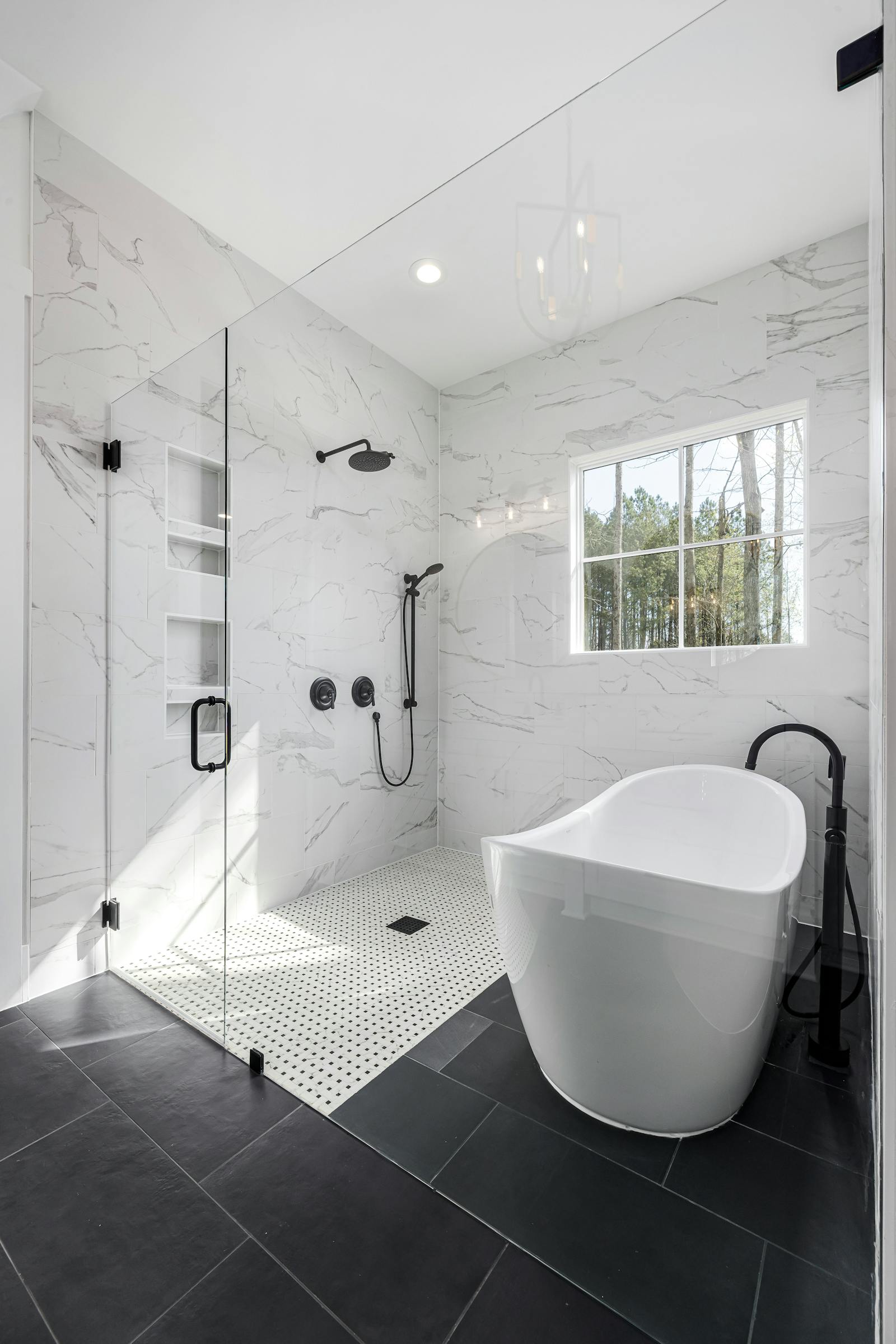
Dreaming of a soaking tub?
We install freestanding tubs in NJ master baths
A freestanding tub is equal parts plumbing and structure — the floor-mounted filler, the drain rough-in, and the floor support all have to be right. Custom Kitchens by Lopez has designed and built spa-style master baths with freestanding tubs and walk-in showers across Monmouth, Ocean, and Middlesex County for 20+ years. NJ HIC #13VH04175700, NARI member.
Bathroom RemodelingDesign a spa-style master bath with a freestanding tub and walk-in shower.Bathroom Remodelers Near MeLocal, licensed bathroom remodelers serving Monmouth and Ocean County.NJ Bathroom Remodelers20+ years of New Jersey bathroom renovations, plumbing, and tile.
Get a Free QuoteCall 732.984.1043
Freestanding Tubs: Pros, Cons, Cost & Are They Worth It? (NJ 2026)
Quick answer: A freestanding tub is a standalone soaking tub that isn't built into a wall or surround — a sculptural centerpiece for a bathroom. In NJ in 2026, the tub itself runs $800–$5,000+ and installation adds $700–$3,000+ (mostly the floor-mounted faucet and drain rough-in), so most land around $1,500–$8,000+ installed. They're worth it as a primary-bath focal point, less so as a practical family-only tub.
A freestanding soaking tub is the feature that turns a bathroom into a spa — and the one homeowners most often misjudge on cost, because the showroom prices the tub but not the plumbing and floor work behind it. After 20+ years building bathrooms across Monmouth and Ocean County, here's the honest, contractor's-eye guide: the real pros and cons, what actually holds a freestanding tub in place, what it costs installed in NJ, and whether it's the right call for your bathroom.
What is a freestanding tub?
A freestanding tub is a self-contained bathtub finished on all sides that sits out in the room rather than tucking into a three-wall alcove. Because every side is visible, it acts as a sculptural focal point. Common styles include:
- Soaking tub — deep, for a full-body soak; the most popular today.
- Slipper tub — one raised end for reclining (double-slipper raises both).
- Clawfoot / pedestal — traditional, on feet or a base.
- Double-ended — symmetrical, centered faucet, modern look.
They come in several materials, which is where comfort, weight, and price diverge (see below).
Pros and cons of a freestanding tub
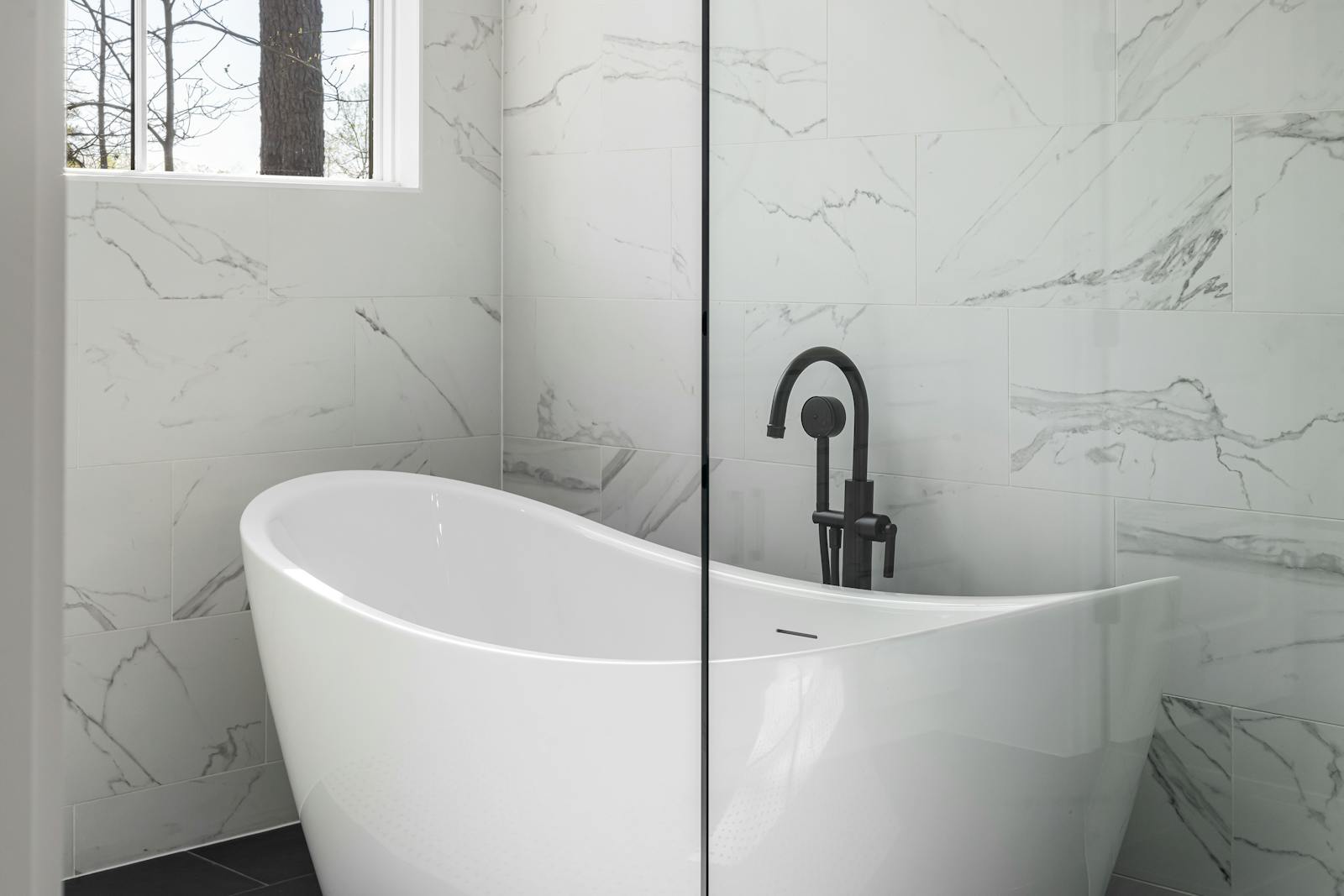
Pros
- A stunning focal point — instantly elevates a primary bath to spa-level.
- Flexible placement — not tied to a wall; can sit center-room, by a window, or in a nook.
- Deep soaking — most are deeper than a standard alcove tub.
- Resale appeal — a freestanding tub paired with a walk-in shower is a sought-after NJ master-bath layout.
- Wide style range — from clawfoot-traditional to sleek modern.
Cons
- No built-in storage or ledge — nowhere to set bottles without a separate stand.
- Harder entry/exit — no surround to grab; less ideal for kids or limited mobility.
- Takes more space — needs clearance on multiple sides.
- More cleaning — you clean around and behind it.
- Pricier faucet — most need a floor-mounted filler with its own rough-in.
- Heavy — cast-iron and stone tubs may need floor reinforcement.
If accessibility is the priority, an alcove tub or a tub-to-shower conversion may serve you better — that's the opposite trend we also do a lot of in NJ.
What holds a freestanding tub in place?
A common worry — and the answer is reassuring. A freestanding tub is not bolted to the wall. It's held by a combination of its own weight, the drain connection, and a seal at the base:
- The tub rests on its integral base or feet on the finished floor.
- The drain assembly connects to the waste rough-in in the floor, which locates and anchors it.
- A bead of silicone seals the base to the floor so water can't get under it and to stop any sliding.
A filled tub with a person in it is extremely heavy, so it simply doesn't move. The drain connection and silicone do the rest. This is also why a level floor and a correctly placed drain rough-in matter so much during installation.
How much does a freestanding tub cost in NJ? (2026)
The price has two parts — the tub and the install — and the install is the part people forget.
| Component | NJ cost | Notes |
|---|---|---|
| Acrylic tub | $800–$2,500 | The popular, practical choice |
| Cast-iron tub | $1,500–$4,000+ | Heavy, durable, best heat retention |
| Stone-resin tub | $2,500–$5,000+ | Premium modern solid-surface |
| Floor-mounted faucet + rough-in | $700–$2,000 | Plumbing up through the floor |
| Drain rough-in / relocation | $300–$1,200 | More if moving the drain |
| Floor reinforcement (if needed) | $300–$1,500 | For heavy tubs / older joists |
| Typical installed total | $1,500–$8,000+ | Tub + plumbing + labor |
The biggest swing factors are the floor-mounted filler (its own rough-in) and any drain relocation. For the whole-room budget, see our master bathroom remodel cost guide and overall NJ bathroom remodel cost guide.
Tub materials compared
| Material | Weight | Heat retention | Price | Best for |
|---|---|---|---|---|
| Acrylic | Light | Good | $ | Most homeowners; easy to handle & repair |
| Cast iron | Very heavy | Excellent | $$$ | Long soaks; durability; may need floor support |
| Stone resin | Heavy | Excellent | $$$$ | Modern, high-end spa look |
| Copper | Medium | Excellent | $$$$ | Statement/traditional pieces |
For most NJ homeowners, a quality acrylic tub is the sweet spot — warm to the touch, light enough to install easily, and a fraction of the weight of cast iron.
Do you need a special faucet?
Usually, yes. Most freestanding tubs use a floor-mounted (freestanding) tub filler that rises from the floor beside the tub, which means a dedicated plumbing rough-in coming up through the subfloor — planned before the floor goes down. Some tubs accept a deck-mounted faucet (on the tub rim) or a wall-mounted filler, which can cost less if the plumbing already runs to that spot. Choosing the tub and the faucet together, early, avoids expensive rework.
Freestanding vs. built-in (alcove) tub
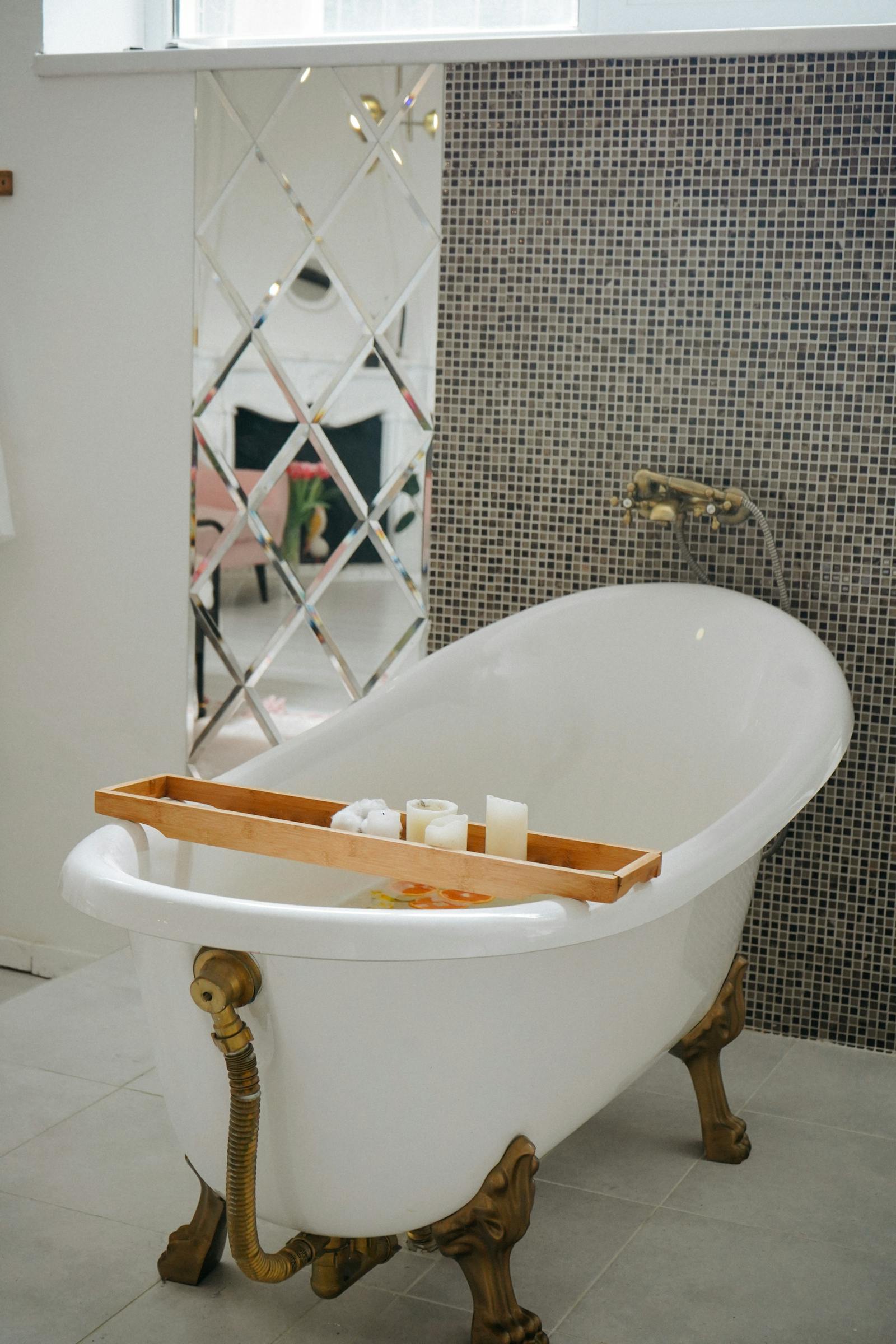
- Freestanding: the design statement; flexible placement; costs more; no storage surround; soak-only.
- Built-in / alcove: cheaper; offers a ledge and often a shower combo; fits tight spaces; the practical family choice.
The most popular NJ primary-bath layout right now pairs a freestanding soaking tub with a separate walk-in shower — the tub for relaxing, the shower for everyday. A frameless glass door on that shower completes the open, spa look. See current looks in our 2026 bathroom trends.
How much space does a freestanding tub need?
Plan for the tub's footprint (most are 60–72 inches long) plus 4–6 inches of clearance all around for cleaning, and ideally 24+ inches of open floor on the entry side. Freestanding tubs shine in bathrooms with room to let them breathe — center-room, under a window, or in a dedicated nook. In a tight bathroom, an alcove tub is the smarter use of space.
Is a freestanding tub worth it?
For a primary or spa-style bathroom in a mid-to-high-end NJ home, yes — it's the centerpiece buyers remember, and paired with a walk-in shower it's the layout today's market wants. It's less worth it as your only tub if you bathe young kids daily, or in a small bathroom where space and budget are tight and an alcove tub does more for less. Match the tub to how you'll actually use the room.
Freestanding tubs in NJ — how we install them
A freestanding tub is equal parts plumbing and structure: the floor-mounted filler rough-in, the drain location, a dead-level floor, and — for heavier tubs — reinforced joists underneath. Get those right and the tub is a flawless, watertight centerpiece for decades; get them wrong and you're opening a finished floor to fix it.
If you're planning a master bath with a freestanding tub anywhere in Monmouth, Ocean, or Middlesex County, that's exactly the work we've done for 20+ years — tub, filler, drain, floor support, and the walk-in shower to go with it. We're licensed (NJ HIC #13VH04175700), NARI members, and led by owner Enrique Lopez. Call 732.984.1043 or request a free quote, and we'll help you choose a tub and a layout that fit your bathroom and your budget.
Thinking About a Remodel?
Get expert advice from our team — serving NJ since 2005.
Ready to start your project?
Related Services
Bathroom Remodeling Near MeWalk-In ShowersTile InstallationBathroom Vanities
5 Rating(46+ reviews)
Ready to Transform Your Space?
Our expert designers are ready to help bring your vision to life. Schedule your free consultation today and get a personalized quote for your project.
Request a Design ConsultationCall 732.984.1043
Licensed & Insured20+ Years ExperiencePrivate Consultations
Local Services
Bathroom Remodeling FreeholdMonmouth County Bathroom RemodelingBathroom Remodelers NJ
Popular Service Areas
Holmdel, NJColts Neck, NJRumson, NJMarlboro, NJShrewsbury, NJMiddletown, NJRed Bank, NJFreehold, NJSpring Lake, NJManalapan, NJ
Ready to start your project?
Get a free, no-obligation quote today.
5 (46+ reviews)
Category
Bathroom Design# Shower Niche Ideas, Sizes, Cost & How to Avoid Leaks (NJ 2026)# Frameless Shower Doors: Cost, Types & Is It Worth It? (2026 NJ Guide)
More Articles
Ready to Start Your Project?
Request a private design consultation for your substantial kitchen, bath, cabinetry, or whole-home project.