
What a wet room actually is, how it differs from a walk-in or curbless shower, the real pros and cons, what it costs in NJ ($8,000–$20,000+), how the whole-room waterproofing ('tanking') works, and whether it's worth it — from a 20-year Monmouth County bathroom remodeler.
Plan Your ProjectView Our Work
Custom Kitchens by Lopez TeamJune 1, 202612 min read
Thinking about a wet room?
We build fully waterproofed wet rooms across NJ
A wet room is won or lost on the waterproofing — the whole-floor membrane, the slope to the drain, and the sealed walls. Custom Kitchens by Lopez tanks, slopes, and tiles wet rooms and curbless, barrier-free bathrooms throughout Monmouth, Ocean, and Middlesex County, so they stay dry where they should and drain where they should. NJ HIC #13VH04175700, NARI member.
Bathroom RemodelingDesign a full wet-room or barrier-free bathroom remodel.Walk-In Shower ConversionOpen up your bathroom with a walk-in or wet-room shower.Tile InstallationExpert waterproofing and full-floor tile — the heart of a wet room.
Get a Free QuoteCall 732.984.1043
Wet Room Bathrooms: What They Are, Cost, Pros & Cons (NJ 2026)
Quick answer: A wet room is a fully waterproofed bathroom where the shower is open to the whole room — no tray, no enclosure, no curb. The entire floor (and lower walls) are sealed with a membrane and sloped to a drain, so the whole space can safely get wet. In NJ, a wet room conversion typically runs $8,000–$20,000+, driven by the full-room waterproofing and tiling.
"Wet room" is one of the most misused terms in bathroom design — people call any walk-in shower a wet room, and it isn't. A true wet room is a different way of building a bathroom, and getting the waterproofing right is everything. After 20+ years building bathrooms across Monmouth and Ocean County, here's the honest guide: what a wet room really is, how it differs from a walk-in or curbless shower, the real pros and cons, what it costs in NJ, and whether it's worth it for your home.
What is a wet room?
A wet room is a bathroom where the entire room is waterproofed and the floor is sloped to a drain, so the shower area is completely open to the rest of the space — no shower tray, no curb, and often no enclosure at all. In effect, the whole bathroom floor functions as the shower pan.
The defining feature isn't the look; it's the construction: the floor and lower walls are fully "tanked" (sealed with a waterproof membrane) before tiling, so water anywhere in the room drains away instead of causing damage.
Wet room vs. walk-in shower vs. curbless shower
This is where the confusion lives, so here's the clean distinction:
| Regular bathroom | Walk-in shower | Curbless shower | Wet room | |
|---|---|---|---|---|
| What's waterproofed | Shower/tub only | Shower area only | Shower area (level entry) | Entire room |
| Curb / threshold | Yes | Usually low or none | None | None |
| Enclosure | Tub/shower walls | Often a glass panel | Open or glass panel | Often fully open |
| Floor | Flat, not sloped | Shower floor sloped | Whole shower-floor sloped, flush | Whole-room floor sloped |
A walk-in shower is a defined shower within a normal bathroom. A curbless (zero-threshold) shower removes the curb so entry is flush — the in-between step. A wet room goes all the way: the whole room is the shower-safe zone. If you only want an open shower (not a fully wet room), the curbless guide is the better starting point.
The benefits — what's the point of a wet room?
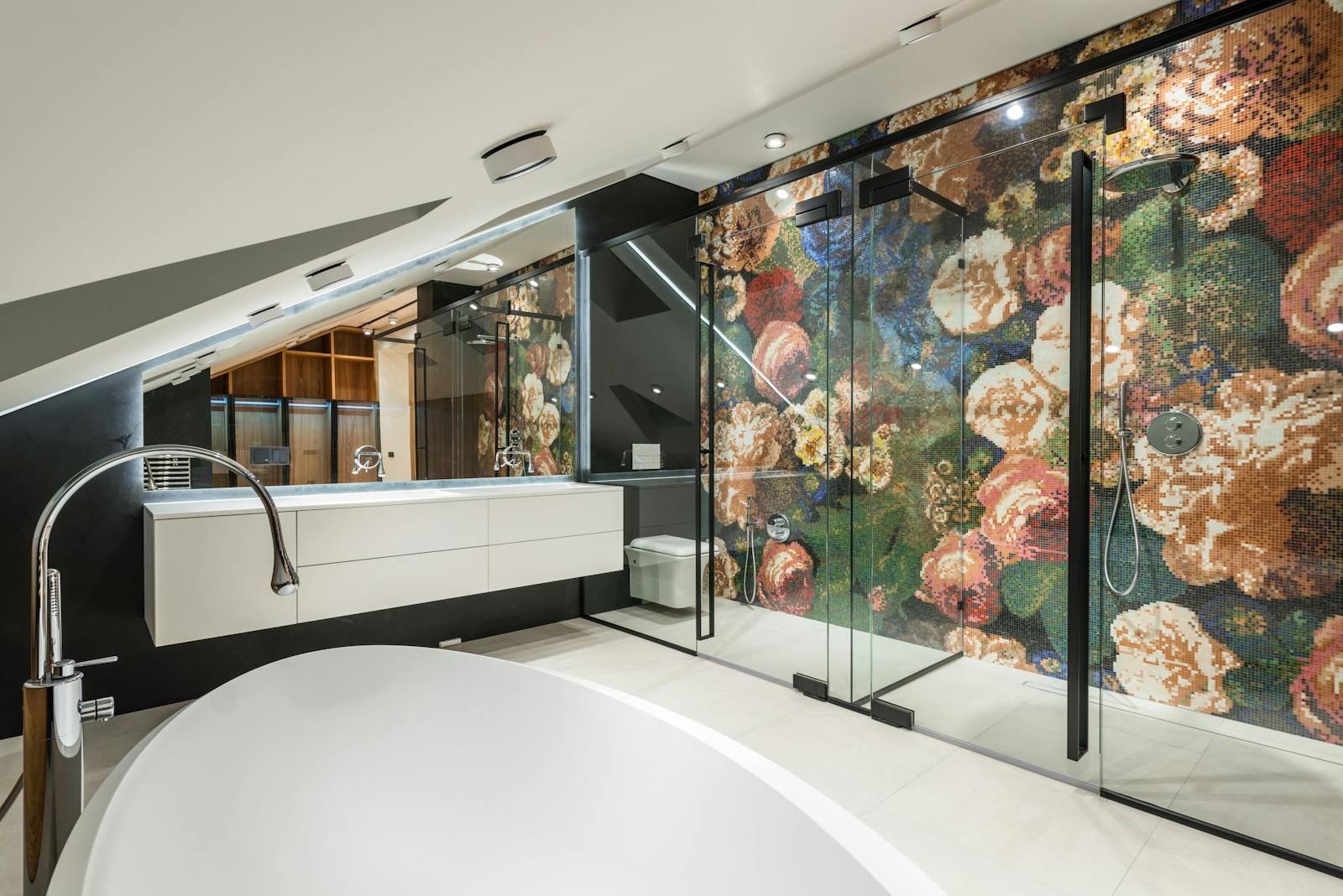
- Completely open and spa-like — no enclosure breaking up the room.
- Barrier-free and accessible — nothing to step over; excellent for aging-in-place and all mobility levels.
- Makes small bathrooms feel bigger — no shower box eating the footprint (more on this below).
- Easy to clean — one continuous tiled, sealed surface; no tray or door tracks.
- Water can't escape — because the whole room is waterproofed, there's no leak-prone tray edge.
- Modern, high-end look — a true design statement.
The downsides of a wet room
In the interest of an honest guide:
- Everything can get damp — towels, toilet paper, and the vanity catch spray unless you zone the layout or add a screen.
- Waterproofing must be perfect — the whole floor is the waterproof layer, so there's zero margin for a bad install.
- Costs more than waterproofing just a shower.
- Can feel cold underfoot — which is why heated floors pair so well with wet rooms.
- Resale nuance — removing your only tub can deter some family buyers.
Most of these are solved with two additions: a fixed glass splash panel to contain spray and heated floors for comfort. Neither undoes the open feel.
⭐ How a wet room is built: waterproofing ("tanking")
This is the part that matters more than any tile choice. A wet room only works if the waterproofing is flawless, because the entire floor is the waterproof barrier, not just a shower pan.
The build, in order:
- Slope the floor to the drain. The whole floor (or at least the shower zone) is pitched so water runs to a linear or point drain — no flat spots where water pools.
- Tank the room. A continuous waterproof membrane (sheet membrane like Schluter Kerdi, or a liquid membrane) covers the floor and runs up the lower walls, with every seam and corner sealed.
- Tie in the drain. The membrane bonds to the drain flange so there's no gap where water can get under the tile.
- Tile over the sealed substrate. Tile and grout are the finish — they are not the waterproofing. The membrane underneath is.
When a wet room leaks, it's a waterproofing failure — a missed seam, a flat spot, a bad drain tie-in. This is exactly why a wet room is not a DIY project and why the same careful slope-and-membrane work goes into every curbless shower we build. Ask any contractor about their tanking and slope approach before anything else.
Wet rooms for small bathrooms
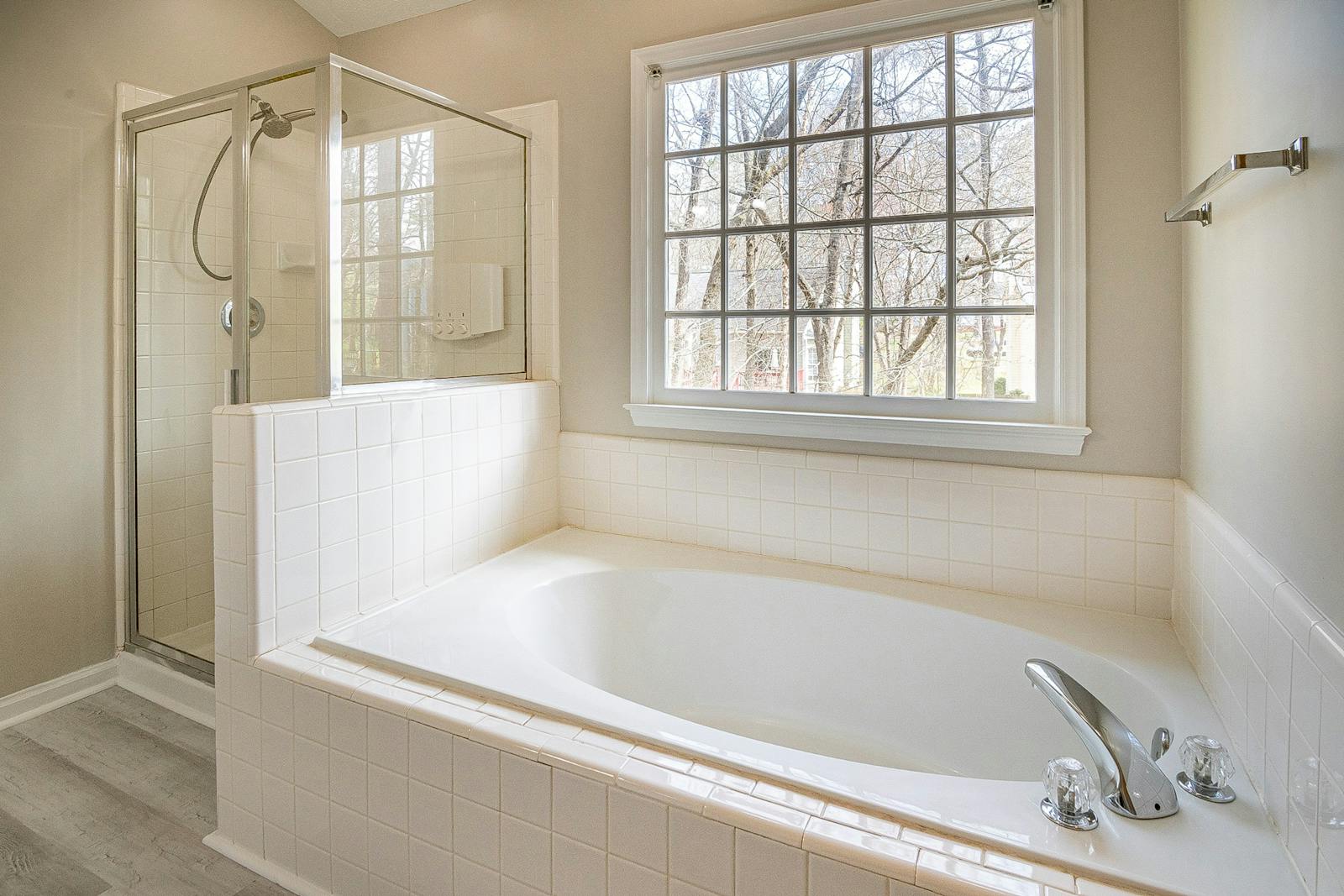
Counterintuitively, wet rooms are often best in small bathrooms. Without a shower enclosure, tray, or swinging door taking up the footprint, the whole room reads as open and larger, and a single sloped, tiled floor fits an awkward small layout more gracefully than a boxed-in shower. A compact wet room with a slim glass splash panel and a wall-hung toilet and vanity is one of the smartest ways to make a tiny NJ bathroom feel like a spa.
How much does a wet room cost in NJ? (2026)
A wet room conversion in NJ typically runs $8,000–$20,000+, depending on the size of the bathroom, the tile, the fixtures, and whether you add heated floors and a glass panel. The cost is driven by the full-room waterproofing and the all-over tiling — it's more involved than waterproofing just a shower, because the whole room has to be tanked, sloped, and tiled. For the broader budget picture, see our bathroom remodel cost guide and shower tile cost guide.
Is a wet room worth it?
For a modern, accessible, or small bathroom in NJ, a wet room can be an excellent choice — it's open, easy to clean, future-proof for aging-in-place, and a genuine high-end feature. The caveats are honest ones: get the waterproofing done by a pro, plan a splash panel and heated floors for livability, and think about the whole house before removing your only tub. Match the wet room to the bathroom and the household, and it's a standout upgrade.
Wet rooms in NJ — how we build them
A wet room is a waterproofing project with a beautiful tile finish on top. The slope to the drain, the continuous tanked membrane, the sealed corners, and the drain tie-in are what keep the room dry where it should be and draining where it should be — for decades. Those details are the entire job.
If you're considering a wet room, a curbless shower, or a barrier-free bathroom anywhere in Monmouth, Ocean, or Middlesex County, that's exactly the work we do — tanking, sloping, and tiling open, watertight bathrooms. We're licensed (NJ HIC #13VH04175700), NARI members, and led by owner Enrique Lopez. Call 732.984.1043 or request a free quote, and we'll tell you honestly whether a full wet room or a curbless shower is the right move for your space.
Thinking About a Remodel?
Get expert advice from our team — serving NJ since 2005.
Ready to start your project?
Related Services
Bathroom Remodeling Near MeWalk-In ShowersTile InstallationBathroom Vanities
5 Rating(46+ reviews)
Ready to Transform Your Space?
Our expert designers are ready to help bring your vision to life. Schedule your free consultation today and get a personalized quote for your project.
Request a Design ConsultationCall 732.984.1043
Licensed & Insured20+ Years ExperiencePrivate Consultations
Local Services
Bathroom Remodeling FreeholdMonmouth County Bathroom RemodelingBathroom Remodelers NJ
Popular Service Areas
Holmdel, NJColts Neck, NJRumson, NJMarlboro, NJShrewsbury, NJMiddletown, NJRed Bank, NJFreehold, NJSpring Lake, NJManalapan, NJ
Ready to start your project?
Get a free, no-obligation quote today.
5 (46+ reviews)
Category
Bathroom Design# Shower Niche Ideas, Sizes, Cost & How to Avoid Leaks (NJ 2026)# Frameless Shower Doors: Cost, Types & Is It Worth It? (2026 NJ Guide)
More Articles
Ready to Start Your Project?
Request a private design consultation for your substantial kitchen, bath, cabinetry, or whole-home project.