
What a frameless shower door really costs installed in NJ ($1,000–$3,500+), framed vs. semi-frameless vs. frameless, glass thickness (3/8" vs 1/2"), the honest pros and cons, whether they leak, and how they're installed — from a 20-year Monmouth County bathroom remodeler.
Plan Your ProjectView Our Work
Custom Kitchens by Lopez TeamJune 1, 202614 min read
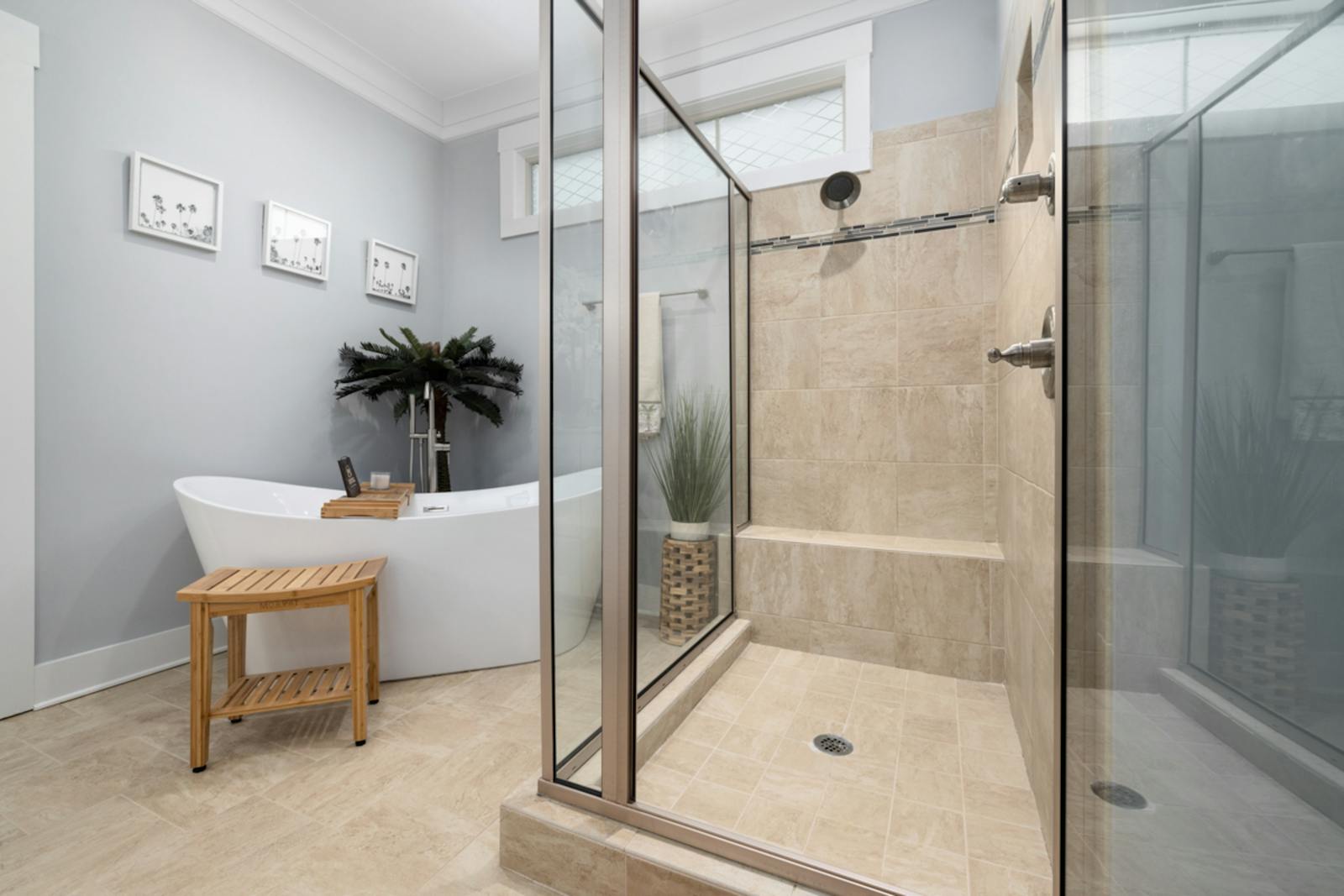
Want a frameless glass shower?
We design and install frameless shower doors across NJ
Custom Kitchens by Lopez has built walk-in and frameless glass showers throughout Monmouth, Ocean, and Middlesex County for 20+ years — measured precisely, anchored into solid backing, sealed and sloped so they stay watertight. We coordinate the tile, the curb, and the glass as one job. NJ HIC #13VH04175700, NARI member.
Bathroom RemodelingPlan a full bathroom remodel with a frameless glass shower as the centerpiece.Bathroom Remodelers Near MeLocal, licensed bathroom remodelers serving Monmouth and Ocean County.Ocean County BathroomsShore-home shower and bath renovations done right.NJ Bathroom Remodelers20+ years of New Jersey bathroom renovations, tile, and glass.
Get a Free QuoteCall 732.984.1043
Frameless Shower Doors: Cost, Types & Is It Worth It? (2026 NJ Guide)
Quick answer: A frameless shower door is a thick (3/8" or 1/2") panel of tempered glass held by clips and hinges with no metal frame around the edges — the cleanest, most open shower look. Installed in New Jersey in 2026, expect roughly $1,000–$2,200 for a frameless single door, $2,200–$4,000 for a corner or neo-angle enclosure, and $4,000–$6,500+ for large, low-iron, matte-black, or steam-shower glass. Framed ($300–$800) and semi-frameless ($550–$1,300) doors cost less.
A frameless glass shower is one of the most-requested upgrades we install on NJ bathrooms — and one of the most confusing to price, because the showroom and the big-box site quote a "door" while the real cost is the glass thickness, the configuration, the hardware, and a precise, watertight install. After 20+ years renovating bathrooms across Monmouth and Ocean County, here's the honest, contractor's-eye guide: what a frameless shower door actually costs, the real differences between framed, semi-frameless, and frameless, whether they leak, how they're installed, and whether it's worth it.
What is a frameless shower door?
A frameless shower door is a shower enclosure built from thick tempered glass with no metal frame surrounding the glass. Instead of an aluminum frame holding thin glass, heavy 3/8" or 1/2" panels are anchored directly to the wall with small metal clips and hinges, and joined to each other with clear silicone and minimal hardware. The result looks like a seamless wall of glass — you see the tile and the space, not a frame.
It's the highest-end of the three common shower-glass styles, and the difference between them is simply how much metal touches the glass.
Framed vs. semi-frameless vs. frameless
| Framed | Semi-frameless | Frameless | |
|---|---|---|---|
| Metal framing | Full metal frame on all edges | Frame on fixed panels, none on the door | No perimeter frame at all |
| Glass thickness | 1/4" (thin) | 1/4"–5/16" | 3/8" or 1/2" (thick) |
| Look | Most "enclosed," visible frame | In-between | Open, seamless, custom |
| Cleaning | Frame tracks trap water & mold | Fewer tracks | Easiest — almost no tracks |
| NJ installed cost | $300–$800 | $550–$1,300 | $1,000–$4,000+ |
| Best for | Budget baths, tub combos | Mid-range baths | Mid-to-high-end walk-in showers |
The takeaway: framed is the budget workhorse, frameless is the design statement, and semi-frameless is the value middle ground that gets you most of the open look for less money.
How much does a frameless shower door cost in NJ? (2026)
Most guides just say "frameless costs more." Here are real installed numbers for New Jersey.
The price is driven by the glass (thickness and size), the configuration (a single door is far cheaper than a wrap-around enclosure), the glass type and hardware finish, and the labor to measure, anchor, and seal it correctly.
Frameless shower door cost by type
| Type | What it is | NJ installed cost |
|---|---|---|
| Framed door | Thin glass, full metal frame | $300–$800 |
| Semi-frameless | Frame on panels, frameless door | $550–$1,300 |
| Frameless single door | One door + a fixed inline panel | $1,000–$2,200 |
| Frameless corner / neo-angle enclosure | Door + return panel(s), wraps a corner | $2,200–$4,000 |
| Custom / large / specialty | To-ceiling, low-iron, matte black/gold, curved, or steam-shower glass | $4,000–$6,500+ |
These are installed prices, including measuring, hardware, and professional installation — not just the glass. For where shower glass fits into a whole-room budget, see our NJ bathroom remodel cost guide and, for the shower specifically, our walk-in shower cost breakdown.
What drives the price
| Cost driver | Effect on price |
|---|---|
| Glass thickness | 1/2" glass costs ~20–40% more than 3/8" and needs heavier hardware |
| Size & height | Taller, wider, or to-the-ceiling panels use more glass and bigger hinges |
| Configuration | Single door < door + panel < neo-angle/corner < full enclosure < steam |
| Glass type | Low-iron (ultra-clear), rain, or frosted glass adds 10–25% |
| Protective coating | A factory water-repellent coating adds ~$150–$400 |
| Hardware finish | Matte black and brushed gold cost more than chrome/nickel |
| Out-of-square walls | Older NJ homes are rarely plumb; custom-scribed glass takes more labor |
| Demo & disposal | Removing and hauling an old framed door or tub enclosure |
A steam shower is the priciest case: the glass has to run to the ceiling with a transom and a tight seal to hold the steam, which is why those land at the top of the range.
Glass thickness: 3/8" vs. 1/2"
This is the single biggest spec that separates a "frameless" door that feels flimsy from one that feels like a custom piece of architecture.
- 3/8" (10mm) is the standard for frameless doors. It's rigid, looks substantial, and is what most NJ frameless installs use. It's the best value.
- 1/2" (12mm) is the premium tier. It's noticeably heavier and more rigid, has a more luxurious "thunk" when it closes, and reads as the highest-end option. It needs stronger hinges and clips, which is part of why it costs more.
- 1/4" glass is only used on framed and some semi-frameless doors — the frame is what makes thin glass safe and stable.
All shower glass is tempered for safety, meaning it's heat-treated so that if it ever breaks it crumbles into small, dull pieces instead of shards. Tempering also means the glass is cut and drilled *before* it's tempered — it can't be trimmed on site, which is exactly why precise measuring matters.
Glass and finish options that change the look
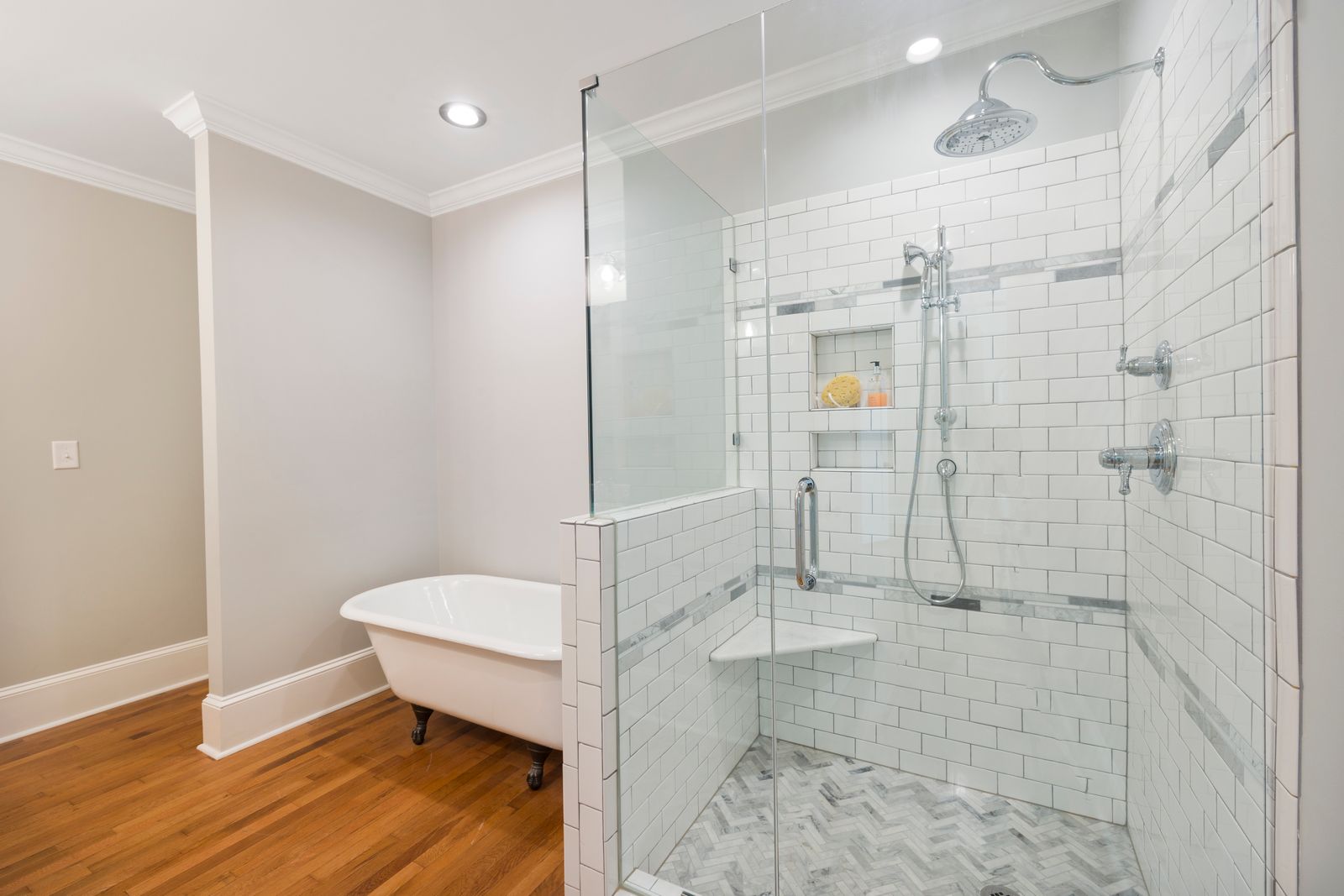
Clear vs. low-iron (ultra-clear) glass
Standard clear glass has a faint green tint, most visible at the edges and on thick panels. Low-iron glass (sold as "ultra-clear," Starphire, or Opti-white) removes that tint so your tile shows its true color. If you've invested in light, white, or high-end tile, the ~10–20% upcharge is worth it; for everyday tile, standard clear is fine.
Privacy and textured glass
For a powder-adjacent or shared bathroom, frosted (satin), rain, or reeded/fluted glass adds privacy while keeping the frameless look. These run a little more than clear.
Hardware finishes
Hinges, clips, handles, and any support bar come in a range of finishes, and this is where 2026 taste has shifted:
- Polished chrome / brushed nickel — timeless, matches most fixtures, the safe choice.
- Matte black — the standout modern finish right now; crisp against white tile.
- Brushed / satin gold (champagne bronze) — warm, high-end, very on-trend.
- Oil-rubbed bronze — for traditional and transitional baths.
The simplest rule: match the shower glass hardware to your faucet, showerhead, and other fixtures. For more on current finishes and palettes, see our 2026 bathroom remodel trends and bathroom design trends guides.
Pros and cons of frameless shower doors
Pros
- Open, spacious look — no frame to chop up the view; makes a small bathroom feel bigger.
- Showcases your tile — the feature wall, the niche, the pattern you paid for is fully visible.
- More light — light passes straight through, brightening the whole room.
- Easier to clean and more hygienic — no metal frame tracks to trap water, soap scum, and mold.
- Custom-fit — scribed to your exact opening, even in an out-of-square older home.
- Resale appeal — reads as a high-end, custom bathroom to buyers.
- Long-lasting — thick tempered glass lasts 20–30+ years.
Cons
- Higher cost — the $1,000–$4,000+ range above.
- Requires expert installation — heavy glass anchored into solid backing and sealed correctly; not a true DIY job.
- Not 100% watertight by design — small gaps mean the layout needs a proper curb slope or drainage (more below).
- Shows water spots — clear glass needs squeegeeing (especially with NJ hard water) unless it's coated.
- Longer lead time — custom-measured and fabricated, usually 1–3 weeks.
- Heavy and permanent — it's anchored to the walls, not easily relocated.
Do frameless shower doors leak?
The honest answer: a frameless door is not designed to be perfectly watertight the way a framed door with full gaskets is. There are intentional small gaps at the hinges and along the bottom of the door. That sounds alarming, but in a correctly built shower it isn't a problem — and here's why.
A good install controls water three ways: the curb (or shower floor) is sloped toward the drain so water runs in, not out; the door is hung to swing inward over the curb; and a clear bottom sweep and silicone seal close the gaps that matter. When a frameless shower leaks, it's almost always because the curb was sloped wrong, the seals were skipped, or the door swings the wrong way — installation mistakes, not a flaw in the concept.
This is also why a curbless or zero-threshold shower needs especially careful slope and drainage planning when you pair it with frameless glass — the water management has to be designed in from the start.
How a frameless shower door is installed (and why it's not DIY)
A frameless install is precise glasswork, and understanding the steps shows why professional measuring and anchoring matter.
- Measure and template. Walls in NJ homes are rarely plumb or square, so the installer measures the opening at multiple heights and notes the lean. Frameless glass is scribed to those exact dimensions.
- Fabricate the tempered glass. The panels are cut, the hinge and clip holes are drilled, and *then* the glass is tempered. After tempering, nothing can be changed — a mismeasure means a new (expensive) panel.
- Locate solid backing. Hinges and clips must anchor into studs or blocking behind the tile, not just into tile and thinset. Good bathroom remodels add blocking during framing exactly for this.
- Drill and anchor. Holes are drilled through finished tile with the right bits (a cracked tile here is a costly mistake), and hardware is anchored securely.
- Set, seal, and add sweeps. Panels are leveled and set in clear silicone; bottom sweeps and seals are fitted; the silicone cures ~24 hours before the shower is used.
Because the glass is heavy, custom, and unforgiving, this is work for an experienced installer. A botched measurement wastes a fabricated panel, and improperly anchored glass is a genuine safety hazard.
Maintenance: keeping frameless glass clear
Two realities the showroom won't dwell on — both easily managed:
Water spots and hard water. Much of New Jersey has hard water, which leaves mineral spots on clear glass. The fix is simple: squeegee after each shower (10 seconds) and wipe down weekly with a mild glass cleaner or a vinegar-and-water mix. Avoid abrasive pads and ammonia, which can damage coatings and seals.
A protective coating is worth it. A factory-applied water-repellent coating (EnduroShield, Diamon-Fusion, ClearShield) makes water bead and roll off, so spots don't bake on and cleaning drops to a fraction of the effort. At $150–$400 it's one of the better small upgrades, especially given NJ water.
Done this way, a frameless door stays crystal-clear and the hardware and seals are what you eventually maintain — not the glass itself.
Is a frameless shower door worth it?
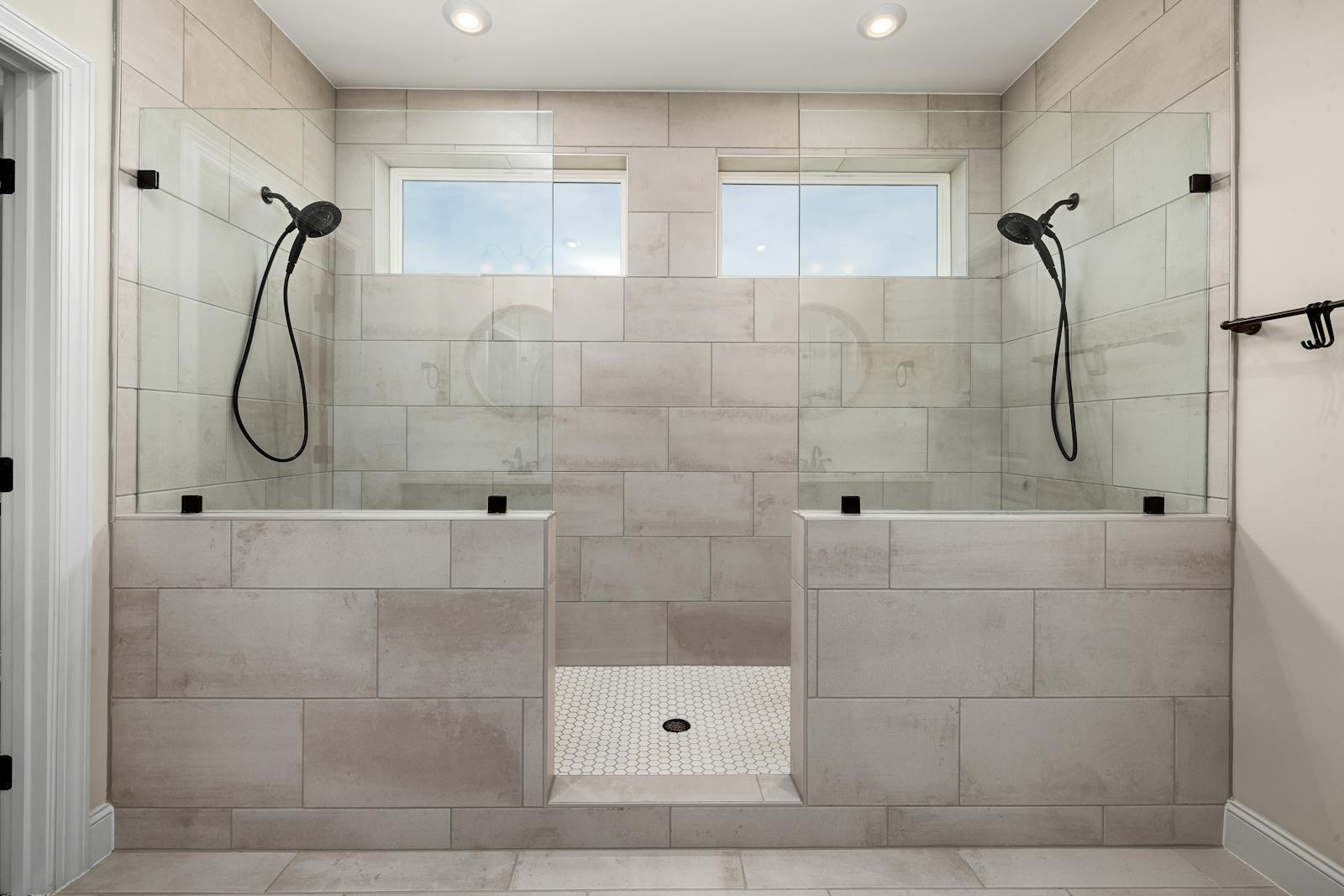
For most mid-to-high-end NJ bathrooms, yes. A frameless glass shower is the single upgrade that most makes a bathroom feel custom and current: it opens up the room, shows off the tile you invested in, and is exactly the detail design-conscious buyers in Monmouth and Ocean County's $450K+ homes notice. A bathroom remodel returns roughly 60–70% at resale, and a frameless shower is one of the features that pushes a bath from "renovated" to "high-end."
When semi-frameless makes more sense: if you're on a tighter budget, finishing a tub-to-shower conversion with limited swing room, or you simply want most of the look for less, a semi-frameless door delivers 80% of the effect at roughly half the price. There's no wrong answer — it's about matching the glass to the bathroom and the budget. For the full range of options, see our shower remodel ideas, designs, and costs and walk-in shower ideas.
Frameless shower doors in NJ — how we do it
A frameless shower lives or dies on three things: an accurate measure of out-of-square walls, hardware anchored into solid backing, and a curb and seals that keep water where it belongs. Those are the details that separate a seamless glass showpiece from a leaky door with a cracked tile next to the hinge.
If you're planning a walk-in or frameless glass shower anywhere in Monmouth, Ocean, or Middlesex County, that's work we've done for 20+ years — coordinating the tile, the curb, and the glass as one job so it looks seamless and stays watertight. We're licensed (NJ HIC #13VH04175700), NARI members, and led by owner Enrique Lopez. Call 732.984.1043 or request a free quote, and we'll tell you honestly which door style, glass, and finish make sense for your bathroom and budget.
Thinking About a Remodel?
Get expert advice from our team — serving NJ since 2005.
Ready to start your project?
Related Services
Bathroom Remodeling Near MeWalk-In ShowersTile InstallationBathroom Vanities
5 Rating(46+ reviews)
Ready to Transform Your Space?
Our expert designers are ready to help bring your vision to life. Schedule your free consultation today and get a personalized quote for your project.
Request a Design ConsultationCall 732.984.1043
Licensed & Insured20+ Years ExperiencePrivate Consultations
Local Services
Bathroom Remodeling FreeholdMonmouth County Bathroom RemodelingBathroom Remodelers NJ
Popular Service Areas
Holmdel, NJColts Neck, NJRumson, NJMarlboro, NJShrewsbury, NJMiddletown, NJRed Bank, NJFreehold, NJSpring Lake, NJManalapan, NJ
Ready to start your project?
Get a free, no-obligation quote today.
5 (46+ reviews)
Category
Bathroom Design# Freestanding Tubs: Pros, Cons, Cost & Are They Worth It? (NJ 2026)# Shower Niche Ideas, Sizes, Cost & How to Avoid Leaks (NJ 2026)
More Articles
Ready to Start Your Project?
Request a private design consultation for your substantial kitchen, bath, cabinetry, or whole-home project.