
The honest pros and cons of porcelain (sintered) countertops, real NJ installed cost ($60–$120/sq ft), how they compare to quartz and granite, why they're the best surface for outdoor kitchens, and the chipping/fabrication truth — from a 20-year Monmouth County countertop fabricator.
Plan Your ProjectView Our Work
Custom Kitchens by Lopez TeamJune 1, 202613 min read
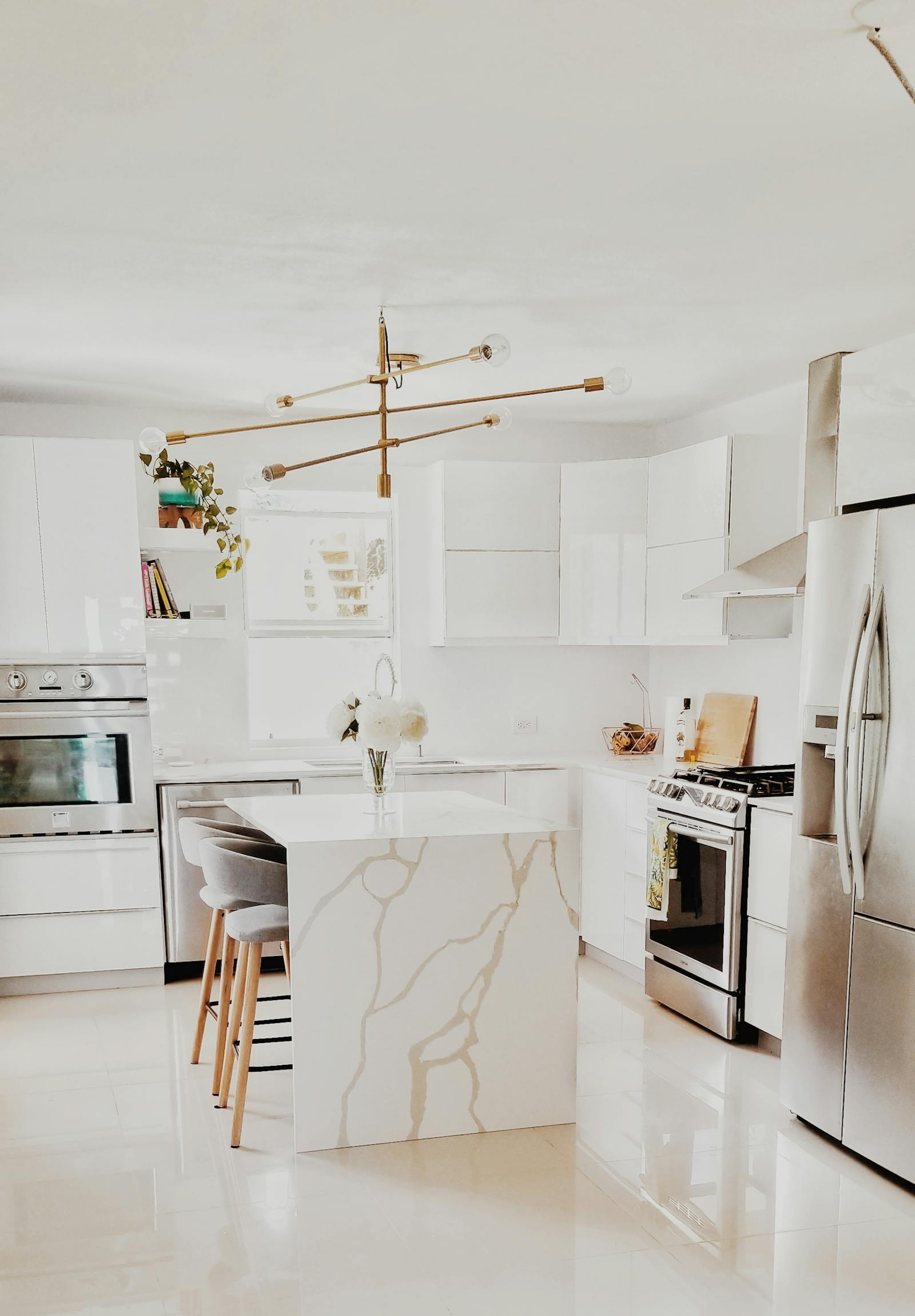
Considering porcelain?
We fabricate and install porcelain countertops across NJ
Porcelain rewards an experienced fabricator — the slabs need the right tools and a careful hand. Custom Kitchens by Lopez has installed porcelain, quartz, quartzite, granite, soapstone, and marble throughout Monmouth, Ocean, and Middlesex County for 20+ years, indoors and in outdoor kitchens. NJ HIC #13VH04175700, NARI member.
Countertop InstallationExpert fabrication and installation of porcelain and natural stone.Outdoor KitchensPorcelain is the standout surface for a UV- and weather-proof outdoor kitchen.Kitchen RemodelingPlan a full kitchen remodel around a porcelain counter or island.Quartz CountertopsWeighing porcelain against quartz? Compare options and pricing.
Get a Free QuoteCall 732.984.1043
Porcelain Countertops: Pros, Cons, Cost & Vs. Quartz (2026 NJ Guide)
Quick answer: Porcelain countertops are large-format slabs of fired, sintered porcelain — extremely hard, fully heat-proof, UV-stable, and non-porous (so they never need sealing). They convincingly mimic marble, concrete, and stone. The trade-offs: edges can chip, the pattern is usually surface-level, and they're harder to fabricate. In NJ, expect roughly $60–$120 per square foot installed, comparable to quartz.
Porcelain (sometimes sold as "sintered stone" — Dekton, Neolith, Laminam, and similar) is one of the fastest-rising countertop surfaces, and one of the most over-hyped and under-explained. It's marketed as indestructible, which is half true: the surface is incredibly tough, but the edges aren't, and not every fabricator can cut it well. After 20+ years fabricating and installing countertops across Monmouth and Ocean County, here's the honest, fabricator's-eye guide: the real pros and cons, what porcelain costs in NJ, how it stacks up against quartz and granite, and where it genuinely shines (hint: outdoor kitchens).
What are porcelain countertops?
Porcelain countertops are slabs made from refined clay blended with minerals like silica and feldspar, then fired at extremely high temperatures in a process called sintering — which fuses everything into a dense, glass-hard surface. A printed, glazed layer gives the slab its color and pattern (marble veining, concrete, stone, even wood), and the whole thing is baked in.
You'll see the same product sold as "sintered stone" under brand names like Dekton, Neolith, Laminam, and Lapitec. It's the same family: a man-made, ultra-durable slab that's thinner and lighter than natural stone or quartz.
Pros and cons of porcelain countertops
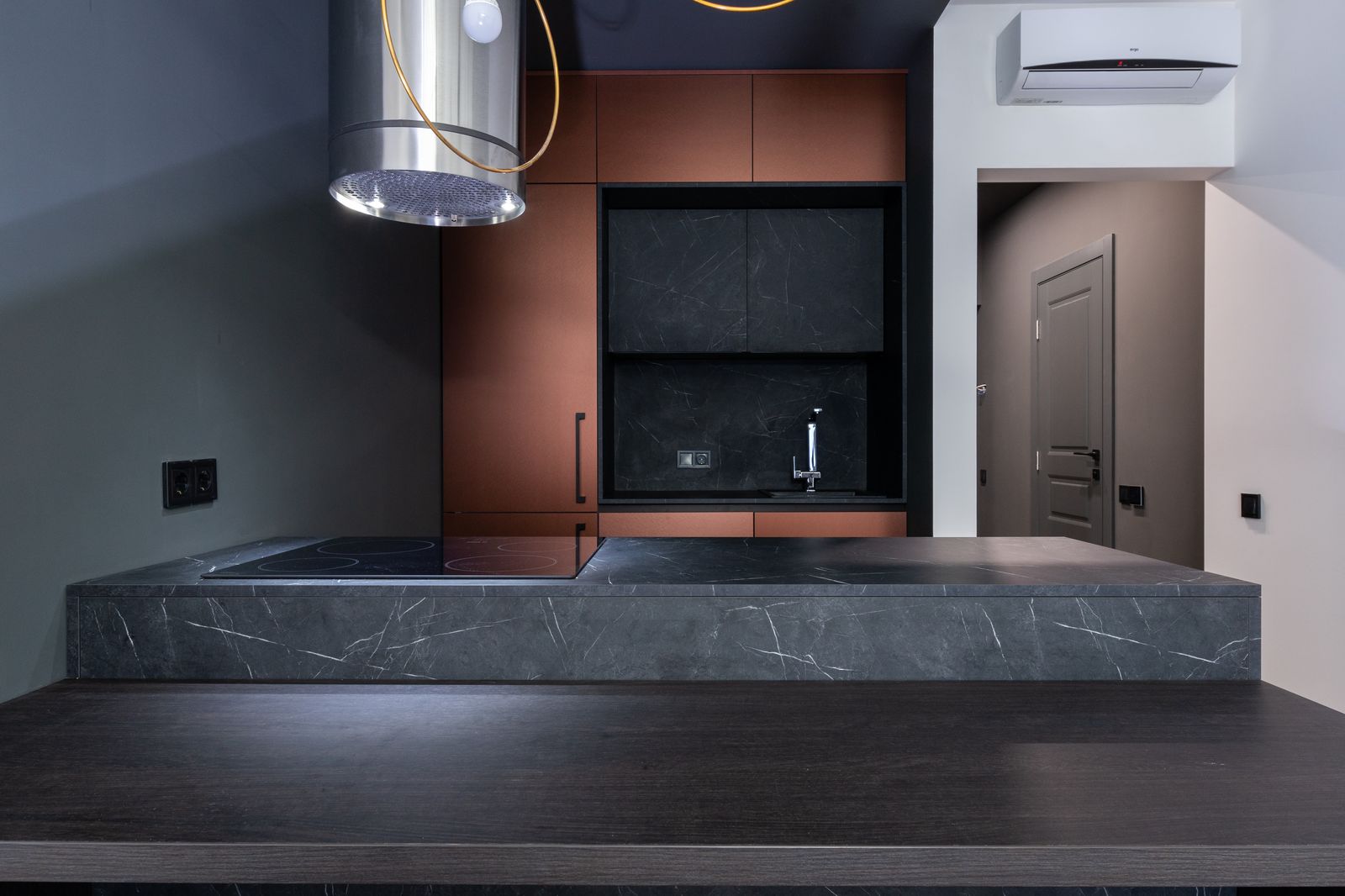
Pros
- Extremely hard surface — highly scratch- and abrasion-resistant; among the toughest surfaces you can buy.
- Truly heat-proof — set a hot pan directly on it; it won't scorch or discolor (something quartz can't claim).
- UV-stable — won't fade in sunlight, which makes it the top choice for outdoor kitchens.
- Non-porous — never needs sealing; resists stains, water, and bacteria.
- Acid- and chemical-proof — lemon, wine, and even disinfecting wipes won't etch or dull it.
- Thin and light — large-format slabs mean fewer seams, and it can sometimes go over an existing surface.
- Realistic looks — convincing marble, concrete, stone, and wood finishes.
Cons
- Edges and corners can chip from a hard impact — the surface is tough, but the edges are the weak point.
- Surface-level pattern — on most porcelain the color is printed on top, so a deep chip can expose a different body color underneath (a few pricier "full-body" porcelains avoid this).
- Harder to fabricate — it takes special tools, diamond blades, and an experienced hand; more slabs break during cutting, which adds labor.
- Fewer skilled installers — not every shop fabricates porcelain well.
- Fewer color/slab options than quartz, and limited edge profiles on thin slabs (a thick edge needs mitering).
The honest summary: porcelain has the toughest *surface* of any countertop, but it's less forgiving at the *edges* and during *fabrication*. Get a fabricator who knows it, and it's a phenomenal, low-maintenance surface.
How much do porcelain countertops cost in NJ? (2026)
In New Jersey, porcelain runs roughly $60–$120 per square foot installed in 2026 — right in line with quartz and mid-grade granite.
| Factor | Effect on price |
|---|---|
| Brand / line | Premium lines (Dekton, Neolith) cost more than entry porcelain |
| Thickness | A 12mm slab with a mitered edge costs more than a thin 6mm install |
| Fabrication | Cutouts, seams, and mitered edges add labor — porcelain is slow to cut |
| Edge profile | Built-up mitered edges (for a thick look) add cost |
| Full-body vs. glazed | Full-body porcelain (color all the way through) costs more |
Note that with porcelain, fabrication labor is a bigger share of the price than with other materials, because the slabs are difficult to cut. For how this compares across the board, see our kitchen countertop cost guide and quartz countertop pricing. Deciding among materials? Start with how to choose a countertop material.
Porcelain vs. quartz vs. granite
| Porcelain | Quartz | Granite | |
|---|---|---|---|
| Type | Sintered slab | Engineered | Natural stone |
| Surface hardness | Very high | High | High |
| Heat resistance | Excellent | Poor (can scorch) | Excellent |
| UV / outdoor | Excellent (won't fade) | Fades outdoors | Good |
| Sealing | Never | Never | Periodic |
| Stain/acid | Excellent | Excellent | Good (sealed) |
| Pattern depth | Surface (mostly) | Through-body | Through-body |
| Edge durability | Can chip | Durable | Durable |
| Fabrication | Difficult | Easy | Moderate |
| Colors | Wide (printed) | Endless | Wide (natural) |
The comparisons people search for:
- Porcelain vs. quartz: porcelain wins on heat and outdoor/UV resistance and surface hardness; quartz wins on through-body color, color selection, and easy fabrication. Quartz can scorch and fade; porcelain can chip at edges.
- Porcelain vs. granite: porcelain is non-porous (no sealing) and lighter; granite has natural full-body depth but needs sealing and is heavier.
- Porcelain vs. natural stone in general: if you want the marble look without marble's etching and staining, porcelain is a brilliant stand-in. For other low-maintenance natural options, compare our soapstone countertops guide.
Porcelain for outdoor kitchens — its best use
This is where porcelain genuinely outclasses everything else. Because it's UV-stable, heat-proof, frost-proof, and non-porous, it holds its color and integrity through full sun, summer heat, and NJ winters — exactly the conditions that fade quartz and weather natural stone. If you're planning an outdoor kitchen, porcelain is the surface we recommend first. (See our outdoor kitchen services.)
Porcelain for waterfall islands and modern kitchens
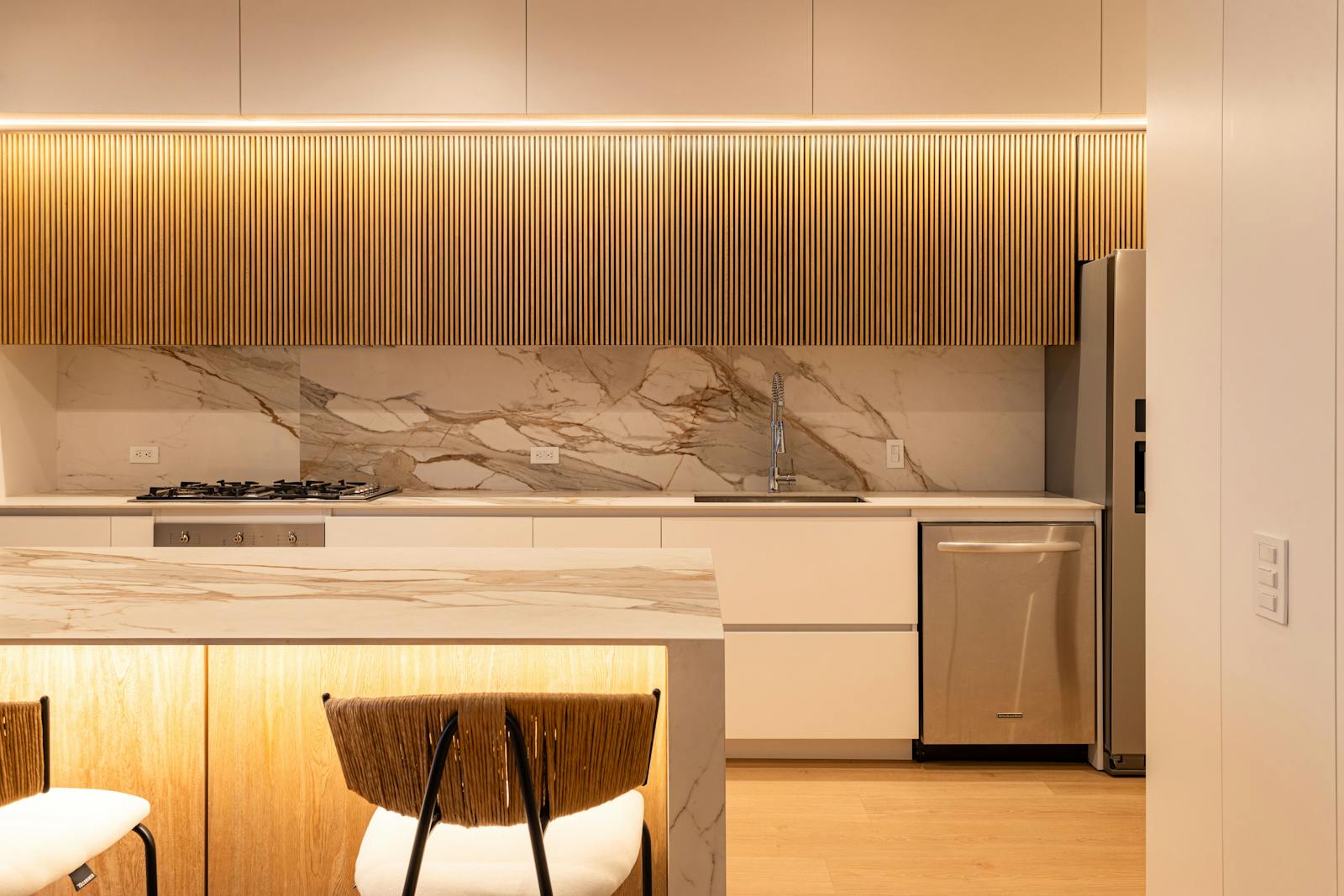
Porcelain's consistent, predictable pattern makes it one of the best materials for a waterfall countertop — the veining matches cleanly across the mitered corner, and the thin slabs suit the seamless look. Combined with its hardness, that's why porcelain shows up so often in modern, design-forward kitchens. For where it fits among this year's surfaces, see our 2026 countertop trends.
Caring for porcelain countertops
Maintenance is about as easy as it gets:
- Clean with anything mild — soap and water, mild cleaners, even Clorox/disinfecting wipes are safe (it's chemical-resistant).
- No sealing, ever — porcelain is non-porous out of the box.
- No heat or acid worries — hot pans and citrus won't hurt it.
- Protect the edges — the one real vulnerability; avoid hard impacts at corners.
- Don't use the surface as a cutting board — not because it'll scratch (it resists that well), but because it will dull your knives fast.
Is porcelain right for your NJ kitchen?
Porcelain is an excellent fit if you want a near-indestructible surface, a marble look without the maintenance, or an outdoor kitchen that won't fade. It's also ideal for waterfall islands and busy family kitchens.
It's less ideal if you want the deepest possible discount, a through-body natural stone with real depth, or the widest color selection — in which case quartz, granite, or quartzite may suit you better. And whatever you choose, the fabricator matters more with porcelain than with any other material — it's unforgiving to cut, so experience is everything.
Porcelain countertops in NJ — how we do it
Porcelain lives or dies on fabrication. The slabs are hard and brittle to cut, the edges need careful mitering to look substantial, and the install has to be precise so a thin slab sits flat and supported. Those are the details that separate a flawless porcelain counter from a chipped edge and a visible seam.
If you're considering porcelain — indoors or for an outdoor kitchen — anywhere in Monmouth, Ocean, or Middlesex County, that's the work we've done for 20+ years across every major countertop material. We're licensed (NJ HIC #13VH04175700), NARI members, and led by owner Enrique Lopez. Call 732.984.1043 or request a free quote, and we'll help you decide whether porcelain — or quartz, granite, quartzite, or soapstone — is the right surface for your kitchen and your budget.
Planning a Complete Kitchen?
See how CKL plans custom cabinetry, premium materials, and $75,000+ kitchen projects.
Ready to start your project?
Related Services
Countertop InstallationCustom Kitchen CabinetsTile InstallationHardwood Flooring
5 Rating(46+ reviews)
Ready to Plan the Complete Kitchen?
Move from product research to a complete design plan. See real CKL kitchens, the decisions that define luxury work, and the $75,000–$150,000+ planning range.
Explore Luxury KitchensCall 732.984.1043
Licensed & Insured20+ Years ExperienceLuxury kitchens from $75,000
Local Services
Kitchen Cabinets FreeholdKitchen Cabinets EdisonKitchen Cabinets ManalapanKitchen Cabinets MarlboroKitchen Remodeling FreeholdBathroom Remodeling Freehold
Popular Service Areas
Holmdel, NJColts Neck, NJRumson, NJMarlboro, NJShrewsbury, NJMiddletown, NJRed Bank, NJFreehold, NJSpring Lake, NJManalapan, NJ
Ready to start your project?
Get a free, no-obligation quote today.
5 (46+ reviews)
Category
Materials Guide# Soapstone Countertops: Pros, Cons, Cost & Colors (2026 NJ Guide)# Waterfall Countertops: Cost, Best Materials & Whether It's Worth It (NJ Guide)
More Articles
Ready to Start Your Project?
Request a private design consultation for your substantial kitchen, bath, cabinetry, or whole-home project.